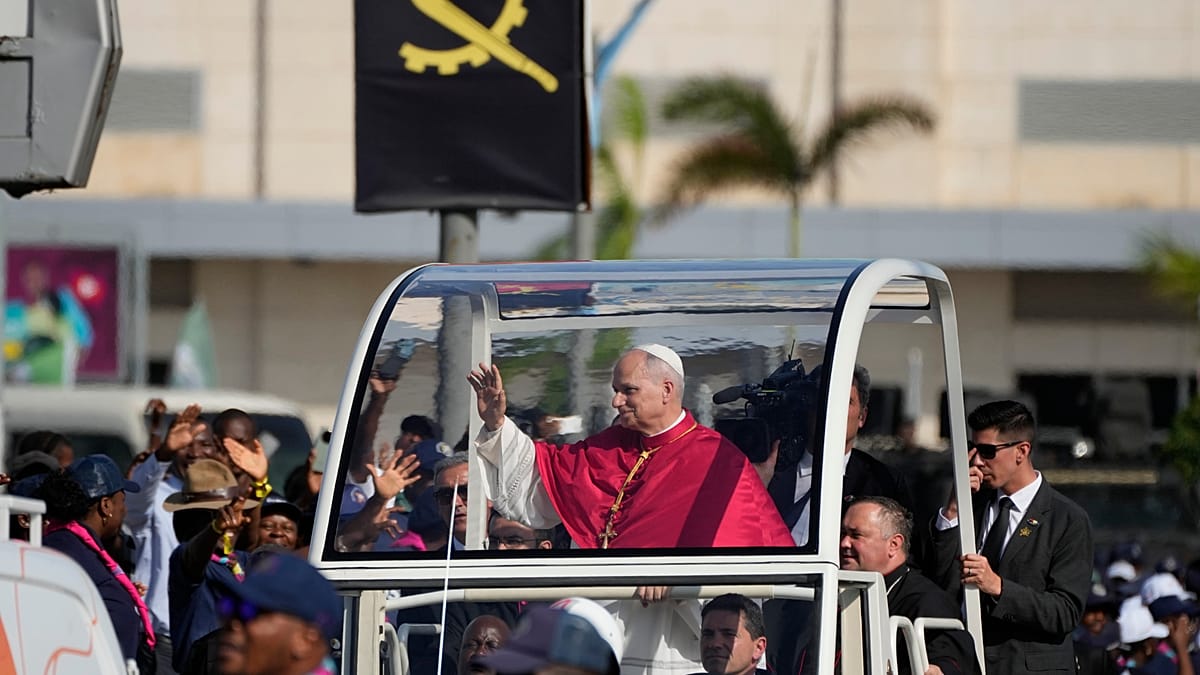
Pope Leo XIV concluded the third leg of his four-nation African tour with a visit to the Mamã Muxima shrine in Angola, a site that stands as a stark reminder of the continent's painful history. The shrine, located in the town of Muxima, was a key hub in the transatlantic slave trade, from which an estimated 5 million enslaved Africans were shipped on Portuguese vessels.
Earlier in the day, the pontiff celebrated Mass in Kilamba, a suburb of the capital Luanda, before a crowd of approximately 100,000 people. Speaking in Portuguese, he appealed for peace in Ukraine and the Middle East, and called for an end to corruption in Angola, describing it as a "wound" that must be healed through a "new culture of justice and sharing."
A Legacy of Exploitation
Angola, an oil- and mineral-rich nation in southwest Africa, is currently the continent's fourth-largest oil producer and the world's third-largest diamond producer, according to the International Energy Agency. It also holds significant deposits of gold and critical minerals. Yet the World Bank estimated in 2023 that over 30% of the population lives on less than €1.83 per day.
During his address to Angolan authorities on Saturday, Pope Leo XIV did not mince words. "You know well that, all too often, people have looked – and continue to look – to your lands in order to give, or, more frequently, to take," he said. He urged leaders to break the "cycle of vested interests" that reduces "reality and even life itself to mere commodities."
The country's history is marked by colonial plunder under Portuguese rule, followed by a brutal 27-year civil war that ended in 2002. Since President João Lourenço took office in 2017, his administration has estimated that at least €20 billion was stolen or embezzled by the family of former President José Eduardo dos Santos. Lourenço has pledged to tackle corruption, but critics argue his efforts have often targeted political rivals to consolidate power.
Standing alongside the Pope, Lourenço acknowledged the "complex and difficult challenge" of improving lives. He also called for an end to the war in Iran and urged the pontiff to continue using his "moral authority" to promote peace. The reference to Iran comes amid heightened tensions in the Strait of Hormuz, where US and Iran trade ship seizures have escalated the crisis.
Muxima: A Symbol of Contradiction
The highlight of the Pope's visit was his pilgrimage to Muxima, described as "the largest Catholic pilgrimage centre in Southern Africa." The shrine, dedicated to Mamã Muxima (Mother of the Heart), became a popular destination after reports of an apparition of the Virgin Mary around 1833. For many Angolans, it remains a place of deep devotion, but it also embodies the complex relationship between Roman Catholicism and the exploitation of Africa.
Pope Leo XIV, born Robert Francis Prevost in the United States, has both Black and white ancestry, including forebears who were both enslaved people and slave owners, according to genealogical research. His visit to Muxima, where he prayed the rosary, was a personal acknowledgment of this history.
The Pope's broader tour of Africa has focused on themes of peace, justice, and reconciliation. Earlier stops included visits to other nations, where he addressed similar issues of poverty and conflict. The trip comes as Europe watches closely, given the continent's historical ties to Africa through colonialism and ongoing economic interests. The European Union, for instance, has trade defence mechanisms to shield industries from subsidised imports, but the legacy of exploitation remains a sensitive topic in EU-Africa relations.
As the Pope departed Angola, his message resonated beyond the faithful. In a country where 44% of the population is Catholic, his call for a break from the past—both colonial and corrupt—offered a glimmer of hope for a more equitable future.