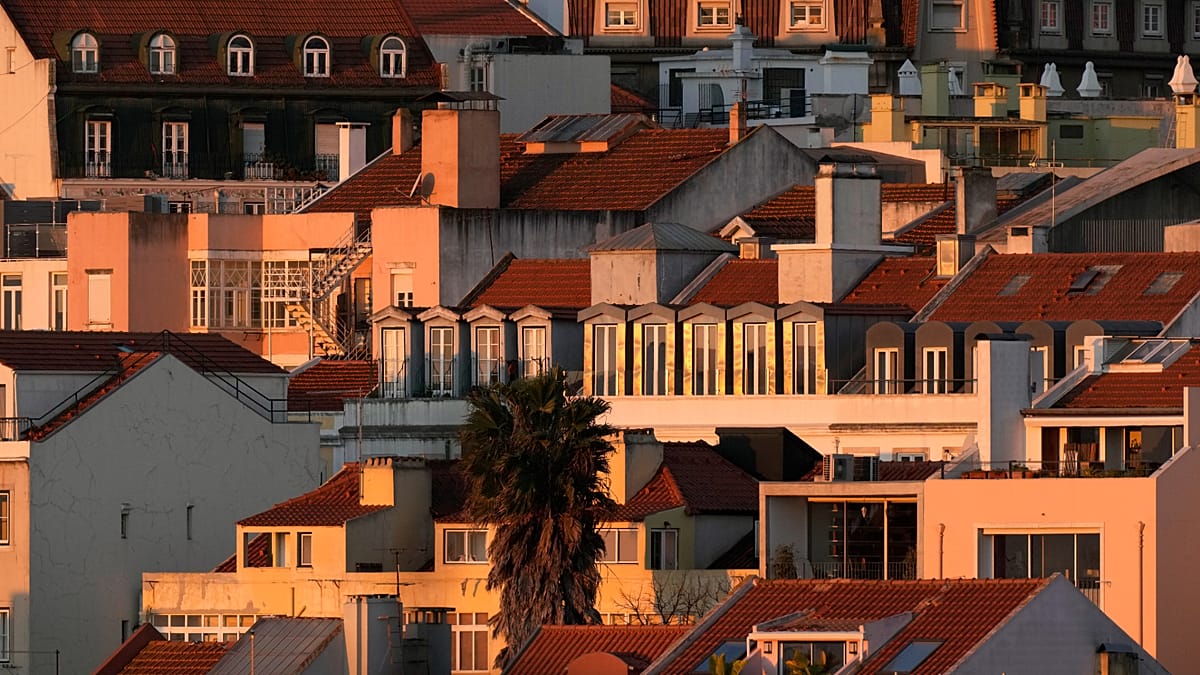
For anyone hoping to buy a home in Portugal on a budget of €400,000, the options are shrinking fast. According to the latest Imovirtual Barometer, published in May 2026, the average asking price for a property — new or resale — now stands at €430,500. That figure, which covers the entire country, puts homeownership beyond the reach of a significant share of the population.
The numbers tell only part of the story. A stroll past estate agents' windows in Lisbon or Porto, or a quick search on any property portal, reveals how dramatically prices have climbed in recent years. But is it truly impossible to find a cheaper home? The answer, as with most things in housing, depends on a web of interconnected factors — starting with the simple fact that there are not enough homes to go around.
"Without new homes coming onto the market and with extremely dynamic demand, it is becoming very difficult for young people and for Portuguese families to manage to buy their own home," Patrícia Barão, president of the Professional Association Representing Portugal's Estate Agents (APEMIP), told Euronews. She pointed to the cumulative weight of land costs, construction expenses, labour, project fees, taxes and planning charges — all of which feed directly into the final price tag.
A state guarantee that backfired?
Ricardo Vagarinho, CEO of the construction firm MomentVM, highlights another factor that has helped push prices upward: a government scheme offering young buyers a state-backed guarantee on mortgages. The programme, available to people aged 18 to 35 with incomes up to the eighth tax bracket, covers between 85% and 100% of a property's value, with the state guaranteeing up to 15%. The catch is that the property must cost no more than €450,000.
"It seems that a new threshold has now been set based on what the government has allowed young people, giving them the possibility of buying a property with a state-backed guarantee, with an upper limit of €450,000," Vagarinho said. That, he argues, has led the market to "push prices up across the board, for both resale and new homes, because people have that financing available."
The International Monetary Fund (IMF), in its June report on the Portuguese economy, recommended suspending some of these measures, including the public guarantee for young buyers, arguing that they had widened "market imbalances." In effect, more people are now in the market than before, but the supply of homes has not kept pace.
Barão cautions against expecting a single solution. "There is no silver bullet for housing. There is no such thing as a single measure that solves everything, so we have to act on several fronts," she said, calling for a "holistic view" of the market.
Not enough hands to build
The housing crisis is not just about a lack of homes — it is also about a lack of people to build them. The construction sector is short of skilled workers: bricklayers, electricians, plumbers, formwork specialists and subcontractors. Vagarinho estimates that around 80,000 workers are missing from the industry.
The roots of this shortage go back to the international bailout programme that followed Portugal's debt crisis. The state slashed investment in infrastructure and major projects, banks stopped lending for housing and business activity, and many construction companies went bankrupt. That triggered a "brain drain" in the sector, as skilled workers left for other countries or other industries.
"Those who were good and stayed here are not enough for the volume we want to build," Vagarinho said. "If everyone needs workers, of course they will end up offering a little more. That is why the price of labour rises."
Construction also competes with large public and private projects — airports, railway lines, roads — that absorb a lot of the same workforce. This year, the storms that devastated central Portugal have added further pressure, prompting the government to fast-track a "green lane" for migrant workers in the construction industry, under a protocol with the Portuguese Confederation of Construction and Property (CPCI). Some ongoing public works may be temporarily suspended or delayed to prioritise urgent repairs.
Materials and land: the hidden costs
Construction materials have also become more expensive. According to the National Statistics Institute (INE), the cost of materials rose by 3.7% year-on-year in March 2026, with glass, copper wire, concrete slabs and ceramic blocks among the biggest contributors. "Everything depends on energy," Vagarinho explained. "A large part of materials depends on energy and, therefore, if there is a war that pushes up fuel prices, energy costs rise, as do the costs of materials that depend on it."
Land prices are another major component, accounting for roughly 20% of a project's budget. "Since demand for homes is high, land prices also inevitably rise," Vagarinho said. He notes that "building costs the same anywhere" — what really varies is the value of land and the square metre in different regions. "Location is the big issue," he concluded.
For those watching the market, the message is clear: the €400,000 benchmark is no longer a reliable guide to affordability. As Portugal grapples with a housing shortage, rising input costs and policy measures that may be adding fuel to the fire, the dream of homeownership is slipping further away for many — particularly the young. The debate over how to fix it is only just beginning, and it is one that resonates across Europe, where similar pressures are being felt in capitals from Madrid to Berlin.