South African authorities have recovered the remains of a Portuguese citizen from the stomach of a crocodile, ending a days-long search that began when the man went missing on 27 April. Gabriel Batista, 59, a businessman from Portugal, was reportedly swept away in his vehicle while attempting to cross a partially submerged bridge over the Komati River in the country's Mpumalanga province.
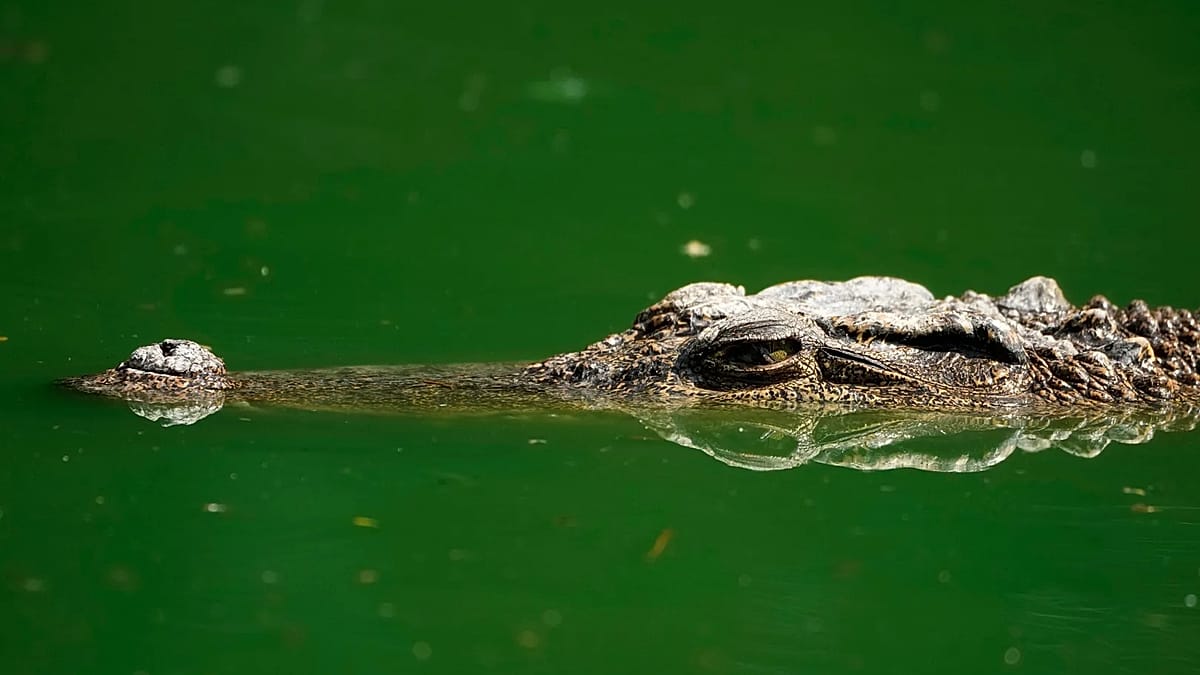
Investigators located Batista's abandoned vehicle on the riverbank, but there was no immediate sign of the driver. During the search, they noticed a large crocodile behaving unusually: it appeared swollen, was struggling to move, and showed no reaction to human presence. Captain Johan Potgieter of the South African police explained to eNCA that such behaviour is typical of crocodiles that have recently consumed a large meal. "We know from experience that when crocodiles have just eaten a large meal, they are not very active and need to lie down in the sun for their digestive system to start working," he said.
Euthanasia and Recovery Operation
Authorities decided to euthanise the animal to examine its contents. The crocodile, weighing approximately 600 kilograms and measuring nearly five metres in length, was airlifted from the river by helicopter. Potgieter descended from the aircraft to perform what he described as a "highly dangerous and complex operation."
Police confirmed the presence of human remains inside the crocodile, which were sent for DNA analysis. The Portuguese Ministry of Foreign Affairs later confirmed the victim's identity as Gabriel Batista. In addition to the remains, Potgieter told SABC News that the crocodile's stomach contained around six pairs of crocs and flip-flops. "I can't say why they were there or why he ate them, but this shows that these crocodiles are very active in this area," he added.
The family of the missing businessman was present during the search operation and has asked the press for privacy. Authorities continue to investigate the incident.
This tragic event highlights the dangers posed by wildlife in regions where human activity intersects with natural habitats. South Africa's rivers, particularly in the Komati River area, are home to large crocodile populations, and incidents of attacks on humans, though rare, can occur when animals are startled or when people venture into their territory. The case also underscores the challenges faced by rescue teams in remote areas, where access to heavy equipment and specialised personnel is limited.
Portugal has a significant diaspora in South Africa, with many Portuguese citizens working in business and trade. The Portuguese government has offered consular assistance to the family. This incident comes as Portugal continues to strengthen its global diplomatic presence, including its push for Portuguese to become an official UN language by 2030, as reported by European Pulse.
For South Africa, the event is a reminder of the country's rich but sometimes dangerous wildlife. The region's tourism industry, which has seen growth in recent years, often promotes wildlife safaris and river excursions, but safety protocols remain critical. As Africa emerges as the fastest-growing tourism region, balancing visitor safety with conservation efforts is an ongoing challenge.