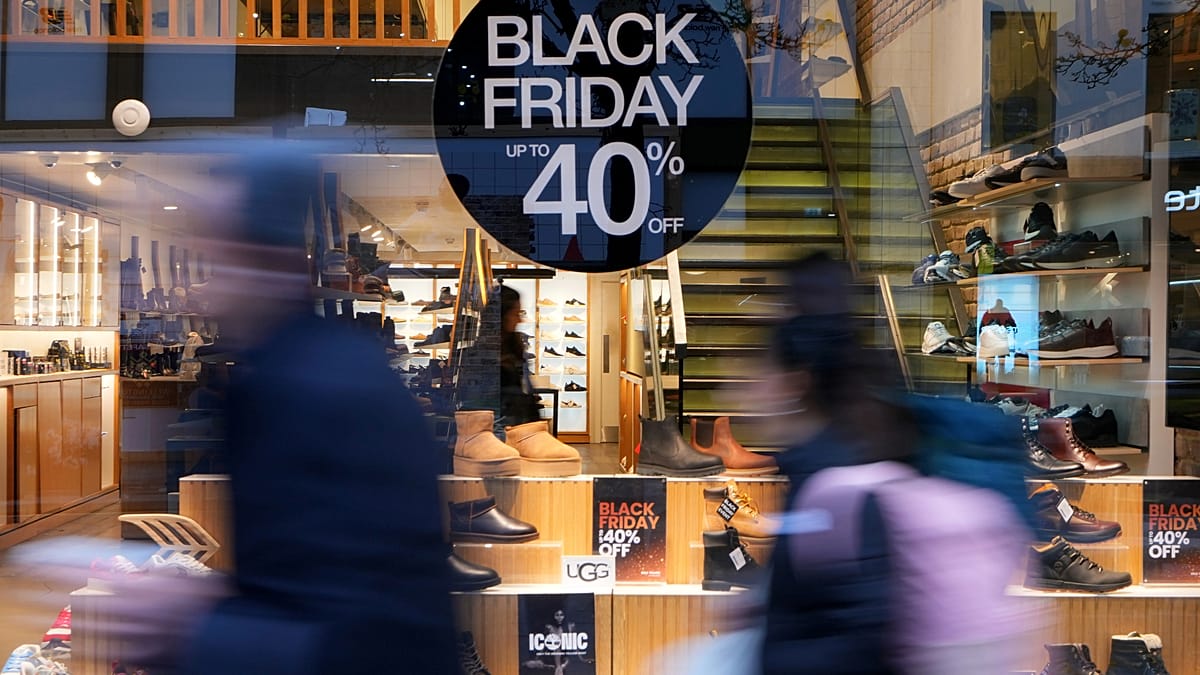
Black Friday, now a fixture in Portugal's retail calendar, officially falls on 27 November, but the promotional push begins weeks earlier. From the start of the month, retailers across the country roll out discounts and campaigns, hoping to capture early Christmas spending. Yet the Portuguese Consumer Protection Association (DECO) is cautioning shoppers that not every deal is what it seems.
In a review conducted on 2 and 3 November, DECO analysts examined online offerings from four major chains—Auchan, El Corte Inglés, Euronics, and FNAC—and found multiple breaches of Portugal's promotions law, which governs how price reductions must be presented. The rules are straightforward: a discount must be calculated from the lowest price charged in the 30 days preceding the promotion. According to Nuno Pais de Figueiredo, DECO's spokesperson, "the rules are clear and say that the same shop has to apply the discount to the lowest price of the last 30 consecutive days before the start of the price reduction."
The association's findings reveal that some retailers did not follow this rule. For instance, a pair of headphones at FNAC was advertised at €249.99 as part of a Black Friday campaign, yet between 12 and 18 October the same product sold for €199.99—€50 less than the "discounted" price. "What often happens is that a week, 10 days before Black Friday, product prices go up," Figueiredo explained. "What actually happens is that in the final accounts the retailer is not giving any discount, it is selling at precisely the same price."
Another common infringement involves using the manufacturer's recommended retail price (PVPR) as the reference point for discounts. DECO notes that many listings show a percentage or euro amount off the PVPR, even though the retailer never actually charged that higher price. This misleads consumers into believing they are getting a bargain when the reduction is fictitious—a practice that violates the law on sales with price reductions.
Even when shoppers lack access to a product's price history, retailers are obliged to provide clear and transparent information. While stating the discount percentage is optional, the new price and the lowest previously applied price must be displayed prominently. DECO stresses that consumers who spot irregularities should not stay silent. "He or she can and should" complain, Figueiredo said, whether through the in-store Complaints Book, a formal complaint to DECO PROteste, or by contacting ASAE, Portugal's food and economic safety authority.
Why the tricks persist
DECO's annual checks have repeatedly uncovered such practices, and the association believes the root cause is weak deterrence. "The fine is not a deterrent and this is the problem most of the time," Figueiredo said. "It is common and has not decreased, not by a long shot, because again, the amount companies have to pay is not sufficiently dissuasive." The irregularities span multiple product categories, from electronics to household goods, and appear in both physical and online stores.
For consumers, the best defence is preparation. DECO advises shoppers to research products thoroughly before the sales begin, using tools like its online price comparison service to track historical prices. "In this specific case of Black Friday, avoiding impulse buys and being wary of offers that seem too good to be true ends up helping people to make the best purchase," Figueiredo said, adding that genuine bargains do exist. "If you know what you are going to buy, and have clearly decided what you want, you will get good deals."
The phenomenon is not unique to Portugal. Black Friday, which originated in the United States, has spread across Europe, and in many countries it has expanded from a single day into a month-long event. In Portugal, shoppers now encounter Black Week, Cyber Monday, and a cascade of early November promotions. The same regulatory issues have been flagged elsewhere, but DECO's findings highlight how easily consumers can be misled when prices are manipulated in the run-up to the big day.
As the discount season intensifies, DECO's message is simple: be sceptical. "Be suspicious first and look closely afterwards," Figueiredo advised. "There are situations where we look at the prices and think: 'how do these people manage to make money, they're almost giving things away'. So you need to be careful." The association's advice echoes an old Portuguese saying: when the handout is too generous, the poor man grows suspicious.
For those planning to shop, the key is to know the product's value and to compare prices across retailers. While the lure of a "super, mega, hyper promotion" can be strong, an impulse purchase may lead to disappointment. DECO's spokesperson concluded: "Everything depends on how people behave. By making an impulse purchase, the consumer risks falling for the trick behind those so-called 'super, mega, hyper promotions'."