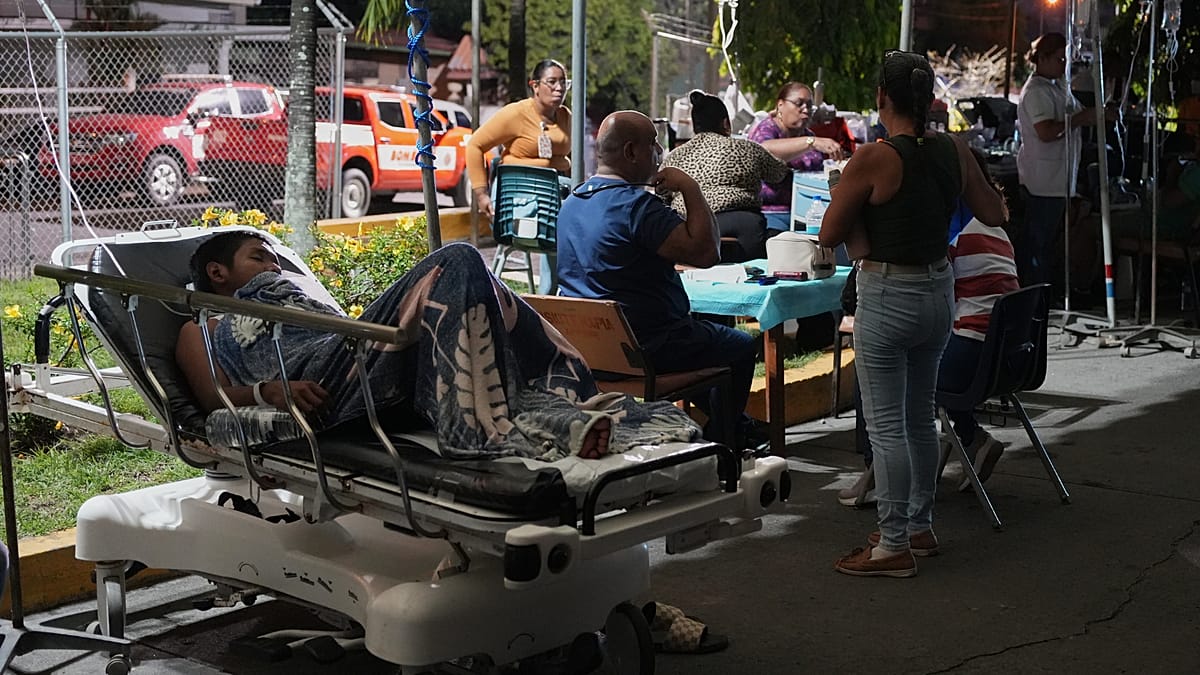
A powerful earthquake measuring 7.7 on the Richter scale struck Panama on [date], sending residents into the streets as buildings swayed and a historic cathedral collapsed. The quake, followed by a 6.6 aftershock and numerous tremors, triggered tsunami warnings along the country's coastlines, though no casualties have been reported so far.
Widespread damage and evacuations
The epicenter was located [specific location if known, otherwise: off the Pacific coast], and the shaking was felt across the isthmus, from Panama City to the border with Costa Rica. In the capital, glass facades of office towers cracked, and debris littered the streets. The most dramatic damage occurred in the colonial district of Casco Viejo, where the Catedral Metropolitana partially collapsed, its bell tower crumbling into the plaza below. Emergency services cordoned off the area as onlookers watched in disbelief.
Authorities ordered evacuations of coastal communities as a precaution against potential tsunami waves. In the beach town of Pedasí, residents and tourists moved to higher ground, while the national emergency management agency (SINAPROC) activated its response protocols. The Pacific Tsunami Warning Center initially issued a warning for Panama, Costa Rica, and Colombia, but later downgraded it to an advisory as sea levels remained stable.
Despite the scale of the event, the death toll remains at zero, a fact that officials attribute to improved building codes and rapid public response. "We are relieved but remain vigilant," said the director of SINAPROC in a press briefing. "Aftershocks are expected, and we urge everyone to stay away from damaged structures."
Regional and international response
The quake has drawn attention across the region, with neighboring countries offering assistance. In Europe, solidarity has been expressed from Brussels, where EU foreign policy chief Josep Borrell issued a statement of support, noting that the bloc stands ready to provide humanitarian aid if requested. This comes as the EU has been strengthening its disaster response capabilities in the wake of recent crises.
Panama's location along the Pacific Ring of Fire makes it prone to seismic activity, but a quake of this magnitude is rare. The last comparable event occurred in 1991, when a 7.6 tremor struck the Bocas del Toro region, causing significant damage. This time, modern construction standards appear to have mitigated the worst effects, though older structures like the cathedral remain vulnerable.
As aftershocks continue, engineers are assessing the integrity of bridges, dams, and the Panama Canal, a critical artery for global trade. The canal authority reported no major disruptions, but inspections are ongoing. Any prolonged closure would have ripple effects on shipping schedules worldwide, a concern that resonates in European ports from Rotterdam to Hamburg.
For now, Panamanians are counting their blessings. "We have been lucky," said María Fernanda, a resident of Panama City, as she surveyed the cracked pavement outside her apartment. "But the fear is real. Every tremor makes your heart stop."
The coming days will be crucial as rescue teams search for anyone trapped in the rubble and scientists monitor seismic activity. The international community, including European nations with strong ties to Panama, is watching closely, ready to assist in recovery efforts.



