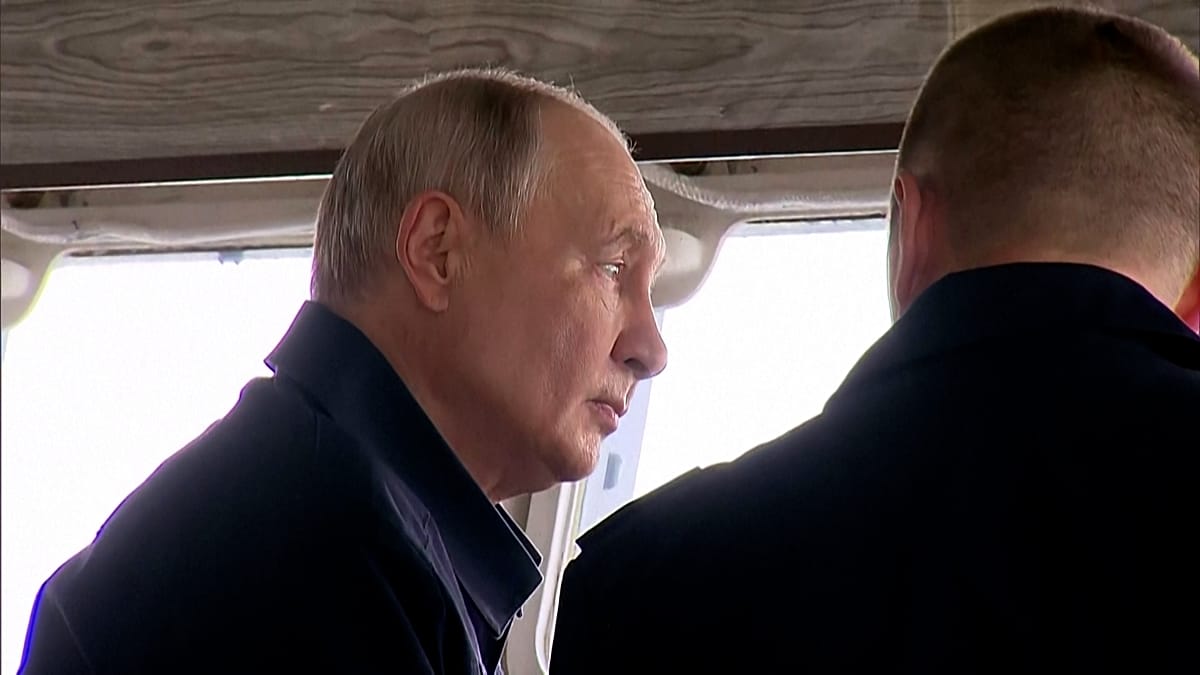
Russian President Vladimir Putin watched naval exercises off Sakhalin Island on Thursday before flying to the disputed Kuril Islands, a move that drew an immediate and sharp protest from Japan. The drills, involving ships and aircraft of Russia's Pacific Fleet, took place in the Sea of Okhotsk, a strategic waterway that Moscow considers vital for its submarine-based nuclear deterrent.
The visit to the Kuril chain—known as the Northern Territories in Japan—was Putin's first since 2019. The islands have been under Russian control since the end of the Second World War, but Japan continues to claim the southernmost four. The dispute has prevented the two countries from signing a formal peace treaty.
Tokyo's response
Japan's government reacted swiftly. Chief Cabinet Secretary Yoshimasa Hayashi told reporters that the visit was "extremely regrettable" and ran counter to Japan's position on the islands. "We strongly protest against this," he said, adding that Tokyo would continue to pursue a resolution through dialogue.
The timing of the visit is sensitive. It comes as Russia deepens its military cooperation with North Korea, and as Moscow's war in Ukraine continues to reshape security dynamics across Europe. For Brussels and other European capitals, the Kuril dispute is a reminder that Russia's revisionist ambitions extend beyond the European continent.
Putin's presence in the Far East also underscores the Kremlin's efforts to project power in the Asia-Pacific, even as its forces remain bogged down in Ukraine. The naval drills off Sakhalin included anti-submarine exercises and simulated strikes against enemy surface groups, according to Russian state media.
European observers note that the Kuril issue is not merely a bilateral matter. The islands sit near key shipping lanes that connect the Pacific to the Arctic, and Russia has been fortifying its military presence there in recent years. This has drawn attention from NATO allies, particularly as Russian airspace violations over Poland and Romania have heightened concerns about Moscow's assertiveness.
Japan has sought support from the United States and other partners in its territorial dispute. Washington has repeatedly affirmed that the 1951 San Francisco Peace Treaty, under which Japan renounced claims to the Kurils, does not apply to the Northern Territories. However, the Biden administration has been cautious not to inflame tensions with Moscow.
For the European Union, the Kuril dispute is a test of solidarity with Japan, a like-minded democracy and a key partner in the Indo-Pacific. The bloc has imposed sanctions on Russia over its invasion of Ukraine, and some member states, including France and Germany, have expressed support for Japan's position in the past.
Putin's visit also comes amid a broader pattern of Russian military activity near allied borders. In recent weeks, Ukraine has struck Novorossiysk, challenging Russia's Black Sea posture, while overnight drone exchanges have killed civilians on both sides. These events highlight the Kremlin's willingness to escalate in multiple theaters.
Analysts say the Kuril visit is partly symbolic, aimed at demonstrating that Russia remains a Pacific power despite its European entanglements. But it also carries practical implications. Moscow has been developing military infrastructure on the islands, including new barracks and air defense systems, which could complicate any future diplomatic settlement.
Japan's protest may have limited immediate effect, but it keeps the issue alive in international forums. Tokyo has repeatedly raised the dispute at the United Nations and in bilateral talks with Russian officials. The question is whether Putin's latest gesture will harden Japan's stance or push it toward a more pragmatic approach.
For Europe, the episode serves as a reminder that Russia's challenges to the international order are not confined to the Atlantic. As the EU crafts its new security strategy, it will need to consider how to support partners like Japan without escalating a confrontation with Moscow. The Kuril Islands may be thousands of kilometers from Brussels, but their status resonates in European chancelleries.