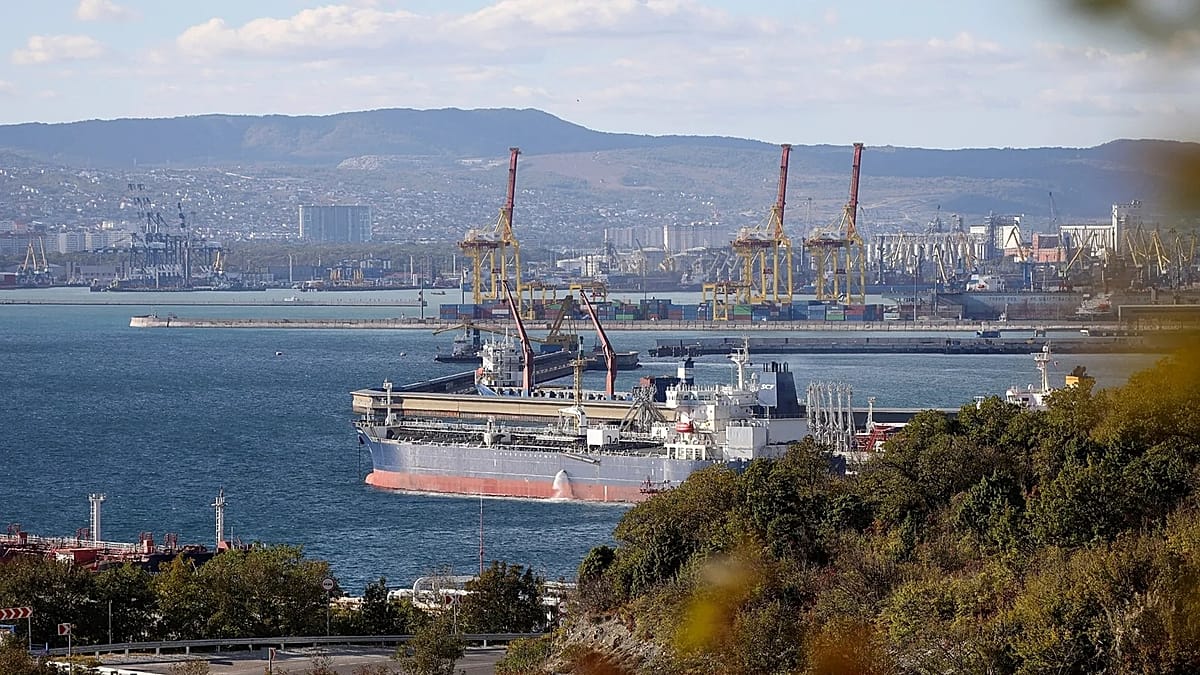
Ukraine has carried out a significant strike on Novorossiysk, the Russian port that has become Moscow's principal naval hub on the Black Sea after sustained Ukrainian attacks forced much of its fleet to abandon occupied Crimea. The operation, confirmed by President Volodymyr Zelenskyy, signals that Kyiv can now threaten Russian military infrastructure far beyond the frontline, challenging the assumption that shifting vessels from Crimea would keep them safe.
In a statement, Zelenskyy described the attack as a “unique operation” and said strikes on the designated targets had been confirmed. He offered few details but said Ukraine had used Palianytsia jet-powered drones, Neptune missiles and unmanned naval systems to target air-defence positions, piers and port infrastructure. “The occupation fleet and all the infrastructure supporting it will not be safe as long as Russian aggression continues,” he said. He also posted a video appearing to show Russian air-defence activity over Novorossiysk overnight.
Novorossiysk lies more than 300 kilometres from the frontline, making the strike a notable demonstration of Ukraine's long-range capability. The port emerged as Russia's principal Black Sea naval base after Moscow relocated much of its fleet from Sevastopol in Crimea, a move intended to place the ships beyond the reach of Ukrainian weapons. Kyiv's latest operation suggests that distance offers only limited protection.
How Novorossiysk became Russia's last Black Sea sanctuary
For years, Sevastopol was the home port of Russia's Black Sea Fleet. But Ukrainian missile and maritime-drone operations made the Crimean port progressively more dangerous, damaging warships and infrastructure and limiting Russia's ability to operate in the western Black Sea. Since 2023, Russian naval assets have been moved eastwards to Novorossiysk and other mainland ports.
The redeployment was meant to create a secure rear area for the fleet. By striking Novorossiysk, Kyiv is seeking to demonstrate that no such sanctuary exists anywhere in the Black Sea. The port is not only a naval base but also a major commercial and energy-export hub, handling substantial cargo traffic, Russian crude and petroleum products alongside military activity.
Russian authorities did not provide a full account of any military damage, although local reports described explosions and air-defence activity in the Novorossiysk area. The lack of official confirmation is typical of Moscow's handling of attacks on its own territory, especially those that expose vulnerabilities in its naval posture.
The strike comes amid a broader pattern of Ukrainian attacks on Russian military and logistical targets, including overnight drone exchanges that have killed civilians on both sides. It also follows warnings from Kyiv's drone chief about planned Russian missile salvos, indicating that the conflict continues to escalate far beyond the frontline.
For European observers, the attack underscores the shifting dynamics of the Black Sea region, where Ukraine has repeatedly challenged Russian naval dominance. The ability to hit Novorossiysk, a port that handles significant energy exports, also raises questions about the security of critical infrastructure that affects global markets.
Zelenskyy's reference to the “occupation fleet” reflects Kyiv's broader strategy of degrading Russia's military capabilities wherever they are stationed. As long as Russian aggression continues, he suggested, no port in the Black Sea can be considered safe.