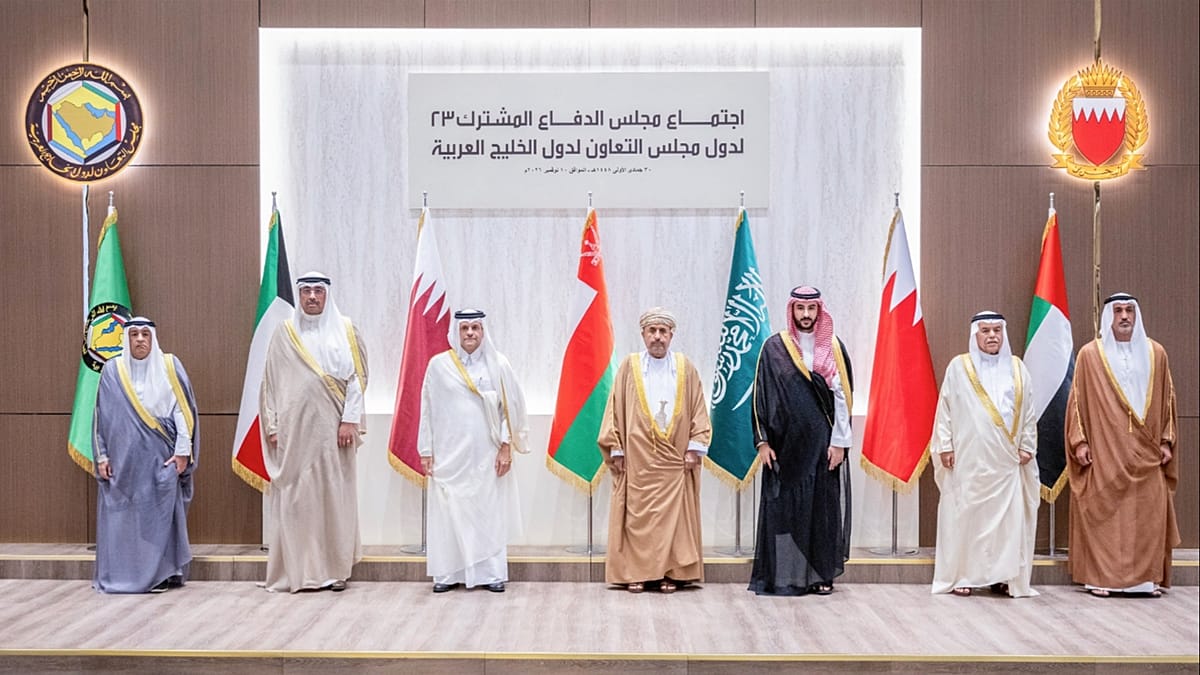
The six members of the Gulf Cooperation Council (GCC) have agreed to establish a new military command post in Kuwait and to station forces there, according to the bloc's Secretary-General, Jasem Mohamed Albudaiwi. The announcement came on Tuesday after defence ministers from Bahrain, Kuwait, Oman, Qatar, Saudi Arabia and the United Arab Emirates convened in Manama, Bahrain's capital.
Albudaiwi did not specify when the post would become operational, how many troops would be deployed, or what their precise duties would be. The decision marks a further step in the GCC's efforts to deepen military integration, which has gained urgency in light of recent regional hostilities.
Part of a unified command
The new post will fall under the GCC's Unified Military Command, a structure established in 2013 to coordinate joint operations among the six member states. Its main headquarters opened in Riyadh in 2021, and the Kuwaiti facility is expected to serve as a forward operating location. Kuwait's strategic position at the northern end of the Gulf, bordering Iraq and Saudi Arabia and facing Iran across the water, makes it a logical site for such a deployment.
The decision comes just hours after the Saudi-led coalition in Yemen reported shooting down two missiles fired by Houthi forces towards Riyadh. The coalition also said it intercepted a ballistic missile aimed at southern Saudi Arabia and downed a drone over the country's Eastern Province. Albudaiwi condemned the Houthi attacks and noted that Iranian strikes had damaged civilian infrastructure in Gulf countries.
Tehran has repeatedly launched missiles and drones at Gulf states since the United States and Israel began their offensive against Iran on 28 February, an escalation that has drawn the region into a broader conflict. The Gulf states, while not directly participating in the strikes, have found themselves in the crossfire, prompting renewed calls for collective defence.
Gulf defence ministers have previously agreed to enhance intelligence sharing and accelerate work on a joint missile warning system. Those commitments were reiterated at the GCC summit in Jeddah in April, where leaders stressed the need for a more cohesive military posture.
The move to station forces in Kuwait is likely to be watched closely by European capitals, which have their own security concerns in the region. The European Union has been grappling with military readiness goals for 2030 that are under threat despite record spending, and the Gulf's security dynamics have direct implications for energy supplies and maritime routes that Europe depends on.
Analysts note that the GCC's military integration remains a work in progress. The Unified Military Command has yet to conduct large-scale joint exercises, and questions remain about command and control arrangements. But the decision to place forces in Kuwait signals a willingness to move from planning to deployment, even if the details are still being worked out.
For now, the announcement is a symbolic but concrete step towards a more unified Gulf defence posture. Whether it will translate into effective deterrence against Iranian or Houthi attacks remains to be seen, but it underscores the seriousness with which the Gulf states view the current threat environment.