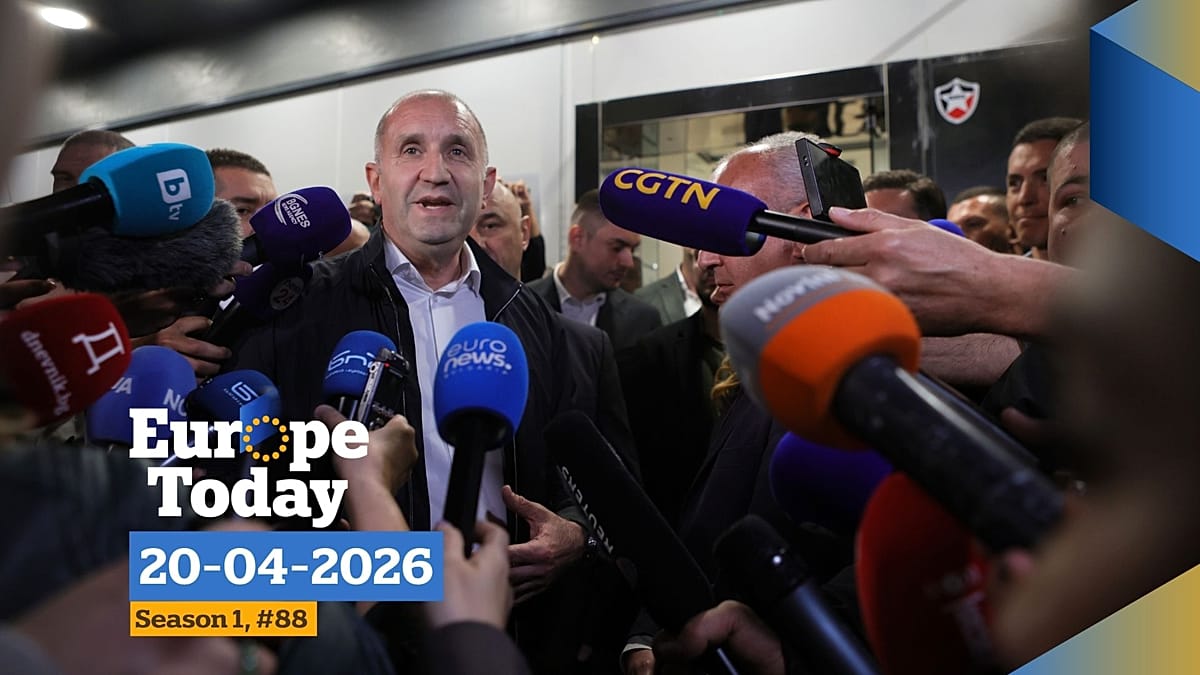
In a significant political development for the European Union's eastern flank, Bulgaria's pro-Russia president Rumen Radev has won re-election, according to reports from Sofia. The result underscores the persistent influence of Moscow-friendly sentiment in parts of the continent, even as the EU grapples with its response to the war in Ukraine.
Radev, a former air force pilot, has consistently advocated for a more conciliatory approach toward Russia, often clashing with the pro-Western government in Sofia. His victory comes at a time when the EU is seeking to maintain unity on sanctions and financial support for Kyiv.
Orbán's Shift on Ukraine Loan
In parallel, Hungarian Prime Minister Viktor Orbán has hinted at lifting his veto on the EU's €90 billion loan package for Ukraine, a move that could unlock crucial funding for the war-torn country. Orbán, who has been the bloc's most vocal critic of sanctions against Russia, appears to be softening his stance amid mounting pressure from Brussels and other member states.
Euronews correspondent Sándor Zsíros reports that Orbán's change of heart may be linked to recent developments, including the restart of the Druzhba pipeline, which supplies Russian oil to Hungary. The pipeline's resumption has been seen as a potential bargaining chip in negotiations over the Ukraine loan.
Analysts caution, however, that Orbán's signals should not be taken as a definitive commitment. “Hungary has a history of using vetoes to extract concessions from the EU,” said Martin Vladimirov, director of the Centre for the Study of Democracy in Sofia. “The question is whether this is a genuine shift or another tactical maneuver.”
If Orbán does lift the veto, it would mark a major breakthrough for the EU, which has been struggling to finalize the loan since last year. The funds are intended to help Ukraine stabilize its economy and finance essential services as the war continues.
Lessons from Poland
Jakub Janas, a political analyst, draws parallels between Hungary's current situation and Poland's recent political transformation. “Poland’s shift from a nationalist government to a more pro-European coalition under Donald Tusk shows that change is possible, but it requires sustained pressure from Brussels and civil society,” Janas explains. “Hungary may eventually follow a similar path, but Orbán’s grip on power remains strong.”
The EU has also been exploring alternative mechanisms to bypass Hungary's veto, including using the European Peace Facility and bilateral agreements. However, a unified approach remains the preferred option for most member states.
Broader European Context
Bulgaria's election and Hungary's stance on Ukraine are part of a wider pattern of political fragmentation in Europe. While countries like Estonia and Poland have taken a hard line against Russia, others, including Bulgaria and Hungary, have maintained more ambiguous positions.
In a related development, Spanish Prime Minister Pedro Sánchez is hosting the Global Progressive Mobilisation meeting in Barcelona this weekend, aiming to rally center-left forces across Europe. The meeting is expected to discuss strategies for countering the rise of nationalist and populist movements.
Meanwhile, the EU continues to grapple with the fallout from the war in Ukraine, including energy security and defense adaptation. As Ukraine's drone innovation exposes Europe's slow defence adaptation, member states are under pressure to accelerate military modernization.
For now, the focus remains on the twin challenges of maintaining unity on Russia policy and ensuring financial support for Ukraine. The outcomes in Sofia and Budapest will be closely watched in Brussels and Kyiv alike.