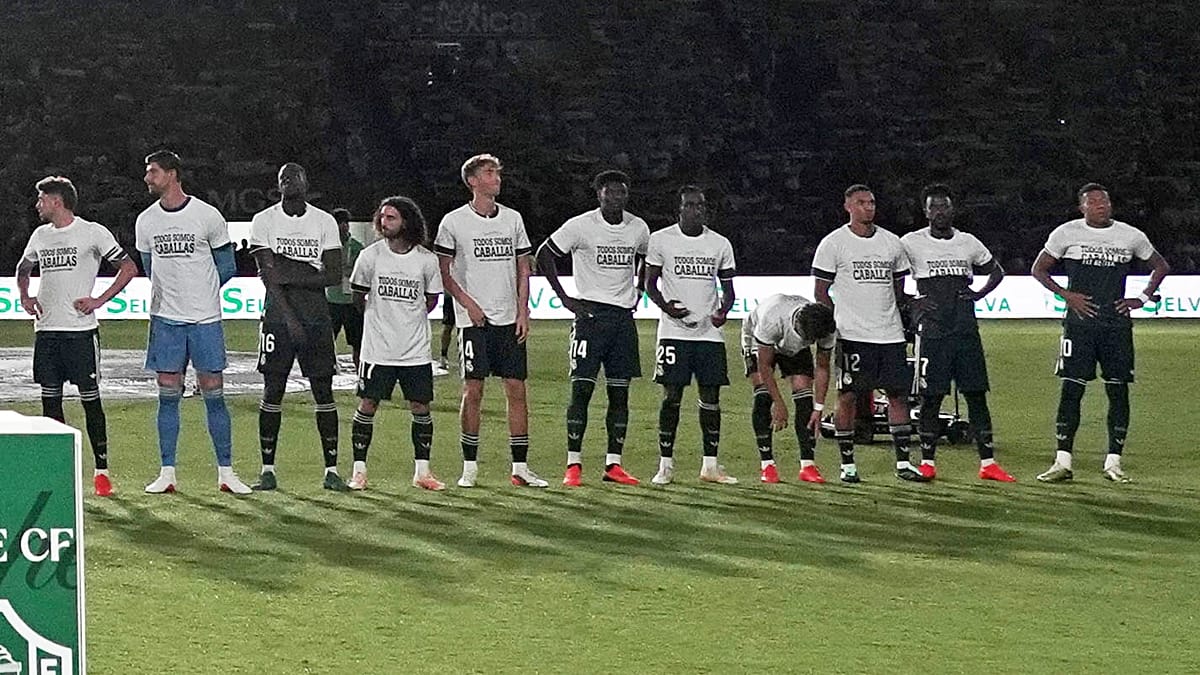
Three of Real Madrid's most prominent players have been publicly rebuked for the way they wore a solidarity shirt in support of Ceuta, the Spanish autonomous city on the North African coast that is currently grappling with a surge in migrant arrivals.
Kylian Mbappé, Vinícius Júnior and Ibrahima Konaté took to the pitch before Tuesday's 3-2 win over Elche with the commemorative T-shirt's sleeves rolled up, obscuring the printed slogan “We are all from Ceuta”. Their teammates wore the shirt in the conventional manner, leaving the message fully visible.
Javier Tebas, the president of La Liga, did not mince words. “We saw three players who decided not to put it on. Wearing it halfway is the same as not wearing it at all... it's bad, very bad,” he told reporters on Wednesday. Tebas stressed that the initiative had come from a group of business leaders in the Valencian Community, not from the league itself, and insisted it was “not a political act of any kind”.
A gesture that resonated beyond the pitch
The shirts were worn by several La Liga clubs over the past week, though only those playing against teams from the Valencian Community took part. Villarreal and Real Betis wore them on Monday, and Levante did so before their Sunday match against Barcelona, which declined to participate.
For supporters in Ceuta, the gesture carried deep meaning. Miguel Ángel Montaño, president of the local Real Madrid supporters' club, told Spanish media: “We were really excited to see the players wearing the T-shirts because we need support, but we were left puzzled when we saw that these three players had covered up the message.”
The controversy unfolds against a backdrop of acute social tension in Ceuta. On 30 and 31 July, tens of thousands of migrants crossed into the city from Morocco. Most returned within hours, but several thousand remain, camping on beaches and sleeping rough in the streets. Local residents have staged repeated protests, accusing Madrid of abandoning a territory overwhelmed by a humanitarian emergency.
The episode has also reignited a broader debate about migration policy in the EU, with some MEPs calling for a rethink of asylum rules. The rift in the European Parliament's centrist alliance over Ceuta shows how divisive the issue has become at the continental level.
One player who did not shy away from the gesture was Abde Ezzalzouli, a Real Betis winger of Moroccan origin. After facing criticism for wearing the shirt, he took to Instagram on Tuesday to clarify his position. “I want to make one thing clear: at no point was the T-shirt with a message aimed at the inhabitants of Ceuta used for a political purpose or out of contempt for my people, the Moroccan people,” he wrote. He described the act as an expression of social support for the city's residents, “regardless of their nationality”.
The incident highlights the delicate balance footballers must strike when engaging with politically charged symbols. While the message itself was framed as humanitarian, the context of a migration crisis and ongoing protests in Ceuta made it impossible to separate from politics. The historical and strategic reasons why Spain's North African enclaves remain Spanish add another layer of complexity to any public display of solidarity.
For now, the focus remains on Ceuta's immediate needs. The city's authorities are struggling to provide shelter and basic services to the migrants, while local residents demand a stronger response from the central government. The EU's consideration of suspending asylum rights in the wake of the border surge has added urgency to the debate.
Whether the three Real Madrid players will respond to the criticism is unclear. Neither the club nor the players have issued a public statement. But the episode serves as a reminder that in today's Europe, even a simple T-shirt can become a lightning rod for broader political and social tensions.