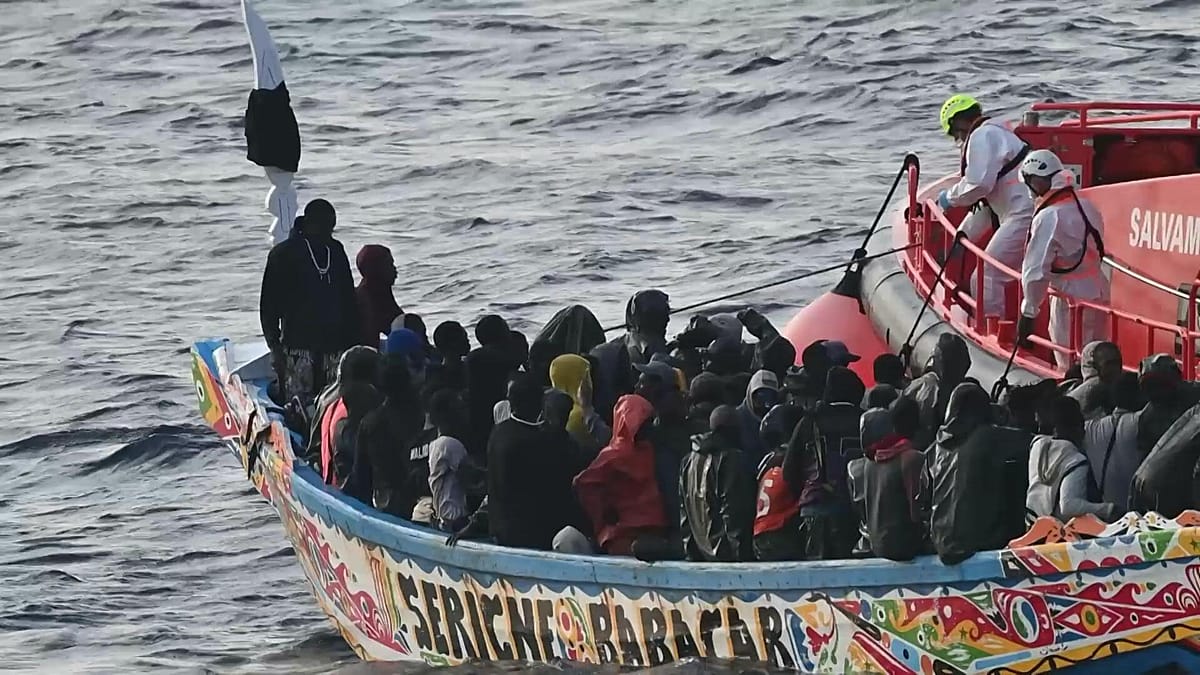
Spanish rescue teams have again been called into action off the coast of El Hierro, the smallest of the Canary Islands, as boats carrying migrants from West Africa continue to make the perilous Atlantic crossing. Salvamento Marítimo, the national maritime rescue service, escorted several vessels to the port of La Restinga, where Red Cross volunteers were on hand to assist those coming ashore.
El Hierro, home to roughly 11,400 people, has emerged as one of the primary gateways for migrants attempting to reach European soil from the African mainland. The island's location, further south and west than the other Canary Islands, makes it a frequent first landfall for boats departing from Morocco, Western Sahara, and Senegal.
The latest arrivals come just weeks after local authorities declared a state of emergency in November, following a period in which thousands of people reached the island in a short span. That influx placed severe strain on El Hierro's reception facilities, its small health centre, and other public services. The emergency declaration was intended to unlock additional resources from the regional government in Las Palmas and from Madrid.
A growing pressure point on Europe's southern border
The Canary Islands as a whole have seen record numbers of arrivals this year, with the route from West Africa becoming increasingly popular as other Mediterranean crossings are more heavily patrolled. According to data from the Spanish Interior Ministry, more than 30,000 migrants have reached the archipelago by sea in 2024, a figure that already exceeds the previous annual record set in 2006.
For many of those making the journey, the crossing is fraught with danger. Boats are often overcrowded and unseaworthy, and the Atlantic currents can be unforgiving. Humanitarian organisations have repeatedly warned that the true death toll is likely far higher than the official count, as many vessels disappear without trace.
The situation on El Hierro has become a focal point in Spain's broader political debate over immigration. The issue is expected to feature prominently in the upcoming general election campaign, with parties staking out sharply different positions. Housing, immigration, and polarization dominate Spain's election campaign, and the Canary Islands have become a symbol of the challenges facing the country's southern border.
Local officials on El Hierro have repeatedly called for more support from the central government, arguing that the island's infrastructure is not equipped to handle the sustained flow of arrivals. They have also urged the European Union to step up cooperation with West African countries to address the root causes of migration, including poverty, conflict, and the effects of climate change.
The European dimension of this issue is hard to ignore. The Canary Islands are part of Spain and therefore of the EU, making this a European border concern. The bloc has been working on a new migration and asylum pact, but implementation has been slow and contentious. Meanwhile, the pressure on frontline states like Spain, Italy, and Greece continues to grow.
In recent weeks, the Spanish government has sought to ease the strain by transferring some migrants to the mainland and to other islands, but the pace of arrivals has made it difficult to keep up. The Red Cross and other NGOs have been providing basic assistance, including food, water, and medical care, but they too are stretched thin.
For the people who reach El Hierro, the journey is not over. Many hope to continue to the Spanish mainland and then on to other European countries, but their legal status remains uncertain. The asylum system is backlogged, and many migrants face the prospect of being returned to their countries of origin under readmission agreements.
The situation on El Hierro is a reminder that migration is not a distant phenomenon but a pressing reality for many European communities. As the Atlantic crossings continue, the island's residents and authorities are left to manage the consequences, often with limited resources. The coming weeks and months will test both Spain's capacity and the EU's willingness to find a common response.



