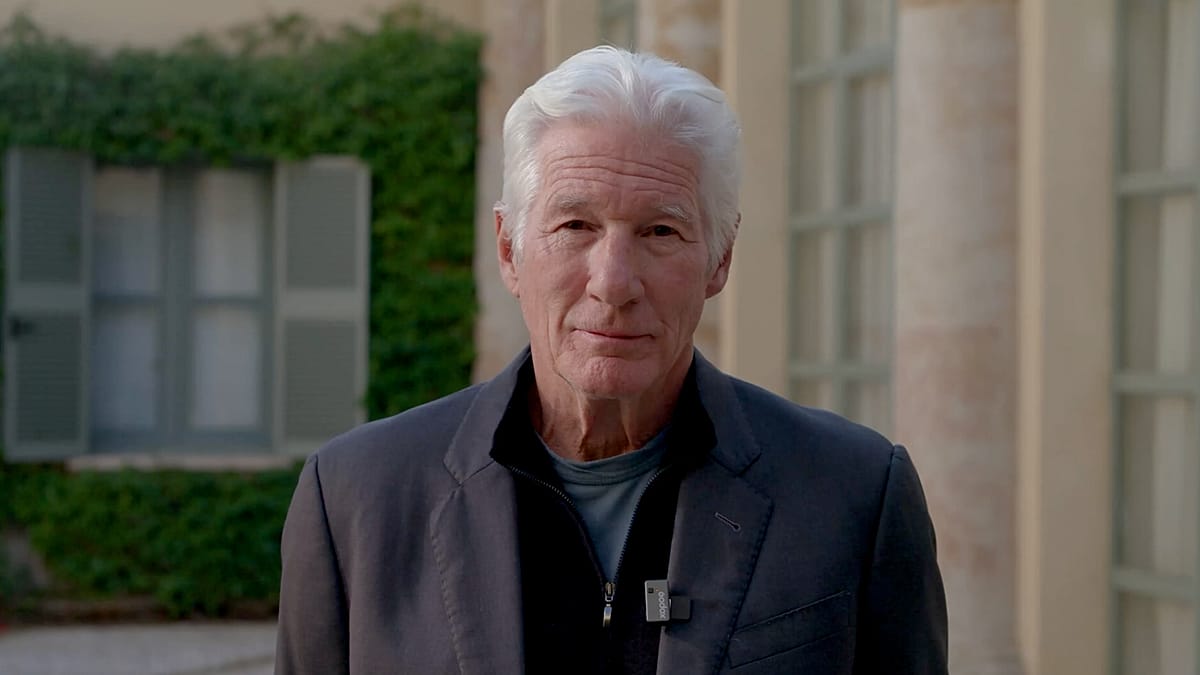
At the thirteenth session of the World Urban Forum (WUF13) in Baku, the conversation shifted from red carpets to a documentary on homelessness. The film features Latyr Thioye, a former beneficiary of HOGAR SÍ, a programme co-founded by Hollywood actor Richard Gere and his philanthropist wife, Alejandra.
In an exclusive interview, Gere explained why he champions UN-Habitat and remains personally involved with HOGAR SÍ. “My motivation for working with HOGAR SÍ stems from a personal conviction: homelessness is not inevitable – it is a social injustice that can be solved through a deep shift in understanding and approach,” he said. “My wife Alejandra and I have been working with HOGAR SÍ for over ten years and have been able to closely follow its development and progress. In 2024, we joined the organisation’s board of trustees.”
Gere first learned about the charity through his wife and emphasises that HOGAR SÍ is “rigorous and highly committed, focused on respect to human rights and dignity, and driven by evidence-based solutions.” The organisation applies the “Housing First” methodology, which prioritises providing permanent housing without preconditions—a model also used by similar groups worldwide.
Housing as a Gateway to Other Rights
“I firmly believe that housing is the gateway to all other rights,” Gere said. “Without a safe home, there is no health. No education. No stable employment. When that door closes, the cycle of exclusion becomes almost impossible to break.” The couple is determined to bring international attention to homelessness, which they consider one of the defining humanitarian challenges facing modern cities.
At WUF13, UN-Habitat screened ten minutes of their hour-long documentary under the theme “Housing the world: Safe and resilient cities and communities.” Gere’s involvement with the UN began naturally, he said, as he was already working on human rights, dignity, and social development. “I realised that the United Nations is a key forum to bring certain issues to the global stage and to influence public policy in ways that make a real difference.” He noted that “from the outset, I felt aligned with its multilateral approach and with the idea that major challenges, such as homelessness or urban inequality, can only be tackled through international cooperation and political will to change things.”
Gere highlighted UN-Habitat initiatives linked to the 2030 Agenda, where “the focus on inclusive cities has enabled the sharing of best practices and demonstrated that ending homelessness is possible when access to housing is prioritized as a starting point, rather than as a final reward.”
Baku as a Platform for Global Urban Dialogue
Gere described the forum’s location in Baku as “a highly significant opportunity. Cities are home to both the greatest social challenges and the most innovative solutions, and this forum brings together political, social and technical voices around a common goal: to create fairer, more sustainable and inclusive urban environments.” He added, “It is essential that homelessness is part of this conversation, because there can be no successful cities whilst there are people living on the streets.”
On the significance of WUF13 being held in Azerbaijan for the first time, Gere said: “The fact that the World Urban Forum is being held in this region for the first time is an important step towards a truly global and diverse perspective on urban challenges. Each context brings different realities, but also valuable lessons, and decentralizing these spaces for debate is key to avoiding single-minded perspectives.” He underlined that “it sends a clear message: human rights, housing, and social inclusion are not a regional issue, but a responsibility shared by the entire international community.”
Gere’s advocacy runs parallel to his acting career. He recalled a personal experience during the filming of Time Out of Mind, where he portrayed a homeless person. “I walked through the streets of New York without anyone recognizing me. And I felt something I had never experienced before: indifference, invisibility, isolation. That experience had a profound effect on me.”
The Gere Foundation and HOGAR SÍ continue to push for long-term housing solutions and social initiatives. As European cities grapple with rising rents and housing shortages, the message from Baku resonates: housing is a global crisis that demands cross-border solutions. For Spain, where 61% of Spaniards are unlikely to inherit property, the urgency is particularly acute.