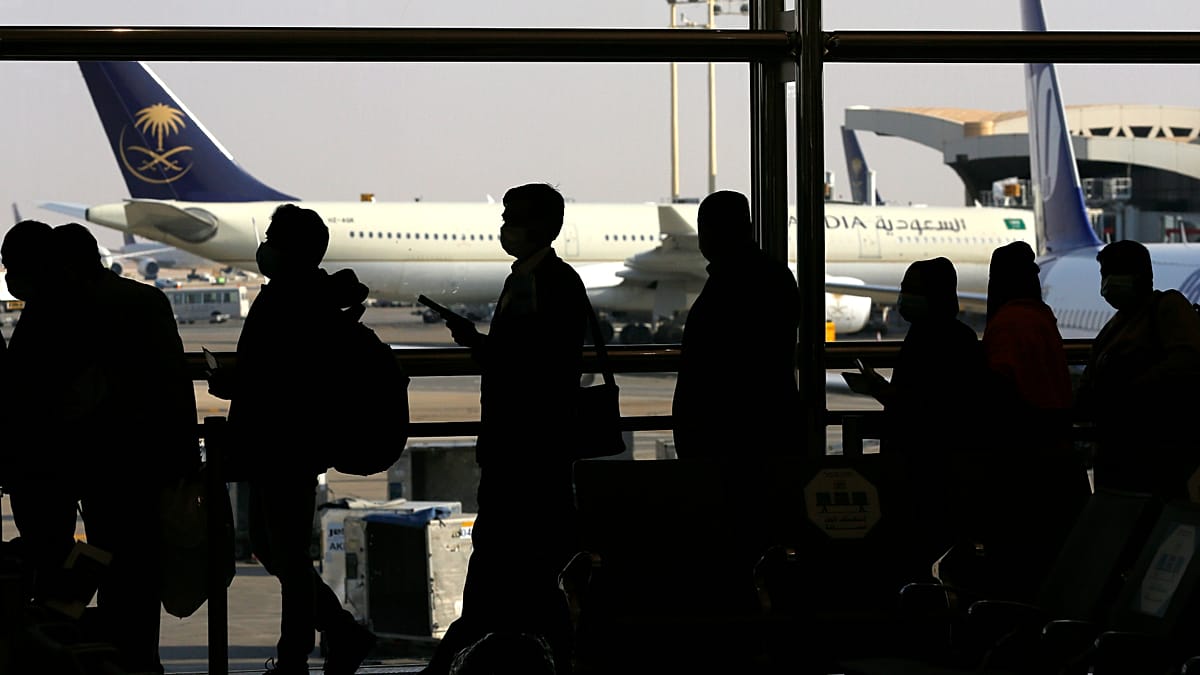
For the second time in less than a week, Riyadh's international airport came under fire on Saturday, with a diplomatic source attributing the attack to Yemen's Houthi movement. The strike, which reportedly hit the domestic terminal, left dozens wounded, many of them Saudi nationals, according to a hospital source in the capital.
"Dozens of people were injured, most of them Saudi nationals," the source said, adding that at least five of the injured required intensive care. The attack follows Thursday's Houthi-claimed missile strike on the same airport, which killed three Saudi citizens, including a pilot.
Saudi authorities had not officially confirmed the new attack or an evacuation by the time of writing, but multiple witnesses described chaos at King Khalid International Airport. One passenger waiting at gate 403 said they saw the strike hit gate 401. "I saw injured in front of my eyes. Everyone was running," they recounted. Another witness reported hearing an explosion while boarding.
The airport urged passengers to check their flight status, and flight-tracking data showed all inbound flights to Riyadh either diverted or cancelled. Kuwait Airways announced the cancellation of two flights to and from the Saudi capital, citing the "security situation" and the airport's closure. Other carriers, including Air India, FlyDubai, Lufthansa Group, and Pakistan International Airlines, had already suspended services to Saudi airports following Thursday's attack.
European airlines and governments respond
The escalation has direct implications for European aviation and diplomacy. Lufthansa Group's suspension of flights affects major hubs in Frankfurt and Munich, while the German, Spanish, and other European embassies in Riyadh issued security alerts advising their citizens to stay away from the airport. The US, Canadian, and UK missions also warned their nationals.
The Houthis have explicitly warned international airlines of consequences for continuing to operate in Saudi airspace, a threat that has already reshaped regional flight paths. European carriers, already navigating complex airspace restrictions due to conflicts in Ukraine and the Middle East, now face additional uncertainty on routes to the Gulf.
This latest incident underscores the fragility of regional security, a concern that resonates across Europe, where airports and airlines are increasingly adapting to a volatile geopolitical landscape. From innovations in airport operations to broader questions about aviation safety, the ripple effects of such attacks are felt far beyond the Arabian Peninsula.
The attack also comes amid heightened tensions in the region, with the Houthis stepping up their campaign against Saudi infrastructure. Thursday's deadly strike, which killed three people, was the first to cause fatalities in Riyadh in years. The group has vowed to continue its offensive until the Saudi-led coalition ends its intervention in Yemen.
For European observers, the situation raises concerns about the stability of Gulf airspace, a critical corridor for flights to Asia and the Middle East. The suspension of services by European carriers could disrupt travel plans for thousands of passengers, and the broader implications for regional security are being closely monitored in Brussels and other European capitals.
As the international community watches, the immediate priority remains the safety of civilians and the restoration of normal airport operations. But with the Houthis showing no sign of backing down, the prospect of further attacks looms large, keeping airlines and governments on high alert.



