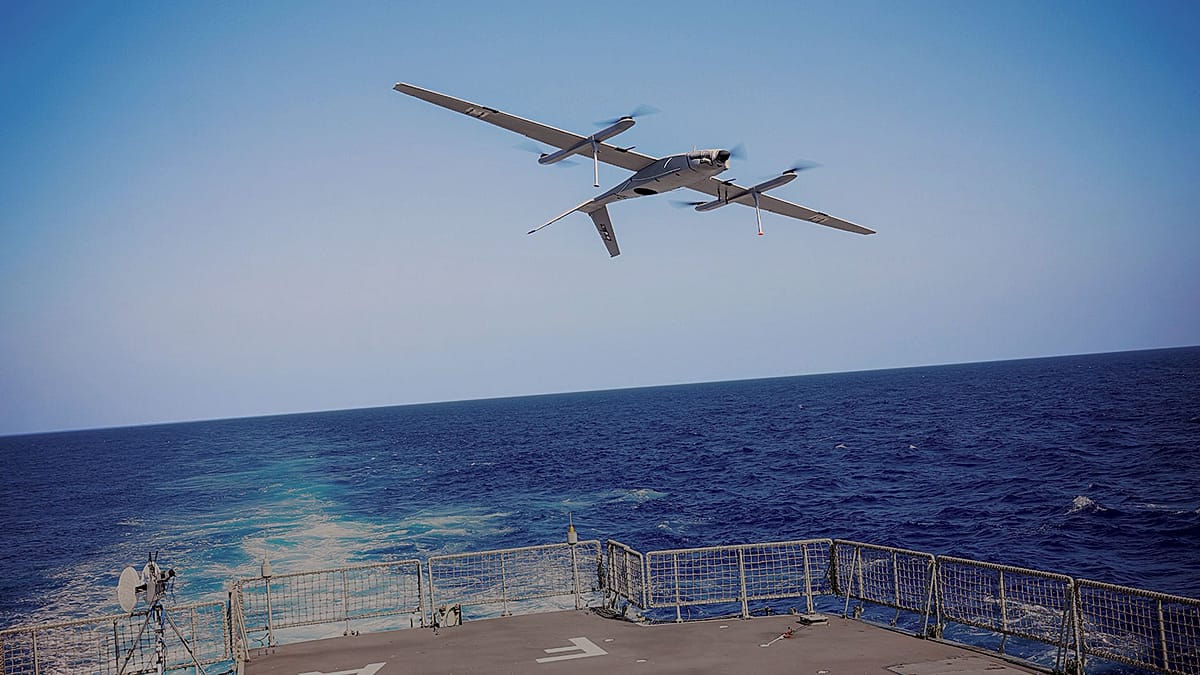
Russian forces have downed a Portuguese-made Tekever AR3 reconnaissance drone operating with the Ukrainian military, according to Russia's state news agency TASS. The interception took place in the Bryansk region, near the border with Ukraine, where a Russian anti-drone battalion claimed to have shot down the aircraft.
The battalion commander, whose unit operates the 'Lis' interceptor drone, told TASS that the encounter was unusual. 'An enemy reconnaissance drone entered our sector. We were surprised because we had never seen anything like it. The unmanned aerial vehicle had a different structure at the tail and on the wings. When we reached the crash site, we found it was a Portuguese reconnaissance drone,' he said.
The commander emphasized the strategic importance of downing such UAVs: 'It is important to shoot down reconnaissance UAVs because, firstly, they plot routes for enemy drones to fly along. Secondly, they are looking for our positions so that we can be attacked.'
A rare capture for Russian analysis
According to TASS, the Tekever AR3 came down largely intact, with only the engine damaged. The fuselage and most of the airframe remained in one piece, prompting Russian forces to hand the drone over to a research institute. Specialists there will examine its design and technical specifications, a move that reflects the novelty of the model for Russian troops.
The Tekever AR3, produced by the Portuguese company Tekever, is a compact reconnaissance drone with a wingspan of nearly four metres and a weight of just 25 kilograms. It cruises at speeds between 75 and 90 km/h and has a communications range of up to 230 kilometres. Ricardo Mendes, CEO of Tekever, described the AR3 as a 'computer with wings' in an interview with Euronews.
Founded in 2001, Tekever has become the largest exporter of drones to Ukraine. In 2025, its exports generated profits exceeding €85 million. The company's unmanned systems have also strengthened trade ties between Portugal and Ukraine, with Ukraine climbing from 75th to 36th place in Portugal's national export rankings in just six years.
The Russian military described the interception as 'challenging'. After radar detection, the 'Lis' interceptor pursued the AR3 for nearly 30 minutes. The Portuguese drone was circling at an altitude of about 2.5 kilometres, at a speed of 90–100 km/h, making it difficult for the Russian drone to close in. On the final approach, the 'Lis' battery was running low, but the crew managed to catch and destroy the target.
The 'Lis' is a small fixed-wing drone developed in Moscow, equipped with a warhead of about one kilogram and an automatic target acquisition system. Once it locks onto a target, it detonates its explosive charge, destroying the enemy UAV.
The incident comes amid ongoing Ukrainian drone operations that have targeted Russian infrastructure, including e-commerce warehouses and military sites. It also highlights the increasing reliance on European-made drones by Ukraine, a trend that has drawn attention from Russian forces seeking to study and counter them.
For Portugal, the downing of the AR3 underscores the growing role of its defense industry in the conflict. Tekever's drones have been used extensively for reconnaissance, and their loss is a reminder of the risks faced by such systems. The company's success in exporting to Ukraine has made it a key player in Europe's defense sector, with implications for broader EU security policies.
As the war in Ukraine continues, the capture and study of Western-made drones by Russian forces is likely to become more common. The Tekever AR3, with its advanced design and capabilities, offers Russian engineers a valuable opportunity to understand the technology that has been aiding Ukrainian operations.