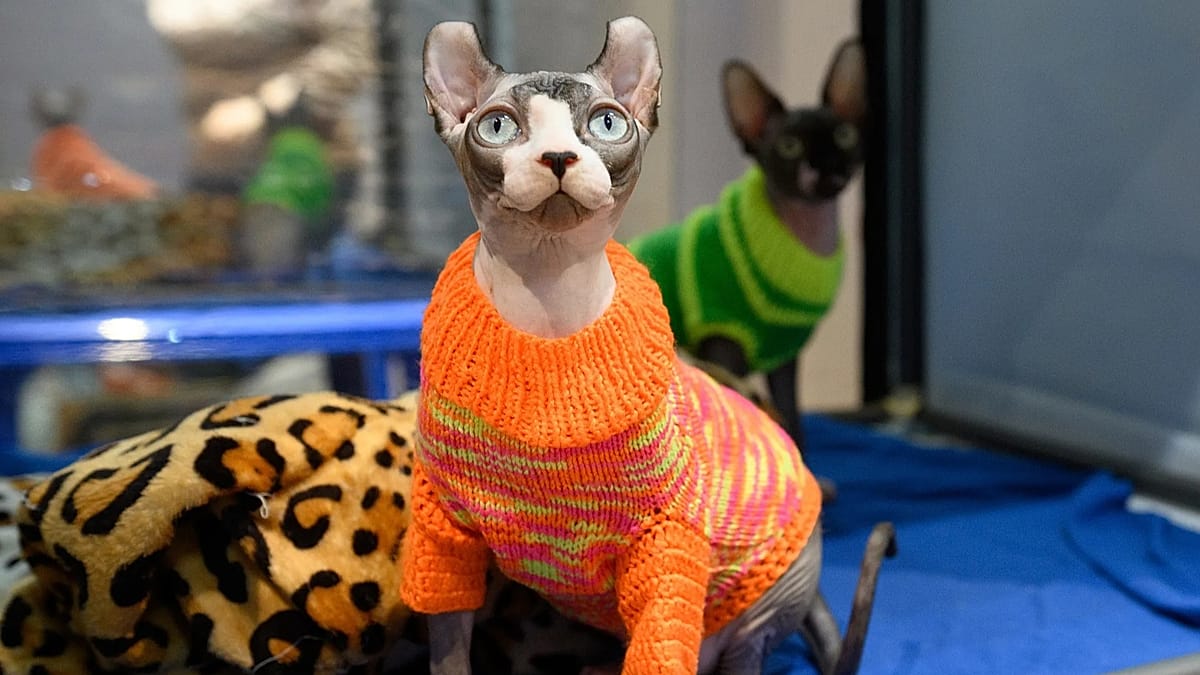
Russia presents a striking feline paradox: it leads the world in cat ownership, with nearly 59% of households keeping at least one cat, yet an estimated 2.8 million stray cats roam its streets. That number has climbed sharply since the 2022 mobilisation order, which forced thousands of pet owners to flee the country or report for military duty amid the ongoing war in Ukraine.
According to a 2024–2026 study by the analytics platform Seasia Stats, Russia ranks first globally for cats as pets. Romania follows in Europe at 48%, with Poland at 41%, Latvia at 37%, and Hungary at 35%. Outside Europe, Indonesia, the Philippines, Thailand, New Zealand, and the United States also make the top ten. The findings align with a 2023 survey by insurer Ingosstrakh and the Financial University, in which 58.8% of Russian respondents identified themselves as cat owners.
The stray crisis
The stray population figures come from a separate study by the Centre for Animal Nutrition and Well-being Studies, the Nika animal charity, and research firm Ipsos. They estimate that in 2025, Russia's total stray animal population reached nearly 3.6 million, of which 2.8 million are cats and 800,000 are dogs. Of those, around 170,000 were in shelters at the time of the study, while the rest lived on the streets. Researchers say up to 98% of stray cats and dogs were once domestic pets abandoned by their owners.
Animal welfare organisations recorded a sharp increase in abandonments after Russia announced partial mobilisation in September 2022. Men who received call-up papers were either leaving the country or preparing for deployment, and in many cases could not arrange care for their animals or find shelter places. On classified advertising websites, owners threatened to have pets put down if no one took them. Shelter volunteers reported similar ultimatums from people surrendering animals in person.
The scale of the problem is immense. Russia has 819 shelters, the overwhelming majority privately run, alongside hundreds of charities and tens of thousands of volunteers. Together they care for between 170,000 and 250,000 animals — no more than 5–7% of the estimated stray population.
The popularity of cats in Eastern Europe has historical roots: before industrialised agriculture, cats served a practical function on farms, where their presence and scent deterred rodents. In Southeast Asia, researchers link rising ownership to urbanisation and the growth of a middle class.
For those following the broader impact of Russia's war, the situation is part of a wider pattern of social disruption. The crippling strikes on Ukraine's power grid and the mayor of Kyiv's warnings about the capital highlight the human cost, while the animal welfare crisis remains a lesser-known consequence.
As winter approaches, the fate of Russia's stray cats and dogs grows more precarious. Without a coordinated national strategy, the gap between the country's affection for cats and its ability to care for them seems likely to widen.