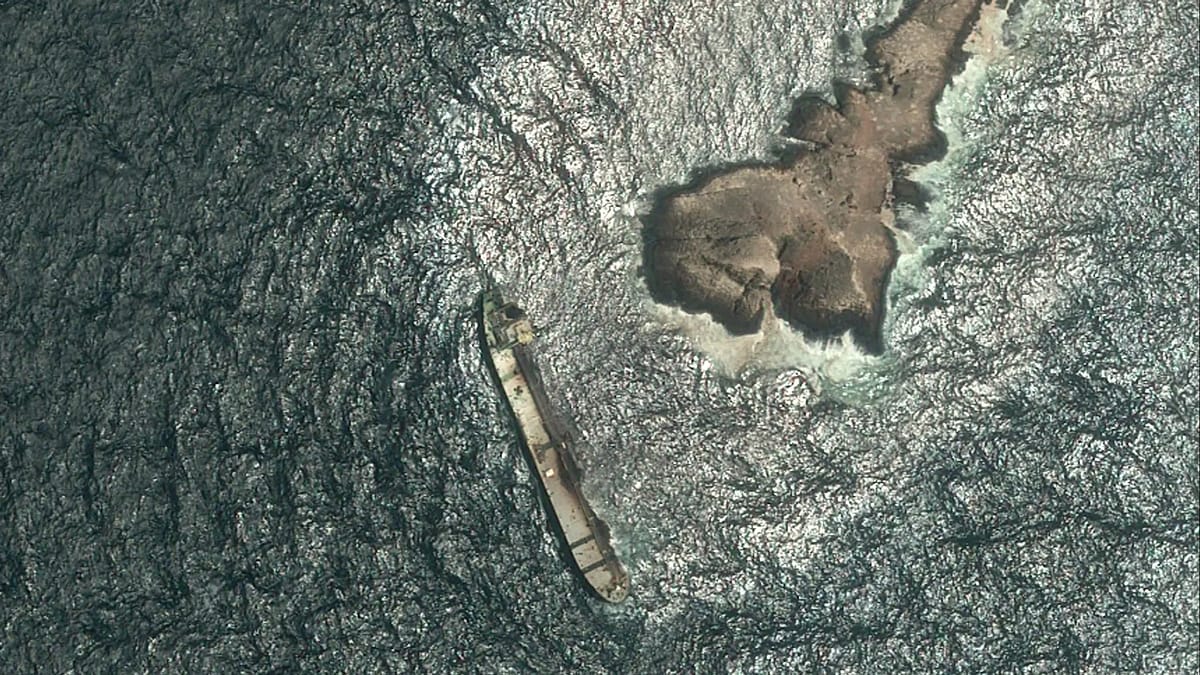
Oil leaking from a tanker grounded off the coast of Oman has now reached the sultanate's mainland, contaminating beaches north of the island where the vessel ran aground, according to Oman's Environment Authority. The agency said Wednesday that crude from the Caroline Bezengi—a sanctioned vessel believed to be part of Russia's shadow fleet—has soiled the shores of Ras Madrakah, roughly 200 kilometres north of Qabiliyah Island.
The tanker, carrying nearly one million barrels of oil, reported an explosion in June and has been leaking ever since. No party has claimed responsibility for the blast, and its cause remains undisclosed. The vessel's owners are thought to be based in Shanghai, and it has been sanctioned by both the British government and the European Union for transporting Russian crude.
Spill spreads rapidly
Environmental experts monitoring the situation say the spill has expanded quickly in recent weeks, driven by strong monsoon winds and currents. Satellite imagery shows the slick now covers more than 600 square kilometres, threatening a marine protected area around Qabiliyah Island. The authorities have also warned that the southern coasts of Masirah Island, over 300 kilometres north of the wreck, could be affected in the coming hours.
The 247-metre vessel left the Black Sea port of Novorossiysk in May, according to geospatial data from tracking company SynMax Maritime. Its route and cargo underscore the continued risks posed by Russia's shadow fleet, which operates outside international insurance and safety standards. This incident is a stark reminder of the environmental toll that such operations can exact, even far from European waters.
Oman, a sultanate on the southeastern coast of the Arabian Peninsula, has played a mediating role in regional conflicts, including the war in Iran that the United States and Israel launched on 28 February. The spill adds a new layer of complexity to the region's environmental and geopolitical challenges.
The European Union has repeatedly sought to curb Russia's use of shadow tankers, most recently with sanctions targeting Russian energy revenues and measures against individuals linked to attacks on Ukrainian cities. The Caroline Bezengi is a case in point: despite sanctions, it continued to operate, and its grounding has now caused an environmental disaster far from the conflict zone.
Local authorities are working to contain the damage, but the scale of the spill and the remote location make response efforts difficult. The Environment Authority has been monitoring the leak closely, but the full extent of the ecological impact remains unclear. Marine biologists warn that the protected area around Qabiliyah Island is home to diverse species, including sea turtles and coral reefs, which could suffer long-term harm.
The incident also raises questions about the effectiveness of international sanctions in preventing such accidents. While the EU and UK have blacklisted the vessel, enforcement at sea remains a challenge. As frozen Russian assets are channelled to Ukraine, the broader costs of Russia's shadow operations continue to mount, not only in Ukraine but across the globe.
For Oman, the spill is a test of its environmental preparedness and its ability to protect its coastline. The sultanate has historically been a careful steward of its marine resources, and the current crisis will demand a coordinated response. As the slick drifts northward, the coming days will be critical in determining the extent of the damage.