In May 2025, the European Union placed two Russian fishing companies—Norebo JSC and Murman Sea Food—on its sanctions list. The reason was not overfishing or illegal catches, but accusations that they form part of a state-sponsored surveillance network. According to Brussels, these firms have been involved in espionage missions and sabotage operations targeting critical infrastructure, including the undersea cables that carry the bulk of Europe's internet traffic.
Norway followed suit months later, blacklisting the same companies. Foreign Minister Espen Barth Eide warned that their activities could pave the way for future acts of sabotage. Norebo JSC has denied the allegations.
A year on, European Commissioner for Fisheries and Oceans Costas Kadis acknowledged the threat openly. “We are aware that Russia is involved in illegal, unreported and unregulated fishing activities, as well as espionage, mapping of critical infrastructure and sabotage activities,” he told the Financial Times in May. “This raises security concerns.”
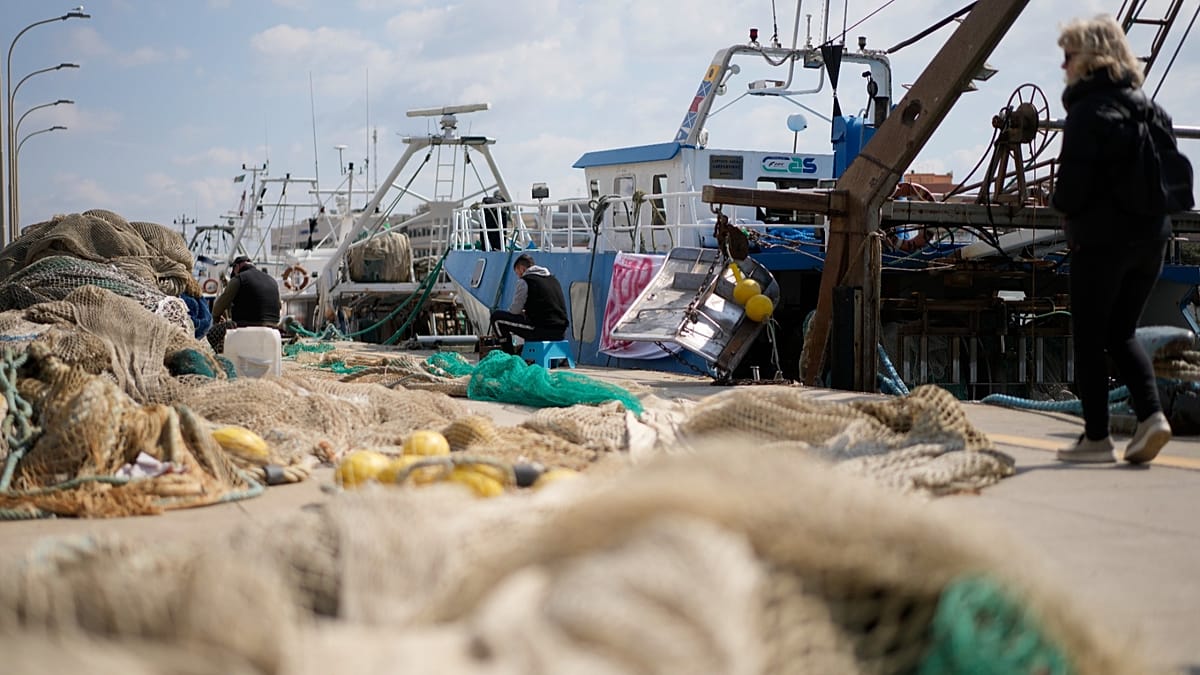
Kadis is not alone in his worry. Experts speaking to Euronews describe a growing fleet of Kremlin-linked vessels that pose as cod or crab trawlers while actually gathering intelligence or damaging subsea infrastructure. The North and Baltic Seas have seen a series of cable cuts in recent years, many attributed to such shadowy operations.
A long tradition of maritime deception
Using fishing boats as cover for espionage is hardly new. Erlend Heier, a hybrid warfare expert at the Fridtjof Nansen Institute in Norway, points out that major powers—from Moscow to Washington to Beijing—have done it for decades. “In 1940, you had German soldiers dressing as civilians on fishing vessels entering Oslo the day before the full-scale invasion. Norway did it, the United States did it, the United Kingdom did it. Most states with a naval maritime area have done something like this,” he said.
What has changed since Russia's full-scale invasion of Ukraine in 2022 is the scale and intent. Heier notes that Russian intelligence-gathering from these vessels has intensified and become more aggressive. “This is all part of the wider hybrid grey zone campaigns to essentially destabilise Norway and European societies,” he said. “The targets are now civilian critical undersea infrastructure instead of solely surveying military exercises and ports.”
NATO's senior expert on cyber and hybrid threats, James Appathurai, described these activities as “the most active threat” to Western infrastructure. He referred to a long-running Russian programme—the Russian Undersea Research Program—which he called “a euphemism for a paramilitary structure, very well-funded, that is mapping out all of our cables and our energy pipelines.”
Following a major cable-cutting incident at the end of 2025, NATO Secretary-General Mark Rutte acknowledged a “concerted campaign” of hybrid warfare in the Baltic Sea and pledged more support. “Safeguarding infrastructure is of utmost importance,” he said, citing energy pipelines and the fact that 95% of internet traffic relies on undersea cables.
‘There is no fish’
Mariia Vladymyrova, a Copenhagen-based academic who studies Russia's maritime activities, says it is hard to put a precise number on how many Russian fishing vessels are engaged in espionage in European waters. But she believes their presence is increasing. Open-source monitoring and anecdotal reports show vessels exhibiting “navigational” and “loitering” patterns—staying in one spot for days or weeks without any apparent reason.
Investigative outlets like Follow The Money have tracked these loitering events, finding that fishing boats in European waters were the most likely to circle in place, drift aimlessly, or take routes that deviated from the norm. Some of this can be explained by legitimate fishing practices; some cannot.
Vladymyrova recounted a telling example: “A Belgian officer told me once about a Chinese vessel, in which he said, ‘There is no fish. We know this 100%. No one fishes in this water, but this one vessel is standing there for two weeks.’” When the officer radioed the crew, they claimed to be fixing their nets—an activity, Vladymyrova notes, that is not typically done on the high seas.
Tracking the shadow fleet
One of the biggest challenges for European authorities is identifying these vessels. Many operate with falsified or concealed ownership structures, dubious insurance arrangements, or are re-flagged to obscure their true origins. Julian Pawlak, a hybrid warfare expert at the German Institute for International and Security Affairs, highlights this in a recent paper. The same tactics are used by the so-called shadow fleet of ageing oil tankers that help Russia circumvent EU sanctions.
As European nations step up patrols and surveillance—NATO has increased its presence in the Baltic Sea—the question remains how to deter these operations without escalating tensions. Some experts argue for stricter port controls and greater transparency in shipping registers. Others call for more robust protection of undersea infrastructure, including rapid repair capabilities and better intelligence-sharing among member states.
For now, the trawlers keep sailing, and the fish remain scarce. As one Belgian officer put it, “There is no fish.” But there is plenty of cause for concern.