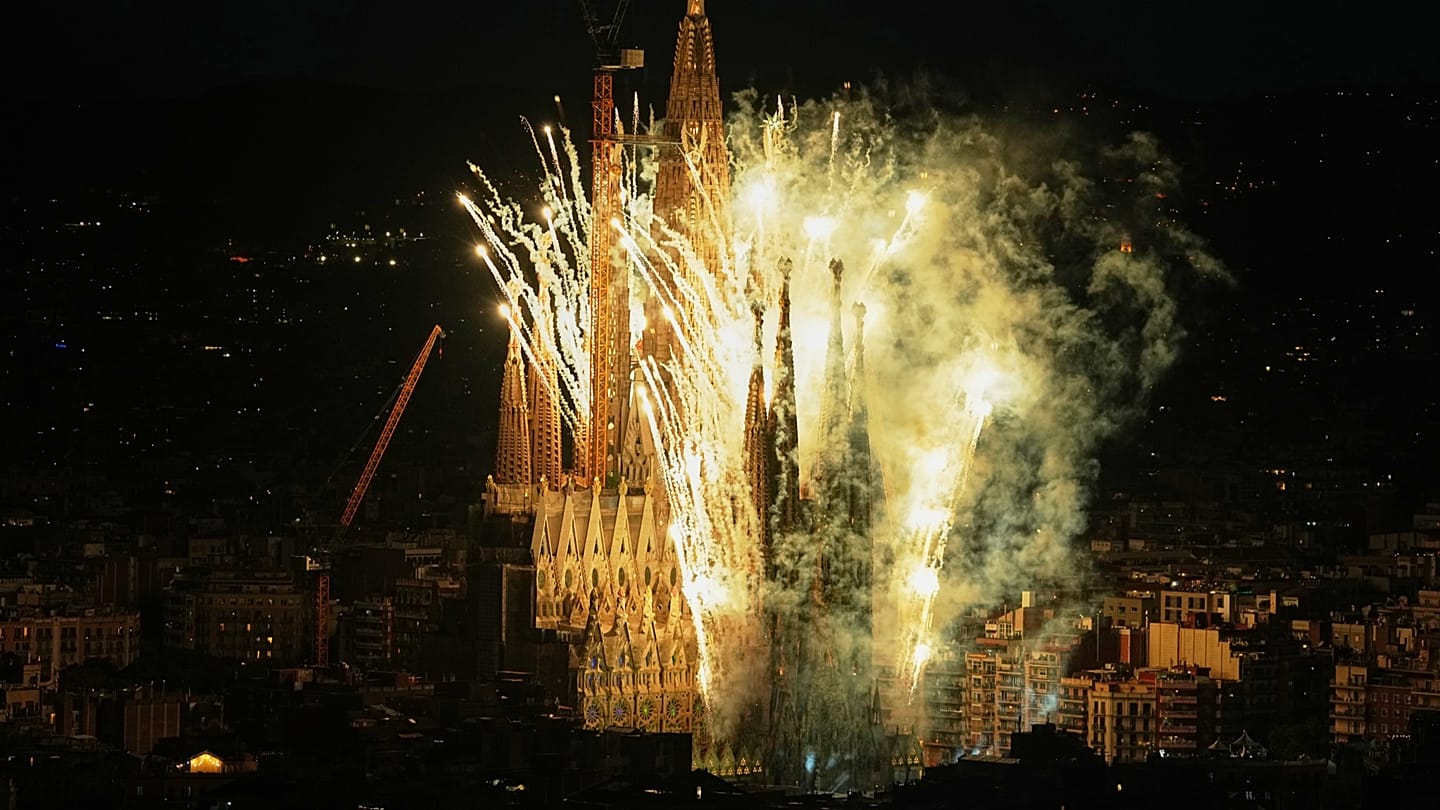
Barcelona witnessed a historic milestone on [date] as Pope Leo XIV blessed the newly completed Tower of Jesus Christ at the Sagrada Família, drawing an estimated 120,000 attendees to the basilica's surroundings. The ceremony, which culminated in a spectacular light and fireworks display, marked the end of a 144-year construction journey for the iconic structure designed by Antoni Gaudí.
The pontiff's visit to the Catalan capital included a series of events, such as a youth vigil where a human castle greeted him, and a prayer service at the city's cathedral. The blessing of the tower, now the tallest church in the world, underscores the enduring cultural and religious significance of Gaudí's masterpiece.
A Milestone in Gaudí's Vision
The Tower of Jesus Christ, rising to a height of 172.5 meters, is the centerpiece of the Sagrada Família's ambitious design. Its completion represents a key phase in the basilica's ongoing construction, which began in 1882 and is expected to finish by 2030. The tower's inauguration attracted not only local residents but also international visitors, reflecting the site's status as a UNESCO World Heritage landmark.
During the ceremony, Pope Leo XIV praised the tower as a symbol of faith and human creativity. The event also highlighted the collaboration between the Catholic Church and the city of Barcelona, which has supported the project through decades of planning and fundraising.
For those interested in the architectural details, a rare tour of Sagrada Família reveals Gaudí's hidden symbols and sacred relics, offering deeper insight into the basilica's design.
The completion of the tower comes at a time when Barcelona faces significant social challenges, including rising housing costs. According to recent data, Spaniards now spend half their salary on rent, over 70% in Madrid and Barcelona, a trend that affects many residents and visitors alike.
The Sagrada Família's construction has been a testament to perseverance, surviving wars, funding shortages, and the Spanish Civil War. Gaudí himself died in 1926, leaving behind detailed models and plans that guide the work today. A century without Gaudí has prompted Barcelona to reflect on the architect who shaped a city, emphasizing his lasting impact on Catalan identity.
The tower's inauguration also drew attention to the broader European context of architectural heritage. Across the continent, similar projects blend tradition with modernity, from Vienna's large-scale murals to the preservation of historic sites. The event in Barcelona serves as a reminder of Europe's rich cultural tapestry and the ongoing efforts to maintain it.
As the Sagrada Família moves toward its final completion, the blessing of the Tower of Jesus Christ stands as a moment of unity for Catalonia and the wider European community. The basilica remains a symbol of artistic ambition and religious devotion, attracting millions of visitors each year.