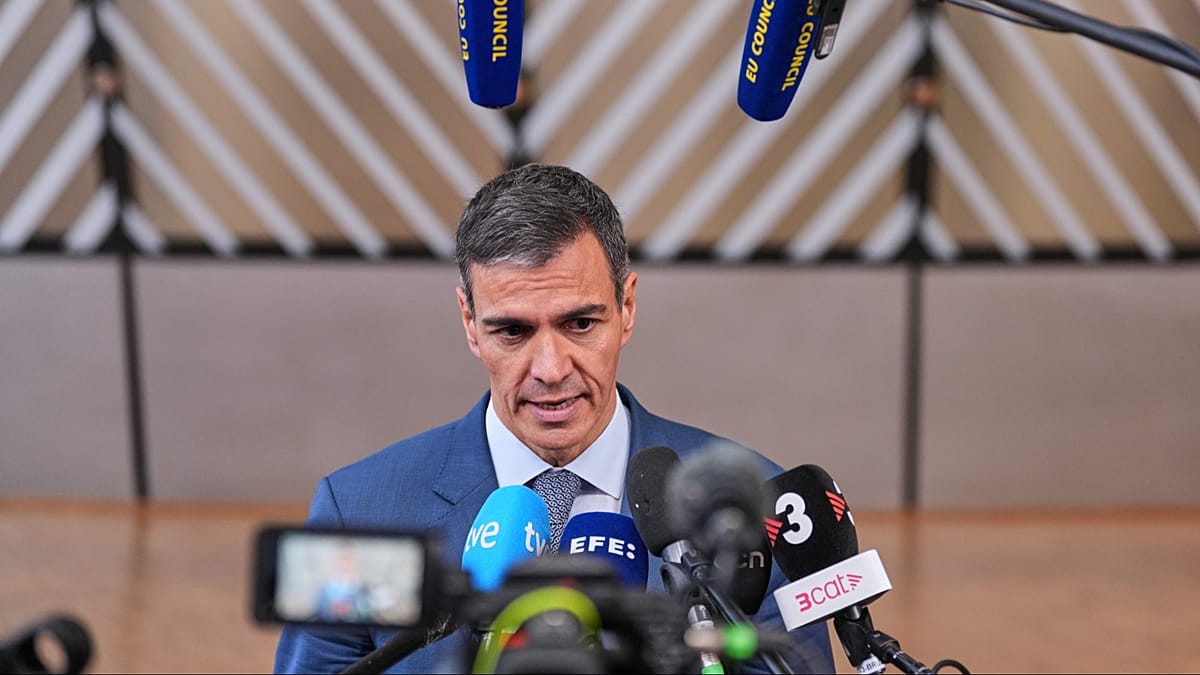
Spanish Prime Minister Pedro Sánchez has summoned an extraordinary session of the National Security Council to address the ongoing fallout from the mass arrival of migrants in the North African enclave of Ceuta. The meeting, set to take place at the Moncloa Palace in Madrid, precedes the first cabinet gathering after the summer recess and aims to assess the situation and coordinate the government's response.
Ceuta, a Spanish territory bordering Morocco, has been under severe strain since tens of thousands of people crossed the border on 30 and 31 July. The Interior Ministry initially reported around 72,000 arrivals, with roughly 70,000 having returned to Morocco. However, the Spanish government's representative in Ceuta, Miguel Ángel Pérez Triano, stated on Monday that more than 80,000 individuals had entered through the Tarajal crossing.
Pérez Triano acknowledged that the city remains "very far" from returning to normal, 25 days after the crisis began. Speaking after a meeting with officials from the National Police's Immigration and Borders Brigade, he noted that additional facilities have been opened, but there are still insufficient places for all those requiring assistance. He also rejected calls for his resignation, calling such a step "an absolute act of irresponsibility and cowardice."
Opposition pushes for faster returns
Spain's main opposition party, the People's Party (PP), has intensified pressure on the government, demanding that more immigration officials be deployed to Ceuta to accelerate the processing of returns. Party spokesperson Borja Sémper called for "all the immigration units that are needed" to be sent and to operate in three shifts daily to handle the cases of migrants still in the city.
"It is unacceptable that returns are being processed as if this were a normal situation, because it is extraordinary," Sémper said. He added, "As many civil servants as necessary must be mobilised for as long as necessary. They must all be returned, and as soon as possible."
The PP's stance reflects a broader political divide in Spain over migration policy, with the conservative party accusing the socialist government of leniency. The government, meanwhile, has defended its approach, emphasizing the rights of minors and potential asylum seekers.
Borrell criticises Europe's response
Josep Borrell, the EU's foreign policy chief and a former Spanish foreign minister, has sharply criticised the bloc's reaction to the Ceuta crisis, describing it as "hysterical, disproportionate and absurd." In remarks to Spanish media, Borrell accused EU countries of failing to show solidarity with Spain and rejected claims that the crisis was caused by Spain's migration policies.
"Several countries, all except France, Portugal, Luxembourg and Ireland, have gone into panic. European solidarity has disappeared. The laws must be applied," Borrell said. His comments come after 22 EU member states criticised Spain's migration policies, arguing that measures such as the regularisation of undocumented migrants have acted as a "pull factor."
Borrell acknowledged the need to strengthen Europe's external borders but defended Spain's handling of minors and potential asylum seekers remaining in Ceuta. "The Spanish government is right to emphasise that minors have rights: the laws must be applied," he stated.
The crisis has also drawn attention to the broader challenges facing the EU's southern border. Similar pressures have been seen elsewhere, such as Latvia's interception of migrants using a tunnel from Belarus, highlighting the diverse nature of migration challenges across the continent.
In Ceuta, the situation remains delicate. Spain is preparing to send up to 25,000 vaccine doses to the enclave, according to El País, following an agreement by the country's Public Health Commission. This move aims to address potential health concerns among the migrant population and the local community. The vaccine shipment is part of a broader effort to restore stability.
Meanwhile, the city has already buried 18 unidentified migrants who died during the border surge, a sombre reminder of the human cost. The burials underscore the tragedy of the events, as families search for missing loved ones.
The Spanish government has also had to navigate diplomatic tensions with Morocco, which has renewed its sovereignty claims over Ceuta and Melilla. Madrid has rebuffed these overtures, insisting on the Spanish character of the enclaves. The crisis has tested bilateral relations, with Morocco's role in border control seen as crucial.
As the National Security Council convenes, the government faces the dual challenge of managing the immediate humanitarian situation while addressing the political and diplomatic fallout. The meeting is expected to outline a coordinated strategy, balancing security concerns with respect for international law and human rights.
The coming days will be critical for Ceuta, as authorities work to restore normality and process the cases of those still in the city. The EU's response, or lack thereof, will also be scrutinised, as Borrell's comments highlight a growing frustration with the bloc's inability to act collectively on migration.