Spain's health ministry is rushing to secure vaccine supplies for the North African enclave of Ceuta after a series of infectious disease cases were detected among migrants and military personnel. The move follows a sharp increase in arrivals from Morocco in late July, which has strained local health services and raised concerns about disease transmission in crowded conditions.
On Monday 24 August, the Public Health Commission will hold an extraordinary videoconference meeting with representatives from Spain's autonomous communities and cities. According to reports first published by El Mundo, the sole item on the agenda is the creation of a "solidarity mechanism for vaccines" to support Ceuta. The aim is to ensure the enclave has enough doses to immunise migrants still present and to bolster protection against a range of infectious diseases.
Vaccines against polio, diphtheria and chickenpox
The ministry plans to administer the measles, mumps and rubella (MMR) vaccine, as well as jabs for chickenpox, poliomyelitis, tetanus and diphtheria. These immunisations are intended to prevent outbreaks in a population that has been living in makeshift camps and temporary shelters, often with limited access to clean water and sanitation.
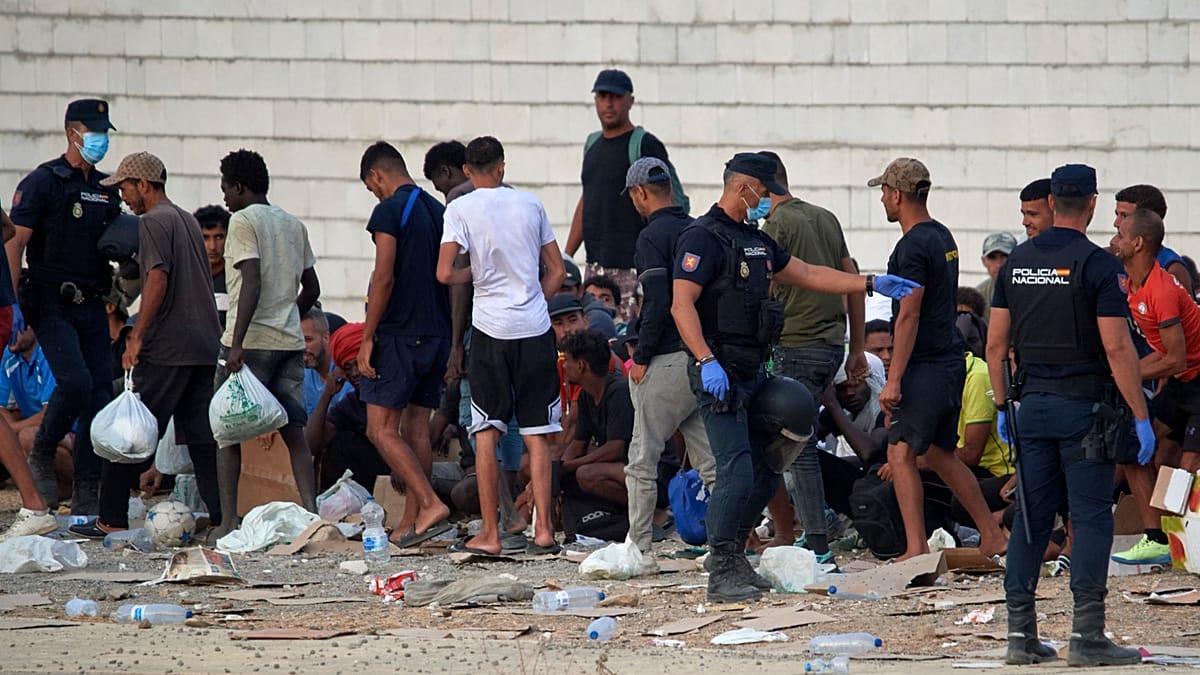
The health situation in Ceuta has deteriorated since the mass border crossings at the end of July. Between 31 July and 14 August, the National Institute of Health Management (Ingesa) recorded 5,801 medical consultations linked to the crisis. The Red Cross operation on Trampolín beach provided more than 2,500 additional check-ups, with the busiest day on 31 July when 1,149 people sought medical attention in a single day.
Health authorities have confirmed 18 minors with a positive Mantoux test for latent tuberculosis and two confirmed cases of active tuberculosis. Medical staff have also reported consultations for gastroenteritis, scabies and impetigo. The Spanish Army has logged at least 24 cases of scabies among its personnel at the General Command in Ceuta, highlighting the risk of transmission in close-quarter settings.
The Spanish Society of Epidemiology has cautioned against linking these diseases to migrant status. In a statement, the society emphasised that the health problems are primarily a consequence of overcrowding, poor sanitary conditions and a lack of resources in the temporary settlements. "These are conditions that would favour the spread of infection in any population," the society noted.
The situation in Ceuta is part of a broader migration challenge for Spain and the European Union. Earlier this month, Spain began relocating migrants from the beach camp to more permanent shelters, but the process has been slow. The EU has also increased funding for Morocco to manage migration flows, yet the pressure on Ceuta's infrastructure remains high.
Local authorities are preparing for further arrivals, with a second beach eviction planned as migrants return to Trampolín beach. The health ministry's emergency meeting is a recognition that public health cannot be separated from migration management. As one health official put it, "We are dealing with a humanitarian crisis that has medical consequences."
The vaccine solidarity mechanism is expected to be operational within days, with doses redistributed from other regions. The ministry has not yet specified how many vaccines will be sent, but the priority is to cover all migrants and military personnel who may have been exposed. The meeting will also discuss long-term measures to improve sanitary conditions in Ceuta's reception facilities.
For now, the immediate focus is on containing the outbreaks. Health workers on the ground are urging migrants to come forward for testing and vaccination, while also addressing the underlying conditions that make such outbreaks possible. As the Spanish Society of Epidemiology warns, "Vaccines are essential, but they are not a substitute for decent living conditions."