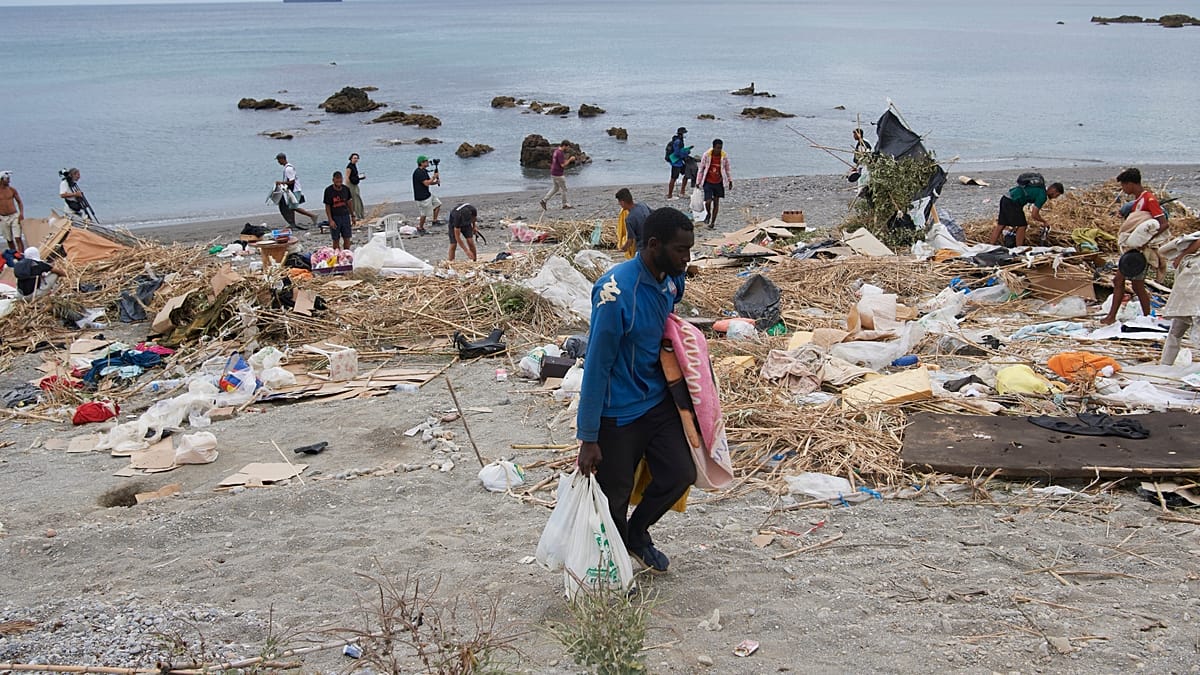
The government of Ceuta is preparing for a second attempt to clear Trampolín beach on Friday, after hundreds of migrants returned to the makeshift camp on Thursday afternoon. According to local newspaper Faro de Ceuta, cleaning crews will first try to evict the estimated 500 people who have set up shelters on the sand, though official figures remain disputed.
Thursday morning had appeared to mark a breakthrough when authorities transferred migrants to temporary reception centres. But by the afternoon, many had filtered back to the beach, erecting new encampments from reeds, plastic bags, and cardboard. The return underscores the fragility of the situation and the deep mistrust among migrants about the government's intentions.
Fear of expulsion to Morocco
Migrants at Trampolín say they fear that being moved to the four new centres opened by Spain's central government could be a first step toward deportation to Morocco. That anxiety has fueled resistance to relocation, even as conditions on the beach remain precarious.
The numbers on the ground are hard to pin down. Police sources claim around 4,000 people were evicted on Thursday, while government sources put the figure closer to 1,500. The temporary facilities at Loma Margarita and El Embolsamiento have a combined capacity of 1,800, but the actual number of transfers is unclear.
Local media report that the Ceuta government withdrew the cleaning operation on Thursday because it could not guarantee workers' safety after migrants began returning. A similar suspension is likely on Friday if the situation is not brought under control.
Juan Vivas, the president of Ceuta, has been openly critical of the handling of the crisis. "Moving them from Trampolín to other places in Ceuta does not show a willingness to solve the problem," he said. His administration has agreed to open additional sites, including the Hípica facilities, a military base, the former football pitch of the Cavalry barracks, and the El Guano area.
Spain's Minister for Migration, Elma Saiz, said the government would expand reception capacity to 4,000 places. The Red Cross distributed around 4,000 food bags in the surrounding area on Thursday, which partly explains the influx at El Trampolín: many people are not staying there but come to the beach to collect meals. Journalists on the ground also reported seeing around 10 tents pitched on the sand overnight.
The standoff at Trampolín is the latest flashpoint in a broader migration challenge for Spain and the European Union. The situation echoes previous efforts to relocate migrants from the beach, and comes amid increased EU funding for Morocco to manage migration flows. Similar pressures are visible elsewhere on the continent, from Latvia's border with Belarus to the Mediterranean routes that have seen rescues off West Africa.
For now, Ceuta remains a pressure point, with local authorities and Madrid struggling to find a durable solution. The second eviction attempt on Friday will be a test of whether the government can enforce its policy without triggering a larger humanitarian crisis on European soil.