Pedro Sánchez enters a period of reflection. The Spanish prime minister will use the weekend to decide whether to bring forward the general election after Congress on Friday rejected two housing decrees put forward by his Socialist government.
The parliamentary defeat leaves the government facing a new scenario, forcing Sánchez to weigh the future of the legislature. According to government sources cited by several national media outlets, the prime minister will, over the coming days, consider whether to call elections before the end of the year.
Hours before the votes, the government had played down that possibility, insisting that an early election was not on the table because "hoy no toca" (today is not the day). After the result unfolded, the executive said it would analyse the situation without ruling out any option.
A double defeat in Congress
The two decrees were rejected after more than four hours of debate. The first fell by 178 votes to 172, with the Popular Party, Vox, Junts, and UPN all voting against. The second was defeated by 184 votes to 166, after the PNV and Canary Islands Coalition joined the 'no' camp.
The defeat marks a significant setback for Sánchez's minority government, which has relied on a fragile coalition of support in the Cortes Generales. The rejection of the housing measures, which included rent caps and protections for tenants, underscores the difficulty of legislating in a deeply fragmented parliament.
As reported in our earlier coverage of the Congressional vote, the outcome was a direct challenge to the government's social agenda.
Protesters take to the streets
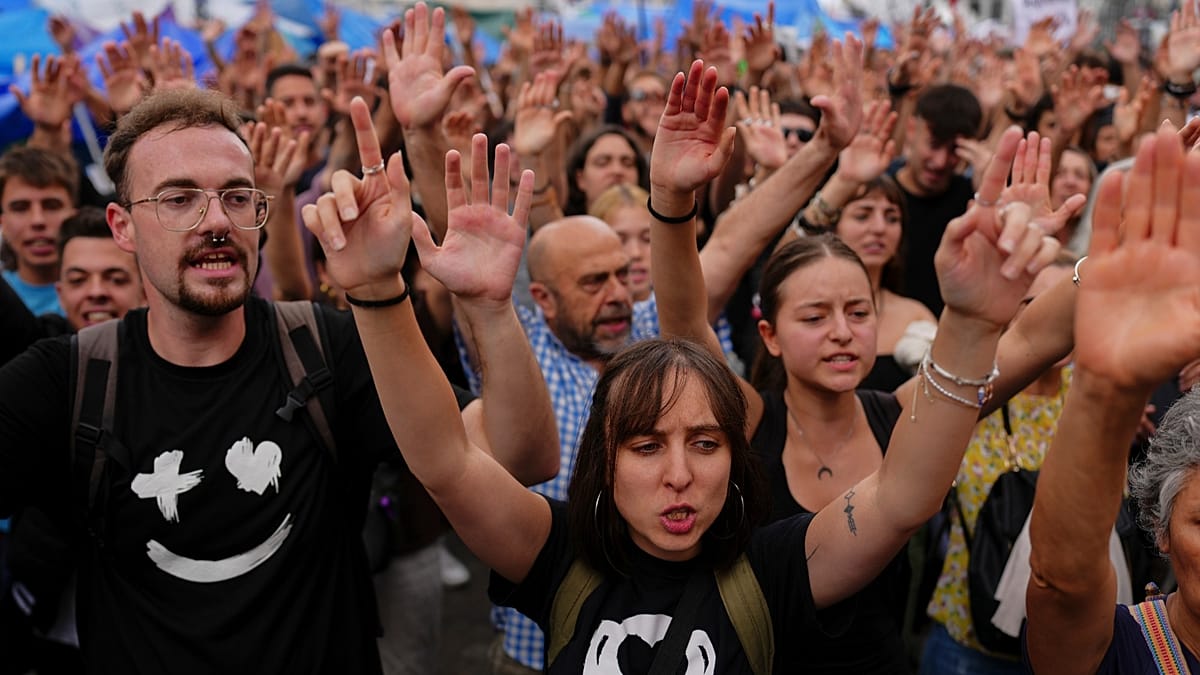
While Sánchez's political future hangs in the balance, the reaction outside Congress has been immediate. Protesters who had been camped out for days in Puerta del Sol marched to Congress on Friday to follow a vote they regarded as crucial to their demands.
Once the rejection of the first decree was confirmed, some of the protesters headed back to Sol chanting "general strike". A general assembly was scheduled for the afternoon to decide the next steps in the movement and the future of the camp itself.
The Confederation of Tenants' Unions has also called demonstrations this Saturday in more than 50 Spanish cities and is already signalling an escalation in protest. "The next step is a general strike," the organisation said.
The spokesperson for the Tenants' Union, Alicia del Río, had already on Friday called for a general strike over housing and warned that the mobilisation would not end with the vote in Congress.
A weekend with two unknowns
The fall of the decrees opens a weekend marked by two key questions. The first will be answered in the political arena: whether Sánchez chooses to continue the legislature or bring forward the general election.
The second lies on the streets. Protests will continue this Saturday in dozens of cities, and housing campaign groups will have to decide how far to step up their mobilisation and how to put into practice their call for a general strike.
Two very different responses to the same vote, which has put on hold both the government's next move and that of a housing protest movement that shows no sign of backing down.