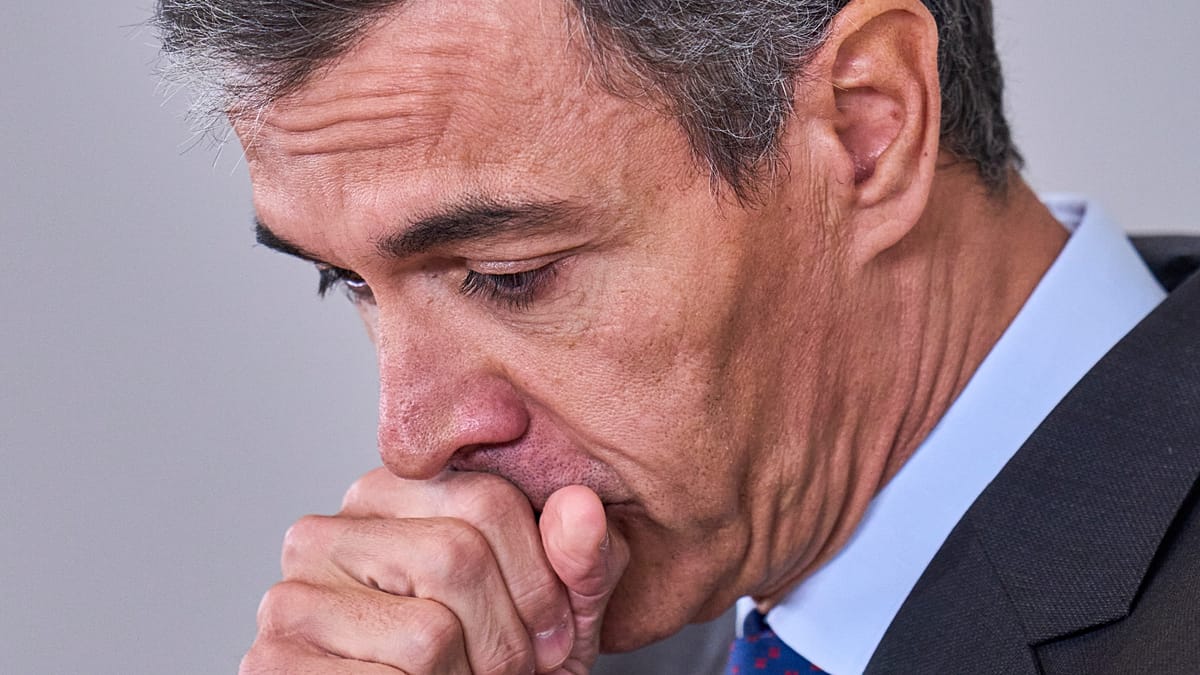
Spanish Prime Minister Pedro Sánchez spent Sunday in consultations with ministers and senior Socialist Party (PSOE) figures, weighing whether to call an early general election after Congress rejected two government housing decrees on Friday. The defeat has plunged his minority coalition into its most serious crisis since taking office.
According to government sources cited by state broadcaster RTVE, Sánchez entered a period of reflection immediately after the parliamentary setback. He is now seeking advice from within his party and cabinet, while also monitoring the wave of protests and housing camp demonstrations that have spread across Spanish cities in recent days.
No final decision has been announced. Some Socialist leaders have openly urged a snap vote. Eneko Andueza, secretary general of the Basque Socialist Party (PSE-EE), said it could be "a good moment for society to decide," while Carlos Martínez, the PSOE leader in Castile and León, spoke of a "window of opportunity."
Why the housing decrees failed
The two decrees, approved by the Council of Ministers earlier in the week, were rejected by the lower house on Friday. The first received 172 votes in favour and 178 against; the second fared worse, with 166 in favour and 184 against. The conservative Popular Party (PP), far-right Vox, and the Catalan separatist Junts were decisive in blocking the legislation.
The government's proposals included extending eviction protections for vulnerable households, introducing new rules for temporary and room rentals, adjusting tax arrangements, and offering greater stability for certain primary-residence tenancy agreements, according to official information from Moncloa.
The defeat underscores the fragility of Sánchez's parliamentary majority, which relies on a patchwork of regional and nationalist parties. The housing crisis has become a flashpoint, with half a million people rallying in Madrid and protests erupting nationwide, as documented in our earlier coverage.
Election timetable and alternatives
If Sánchez decides to dissolve Parliament, the earliest possible election date would be Sunday, 29 November. To meet that deadline, he would need to announce his decision on Monday, with the decree published in Tuesday's edition of the Official State Gazette. Electoral law requires a 54-day campaign period after dissolution.
For now, Sánchez still has the opening of the National Congress of Family Business in Madrid on his diary for Monday, and is scheduled to travel to Split, Croatia, on Wednesday for the MED9 summit of southern EU member states.
The alternative would be to let the parliamentary term continue and attempt to revive the rejected measures, which would require rebuilding support in Congress. That path looks difficult given the current alignment of opposition forces.
Thousands of demonstrators have taken to the streets across Spain to demand action on housing access, and protest organisers are considering escalating their campaign, including a possible general strike. The housing crisis has ignited nationwide protests that show no sign of abating.
Political calculations
The electoral impact of the discontent remains uncertain. Ignacio Urquizu, a sociologist at the Complutense University of Madrid and chief executive of polling firm Metroscopia, said on Onda Cero's "La Brújula" that his latest data showed Vox gaining ground, the PP holding steady, and left-wing parties losing support. According to Urquizu, the housing protests had not, at least up to that point, translated into increased backing for the left.
In the PP, secretary general Miguel Tellado has directly urged Sánchez to call an election this Monday, accusing the prime minister of "still lying on the Moncloa psychiatrist's couch."
The prospect of an election has also triggered activity among other parties. Sumar, the left-wing platform led by second deputy prime minister Yolanda Díaz, brought together its ministers and allied party representatives on Sunday to assess the situation and prepare for a possible vote. Díaz stressed that the decision rests solely with Sánchez.
As Spain's political class braces for a possible snap election, the housing crisis remains a central issue. The government's failure to pass its decrees has exposed the limits of its parliamentary arithmetic, and Sánchez's next move will determine whether he can regain the initiative or face the voters sooner than planned.