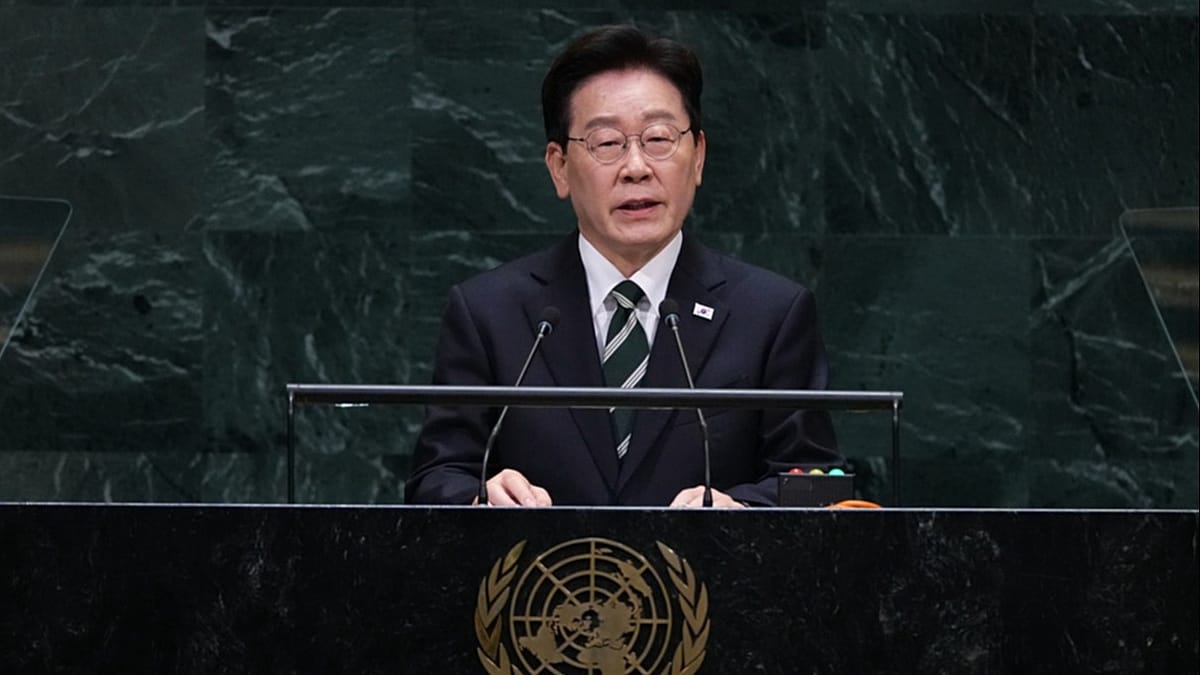
The office of South Korean President Lee Jae-myung has demanded an official apology from Ukraine, accusing Kyiv of violating a confidentiality agreement by publicly confirming that two North Korean soldiers captured on the battlefield had been handed over to Seoul. The disclosure, made last week by Ukrainian President Volodymyr Zelenskyy, has ignited a diplomatic row that threatens to complicate Ukraine's efforts to secure military aid from one of its key Asian partners.
Zelenskyy announced that the two soldiers—who were among the North Korean contingent deployed to fight alongside Russian forces—had been transferred to South Korea, noting that capturing them alive had been no easy feat. Within hours, President Lee took to social media to express his disappointment, writing: "I do not know why the Ukrainian side broke the agreement and made the matter public, but it is very disappointing."
Seoul's reaction has been unusually sharp. Seong Ghi-hong, senior presidential secretary for public relations, issued a statement late Sunday condemning the disclosure as a serious breach of trust. "It is in itself a very serious matter that the Ukrainian side violated the confidentiality agreement between the two countries and made the disclosure unilaterally," he said. He went further, accusing the Ukrainian presidential press office of issuing a "false statement" by denying that any confidentiality agreement existed, which he said "seriously undermines trust between the two governments and gravely damages friendly relations between the two countries."
A test of trust between allies
Ukraine's presidential aide Dmytro Lytvyn sought to downplay the incident, arguing that Zelenskyy had only made public the fact that the soldiers had been handed over to South Korea. He noted that Ukraine is an "open country" and that it would be "unusual" to conduct such a transfer in secret. But Seoul has rejected that reasoning, insisting that the confidentiality agreement was explicit and that Kyiv's unilateral disclosure—and subsequent denial—constituted a serious diplomatic affront.
The two North Korean soldiers were captured early last year, among the thousands of troops that Pyongyang has sent to support Moscow's war effort. One of the soldiers, who said he had served in a reconnaissance unit, told interrogators that he had been conscripted at age 17 and had been in the military ever since. He also said that while some North Korean soldiers had been trained to use Russian military equipment, he had not. A South Korean lawmaker previously indicated that the two men wished to settle in the South and live a "normal life."
The dispute comes at a delicate moment for Ukraine's diplomatic outreach. Kyiv has been pressing Seoul for weapons supplies, and the EU's recent decision to unblock a €6.6 billion military aid package underscores the urgency of maintaining allied support. Analysts warn that the spat could undermine Ukraine's case in Seoul, where public opinion is sensitive to any action that might provoke North Korea.
Park Won-gon, a professor at Ewha Womans University in Seoul, said the South Korean government is likely concerned that confirming the prisoners' return and publicising it could inflame tensions with the nuclear-armed North. "North Korea has been using the deployed soldiers to create a heroic narrative for regime propaganda," he said. "The South Korean government appears concerned that confirming the prisoners' return to the South and publicising it could further fuel hostility towards Seoul."
The row also risks complicating broader security cooperation. South Korea has been a vocal supporter of Ukraine's defence, but it has stopped short of providing lethal aid, citing its own security constraints. The breach of trust could harden that position, making it harder for Kyiv to secure the advanced air-defence systems it desperately needs as Russian strikes continue to hit civilian infrastructure.
For now, Seoul has said it is "considering additional measures that may be necessary regarding this matter," without specifying what those might be. The demand for an apology and an official explanation suggests that the South Korean president is not willing to let the issue slide. As the war grinds on, the incident serves as a reminder that even the closest of allies can find themselves at odds over the handling of sensitive wartime intelligence.