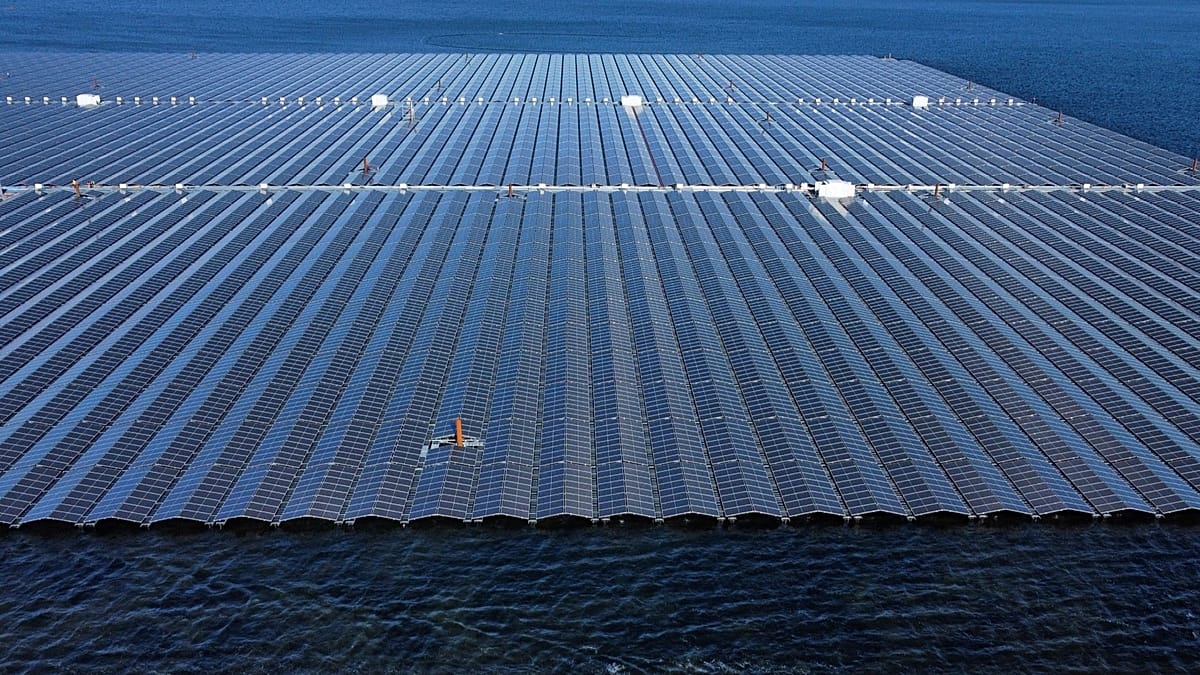
Europe's rapid expansion of solar power is providing a financial shield against the volatile cost of fossil fuel imports, according to new analysis from SolarPower Europe. Since the outbreak of the war on Iran, the bloc has saved an estimated €37.4 billion by using sunlight to generate electricity, reducing the need for expensive gas imports.
The conflict, now in its seventh month, has disrupted shipping through the Strait of Hormuz, a chokepoint that normally carries around one-fifth of global liquefied natural gas (LNG) supplies. The benchmark Dutch TTF gas price has soared from €31.96 per megawatt-hour on 27 February, the day before the war began, to €72.35 on 30 September — a 126.5 per cent increase. Despite assurances from Washington that the conflict will end soon, European households and businesses remain exposed to price swings.
“Every megawatt-hour generated by solar power reduces our dependence on imported fossil fuels and makes Europe safer,” said Walburga Hemetsberger, CEO of SolarPower Europe. She noted that solar became the EU's largest single source of electricity in June, supplying 25 per cent of the bloc's power. “It's a demonstration of the returns on Europe's investment in abundant, homegrown renewable energy resources. We can go further and faster.”
Spain leads the way
Spain has emerged as a standout example of how renewables can cushion an economy from fossil fuel price shocks. Since 2019, the country has doubled its wind and solar capacity, adding more than 40 gigawatts (GW) to its energy mix. To put that in perspective, a single GW of capacity can power roughly 876,000 average households for a year.
According to a report by the energy think tank Ember, “Spain's wind and solar growth has reduced the influence of expensive fossil generators on the electricity price by 75 per cent since 2019.” This decline in the hours when electricity prices were tied to gas costs was faster than in other gas-reliant countries such as Italy and Germany.
In European power markets, the most expensive generator needed to meet demand — typically fossil fuels — sets the hourly wholesale price. As low-cost wind and solar generation expands, it displaces gas and coal, meaning fossil fuels determine the price less often. This dynamic has been crucial in keeping Spanish electricity bills in check.
Record wind in the UK
The UK has also demonstrated the benefits of renewable investment. On 26 March, British wind generation hit a new record of 23,880 megawatts, enough to power 23 million homes. During that period, wind provided more than half of the country's electricity, and at one point, low-cost wind and solar squeezed expensive gas down to just 2.3 per cent of generation — the lowest level in nearly two years.
“That's what the energy transition looks like in practice,” said Tara Singh of RenewableUK. “It shows why we need to continue to build out an ambitious pipeline of new clean energy projects now and in the years ahead.”
The UK's success comes despite claims that the country needs to drill the North Sea for oil. Instead, renewables are proving that energy security can come from homegrown, clean sources.
EU renewables dip raises concerns
Despite these successes, the EU as a whole is struggling to reduce its reliance on gas. Eurostat data for the second quarter of 2026 shows that renewable sources accounted for 54.1 per cent of electricity generation, a slight dip from 54.3 per cent in the same period last year. Total electricity generation rose by 3.2 per cent year-on-year, but gas-fired generation increased by 3.9 per cent while renewable generation grew by only 2.8 per cent.
Solar, however, continues to grow strongly, making up 41.6 per cent of renewable electricity generation, up from 37 per cent a year earlier. Jonathan Bruegel, a power sector analyst at the Institute for Energy Economics and Financial Analysis (IEEFA), told Euronews Earth that the dip highlights the “case for a diversified mix” of hydro, wind and solar.
“Gas held at 13.3 per cent, even with renewables above 50 per cent,” he said. “This means that weak hydro and wind generation still bring gas back in, underlining again the need for more solar — which is a more stable intermittent technology than hydro and wind — storage, and flexibility.”
The findings come as Europe grapples with broader energy security challenges, including the impact of the Ukraine grain blockade on global prices. Meanwhile, renewable electricity growth across Europe is losing momentum despite the solar surge, exposing grid gaps that need urgent attention.
SolarPower Europe's Hemetsberger argues that electrification, more renewable generation, and non-fossil flexibility solutions such as battery storage can shield Europe from future fossil fuel price shocks. “This is the route to long-term energy security,” she said. As Europe continues to invest in solar and wind, the evidence is mounting that renewables are not just an environmental choice but an economic one.