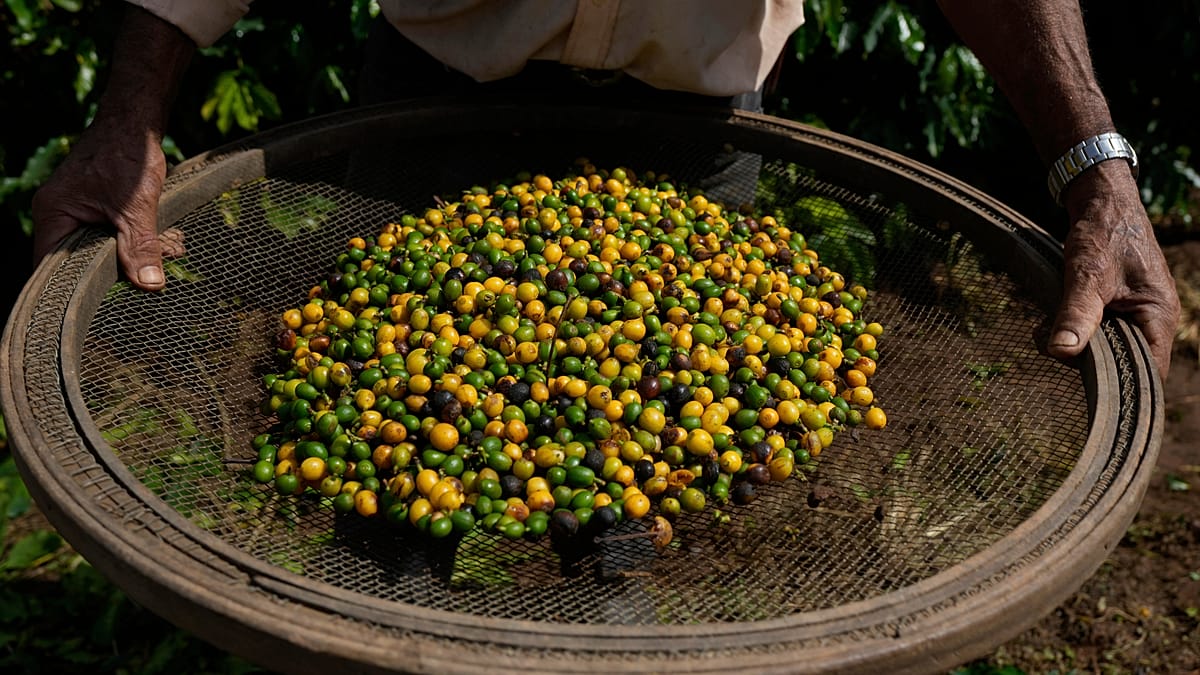
On the outskirts of Palermo, a family-run estate has achieved what was once unthinkable: the first Arabica coffee beans grown, harvested and processed entirely in Italy. The Morettino family, whose name has been synonymous with Sicilian coffee for generations, brought in their inaugural crop this season from a plantation in the San Lorenzo ai Colli district, a few hundred metres above sea level.
The harvest, though modest at around 100 kilograms of coffee cherries yielding just over 15 kilograms of roasted beans, carries outsized significance. It is a tangible marker of how climate change is redrawing the boundaries of what can be cultivated where. While southern England has already begun producing sparkling wine in the style of Champagne, and traditional wine regions in France and northern Italy are shifting northward, the leap from equatorial coffee belt to the Mediterranean is far more dramatic.
A scientific experiment with symbolic weight
The project is a collaboration with the University of Palermo and the city's Botanical Garden, which are studying how tropical crops adapt to the new Mediterranean climate. The aim is not immediate commercial scale but to understand whether coffee can become a viable niche crop in a region where temperatures now regularly approach those of traditional growing areas.
According to the Morettino family, the Palermo coffee develops distinctive aromatic notes reminiscent of raisins, a profile that sets it apart from beans grown in Latin America, Africa or Asia. The experiment follows an earlier attempt in Terrasini, also in the Palermo area, where a local farm grew coffee entirely in greenhouses.
Similar trials are underway elsewhere in southern Europe. In Spain's Granada province, experimental plots are testing the resilience of coffee plants, though results have been mixed. On Gran Canaria, coffee has been cultivated since the 19th century, benefiting from the island's southerly latitude and volcanic soils. The Azores, part of Portugal, host numerous small private plantations, marking one of the northernmost points where coffee is grown commercially.
Italy's coffee culture remains robust
The interest in homegrown coffee comes as Italy solidifies its position as the EU's leading roaster, producing over 400 tonnes of roasted coffee in 2025. The industry, which relies on imported green beans, includes around a thousand roasters and generates an annual turnover of €5.9 billion.
Italian consumption patterns remain strong. A survey by AstraRicerche for the brand Segafredo found that 82.6% of Italians consider the quality of the raw material decisive, 71.8% pay attention to aromatic characteristics, and 51.5% want to know the product's origin and supply chain. Another study by the Italian Coffee Committee of Unione Italiana Food and Altroconsumo, based on more than 1,200 consumers, shows that three out of four Italians drink coffee regularly, and nearly half view it as a cultural symbol on par with pasta.
Among espresso drinkers, 83% consume it daily, whether at home with a moka pot or using modern capsule machines, which are now equally popular.
Environmental costs and future prospects
Any commercial expansion of coffee cultivation outside its traditional tropical home must confront environmental sustainability. Processing coffee after harvest can require between 50 and 200 litres of water per kilogram of green coffee, and the wastewater, if untreated, can harm local ecosystems. In regions where seasonal drought is becoming endemic, as in parts of southern Europe, the agricultural challenge must be matched by technological innovation to reduce water use in both growing and processing.
The Sicilian experiment is a reminder that climate change is not only a threat but also a force that is redrawing agricultural maps. As extreme weather events become more frequent, farmers across Europe are adapting in ways that would have seemed improbable a generation ago. The coffee plants on the hills above Palermo are a small but potent symbol of that transformation.