A powerful storm system has been battering the Greek island of Crete since Wednesday night, unleashing torrential rain and thunderstorms that have turned roads into rivers, triggered landslides and knocked out electricity in several mountain communities. Civil protection crews are on high alert as the island struggles to cope with the deluge.
Mountain communities hit hardest
The worst-affected area is the mountainous Mylopotamos region in the island's north, where villages such as Zoniana, Livadia and Axos have seen severe flooding. In Zoniana, water has invaded homes, streets are submerged, and debris has been swept onto roadways. Municipal and regional crews have been working since dawn with heavy machinery to clear access routes and pump water out of basements and underground spaces.
In Axos, similar operations are underway, and there are temporary disruptions on the road linking Axos to Anogeia. The force of the water has also damaged the Diskouri bridge near Livadia, causing part of it to collapse. A couple in a vehicle ended up in the river below; both were injured and taken to the University General Hospital of Heraklion, though their condition has not yet been disclosed.
Power cuts and travel warnings
The storm has also disrupted the electricity network. Zoniana, Anogeia and Axos are experiencing power outages, and in Zoniana there are reports of fallen poles. The Hellenic Electricity Distribution Network Operator (HEDNO) has been notified, and repair crews are expected to restore service as conditions allow.
Authorities have sent a 112 emergency alert advising residents and visitors to avoid travel to Zoniana, Livadia and the wider mountainous Mylopotamos area. They are urging people not to attempt to cross flooded roads and to exercise extreme caution in zones where landslides or rockfalls have occurred. Municipal crews remain on standby, with the priority being to secure safe access to affected communities.
Heraklion and Lasithi under water
Heavy rainfall has also affected parts of Heraklion, the island's largest city. Flooding has been reported in several districts, and the fire service is fielding numerous calls to pump water from properties. Power cuts have hit the Agios Ioannis Chostos area, and problems are also being recorded in Tsalikaki.
On the Lasithi Plateau, the storm has been relentless. According to meteo.gr, by Thursday morning Tzermiado had recorded 174 millimetres of rain since the onset of the severe weather. The mayor of the Municipality of Lasithi Plateau, Giorgos Athanasakis, is appealing to residents to limit their movements and remain vigilant as the storm continues.
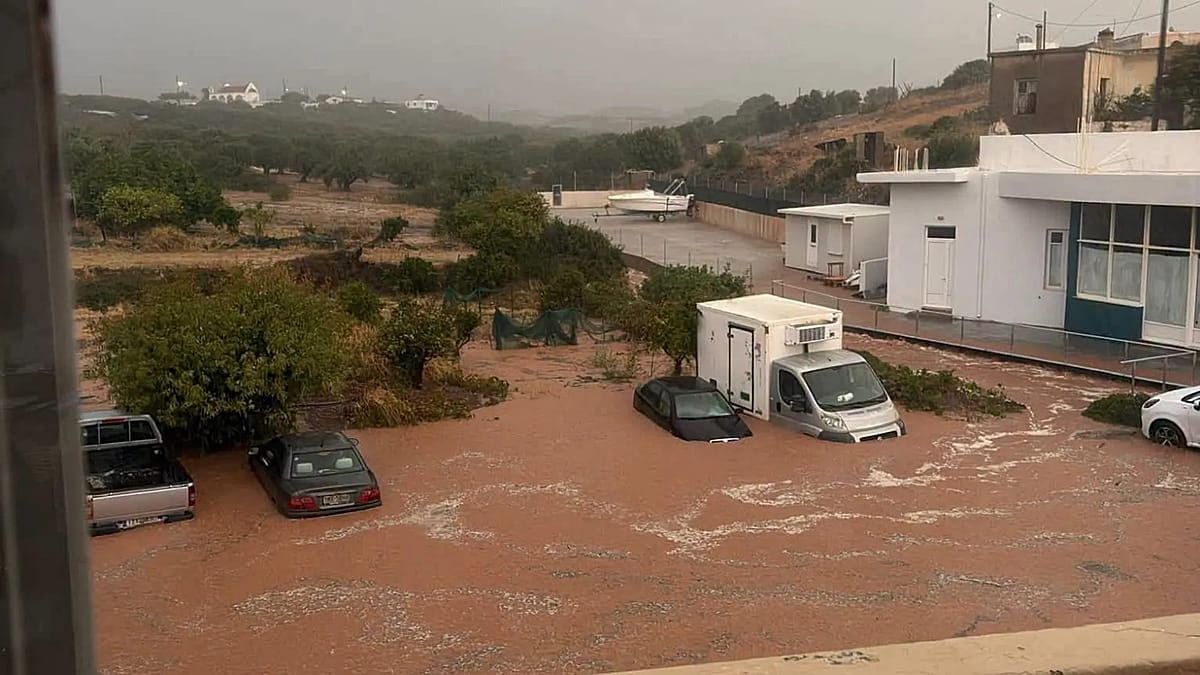
In Sitia, particularly in the Palekastro area, large amounts of water have accumulated in a car park, submerging vehicles. The Kalogeropotamos stream in the Agkathia area has swollen significantly, raising concerns in neighbouring districts.
Schools closed across the island
The hazardous conditions have prompted authorities to suspend schooling in several municipalities. In Mylopotamos, all primary and secondary schools, as well as nurseries and crèches, are closed. The Regional Unit of Lasithi has also shut all schools for the day, as have the municipalities of Sitia and Lasithi Plateau. Similar decisions have been taken in parts of Chania, Rethymno and Minoa Pediada. These closures are precautionary, aimed at limiting travel by pupils, teachers and staff during the worst of the weather.
So far, there have been no reports of people trapped or other situations posing an immediate risk to life. However, the storm is expected to persist, and authorities are urging everyone on the island to stay informed and heed official warnings.
The situation in Crete is a stark reminder of how climate change is intensifying extreme weather across Europe. Similar events have struck other regions, such as Hurricane Polo in Baja California, though the European context is distinct. As the continent faces more frequent storms, the need for resilient infrastructure and effective emergency response becomes ever more critical.