Extreme solar storms could expose airline passengers and crew to dangerous levels of radiation and trigger the kind of electronics failures that grounded thousands of Airbus jets last year, according to new research from the University of Surrey.
The study, led by the Surrey Space Centre (SSC), found that radiation levels at typical cruising altitudes of between 8 and 14 kilometres can surge dramatically during space weather events, while high-energy particles can also interfere with onboard systems, raising safety concerns for airlines operating across Europe and beyond.
Radiation spikes and aircraft vulnerabilities
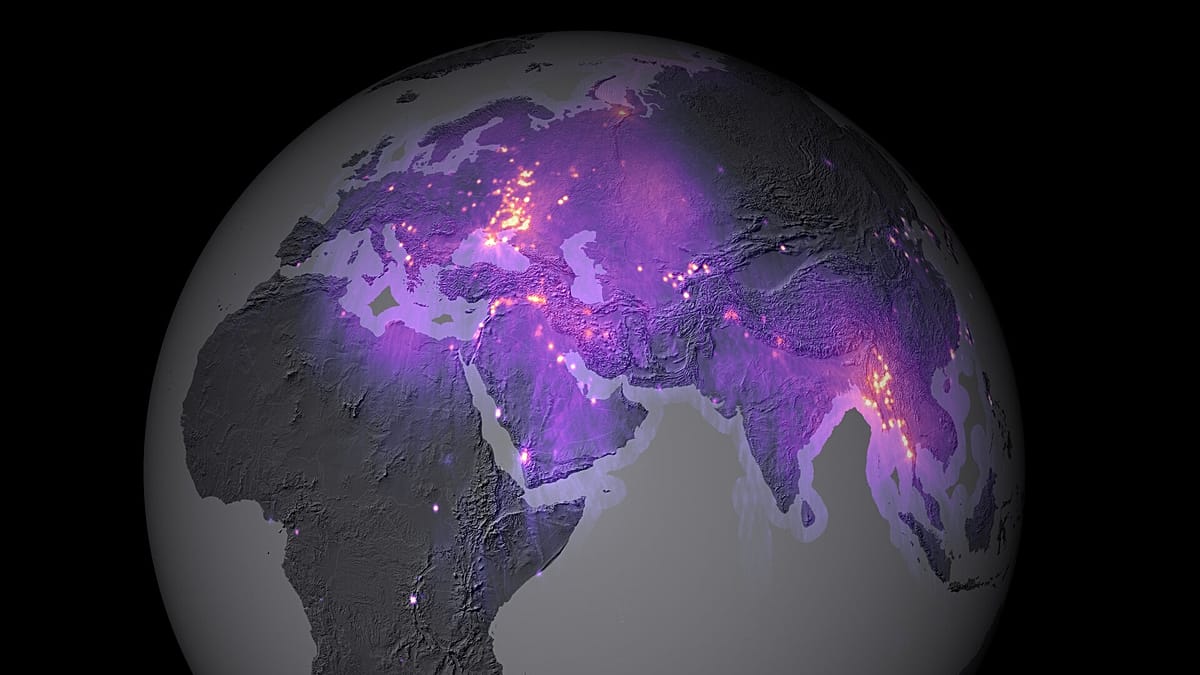
Although the Earth's atmosphere provides some shielding, passengers on long-haul flights are still exposed to higher radiation doses than at ground level. This exposure worsens during solar flares or coronal mass ejections, which have become more frequent in recent years. In November 2025, a massive solar storm caused radiation at flight altitudes to jump to nearly ten times normal levels, according to SSC calculations.
The study, published in the Journal of Space Weather and Space Climate, also highlights the growing vulnerability of aircraft electronics. High-energy particles can cause Single Event Upsets (SEUs)—minor errors that can accumulate and eventually affect critical systems. Last year, Airbus temporarily grounded 6,000 of its A320 aircraft after a vulnerability linked to intense solar radiation was found in a flight control computer. The issue came to light after a JetBlue flight from Cancún to Newark made an emergency landing in Florida in October 2025.
Beyond direct radiation exposure, such disruptions can increase pilot workloads significantly. In extreme scenarios, SEUs can surge from a few per hour to thousands, potentially overwhelming flight crews and ground control.
The most severe risks are on polar routes, such as London Heathrow to Vancouver International, where the effects of geomagnetic storms can be felt much further south, including over the UK.
“The recent Airbus A320 grounding linked to cosmic radiation shows that space weather is not a theoretical risk, it is already affecting aviation. As aircraft systems become more advanced and increasingly reliant on electronics, understanding and preparing for these events will be critical to maintaining flight safety,” said Dr Fan Lei, senior research fellow at the Surrey Space Centre and lead author of the study.
A gap in aviation safety frameworks
The study points to a critical gap in current aviation safety frameworks. Most existing protocols focus on routine radiation exposure and do not adequately account for extreme space weather events. The researchers argue that better integration of space weather data into flight planning, along with clearer guidance, is essential to keep air travel safe and reliable.
To address this, the team has introduced a new, aviation-specific radiation scale designed to help operators make informed decisions during severe space weather. The scale provides clear thresholds for when to increase monitoring, reroute flights, or even ground aircraft.
“At the moment, there is no consistent way for the aviation sector to assess and respond to extreme space weather risks. We've introduced a clearer, aviation-specific radiation scale to help support more informed decision-making in aviation, helping operators act quickly to protect passengers, crew and critical onboard systems,” said Professor Keith Ryden, leader of the Space Environment and Protection research team at the Surrey Space Centre and co-author of the study.
Professor Clive Dyer, a visiting professor at the SSC and co-author, added that the new scale is based on high-energy proton measurements in space and ground-level neutron monitors, such as those installed at Surrey, Lerwick, and Camborne. It scales human dose and avionics upset rates from the February 1956 event, providing a basis for a proportionate response.
The research comes as Europe increasingly turns its attention to space weather and its impacts on modern infrastructure. Earlier this year, Europe's solar eclipse drew attention to the sun's activity, and the continent's growing reliance on air travel makes such studies particularly relevant.
While the study focuses on aviation, the implications extend to other sectors, including power grids and satellite communications. As solar activity is expected to peak in the coming years, the researchers stress that proactive measures are needed to avoid widespread disruption.