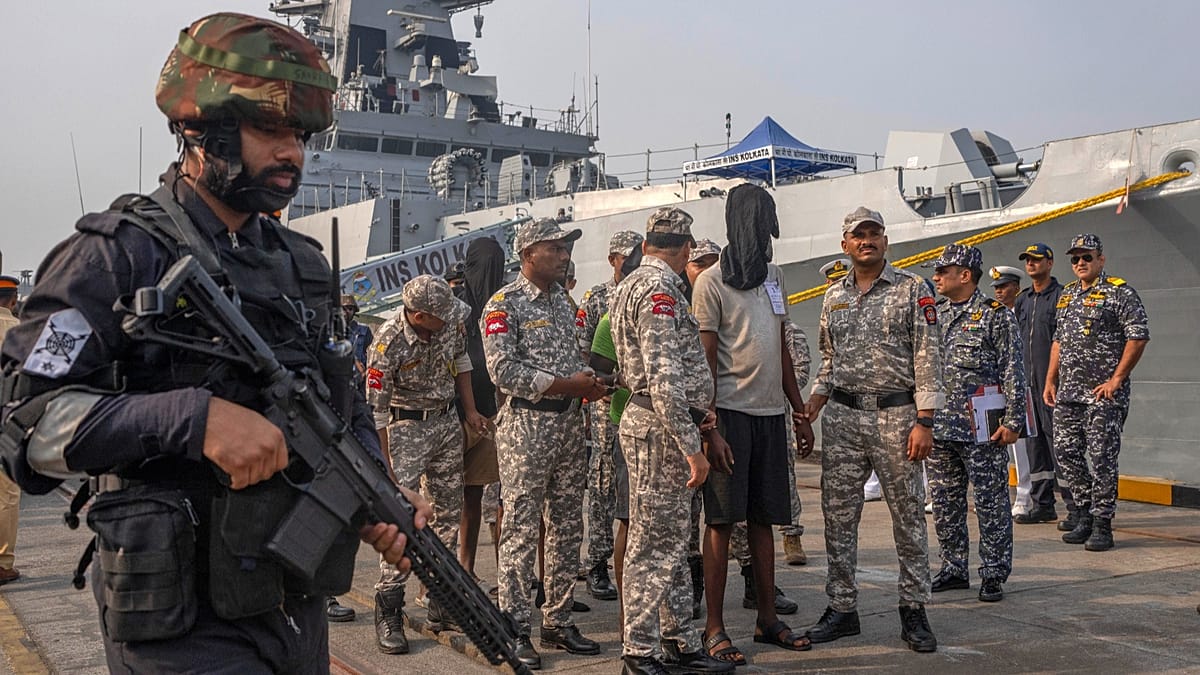
Piracy off the Horn of Africa has returned to levels not seen in over a decade, according to a new analysis of International Maritime Organisation (IMO) data. At least 15 attacks have been reported since the start of 2026, the highest number since 2013, when the region was a focal point of global maritime security concerns.
The figures, compiled from the IMO's Global Integrated Shipping Information System, cover incidents in the Gulf of Aden, the Arabian Sea, and the Indian Ocean within 2,000 kilometres of Somalia. The database includes reports dating back to 1994, providing a long-term perspective on the ebb and flow of pirate activity in these waters.
For most of the past decade, attacks had been rare, with no more than a handful recorded annually. In 2025, the IMO logged just five incidents. But 2026 has seen a sharp uptick, particularly in the Gulf of Aden, the narrow waterway between Somalia and Yemen that connects the Red Sea to the Indian Ocean. Eight attacks have occurred there since May alone.
Regional conflict fuels instability
The surge comes against a backdrop of severe disruption to global shipping routes. The war that began on 28 February between Iran, the United States, and Israel has heavily affected traffic through the Strait of Hormuz, a vital chokepoint for oil and gas shipments. The knock-on effects have been felt across the region, with some vessels rerouting and others facing delays, creating conditions that pirates have been quick to exploit.
“The combination of reduced naval patrols, shifting trade patterns, and the general chaos of conflict has given pirates renewed opportunities,” said a maritime security analyst based in Brussels, who asked not to be named. “The Gulf of Aden is a particularly vulnerable corridor, and the recent attacks show that the threat is not just historical.”
The most significant incident of the year occurred on 21 April, when a group of around 30 pirates armed with assault rifles and grenade launchers boarded the Honour 25, an oil tanker sailing north of Eyl, a former fishing town in the semi-autonomous Puntland region that has become a hub for pirate operations. The attackers took the 17 crew members hostage and still control the 90-metre vessel, according to the IMO data.
While the 2026 numbers are alarming, they remain far below the peak of 2011, when the IMO recorded approximately 200 attacks on ships in the region. That year, international naval task forces and armed guards on vessels helped curb the phenomenon, but the current resurgence suggests those measures may need to be reinforced.
For European shipping companies and navies, the development is a reminder of the fragility of maritime security. Several EU member states, including France, Spain, and Italy, have contributed to counter-piracy missions in the past, and the renewed threat could prompt fresh discussions in Brussels about extending patrols or enhancing intelligence-sharing.
The situation also intersects with broader concerns about migration and regional stability. As European ports grapple with the effects of biometric border checks and increased security scrutiny, the disruption of key shipping lanes adds another layer of complexity to the continent's trade and security agenda.
Analysts note that the pirates' tactics appear to have evolved, with a focus on smaller, faster attacks and a willingness to use heavier weaponry. The Honour 25 incident, in particular, underscores the audacity of the groups operating from the Somali coast.
As the year progresses, the international community will be watching closely to see whether the trend continues. For now, the data from the IMO paints a clear picture: the waters off Somalia are once again a dangerous place for seafarers, and the consequences are being felt far beyond the region.