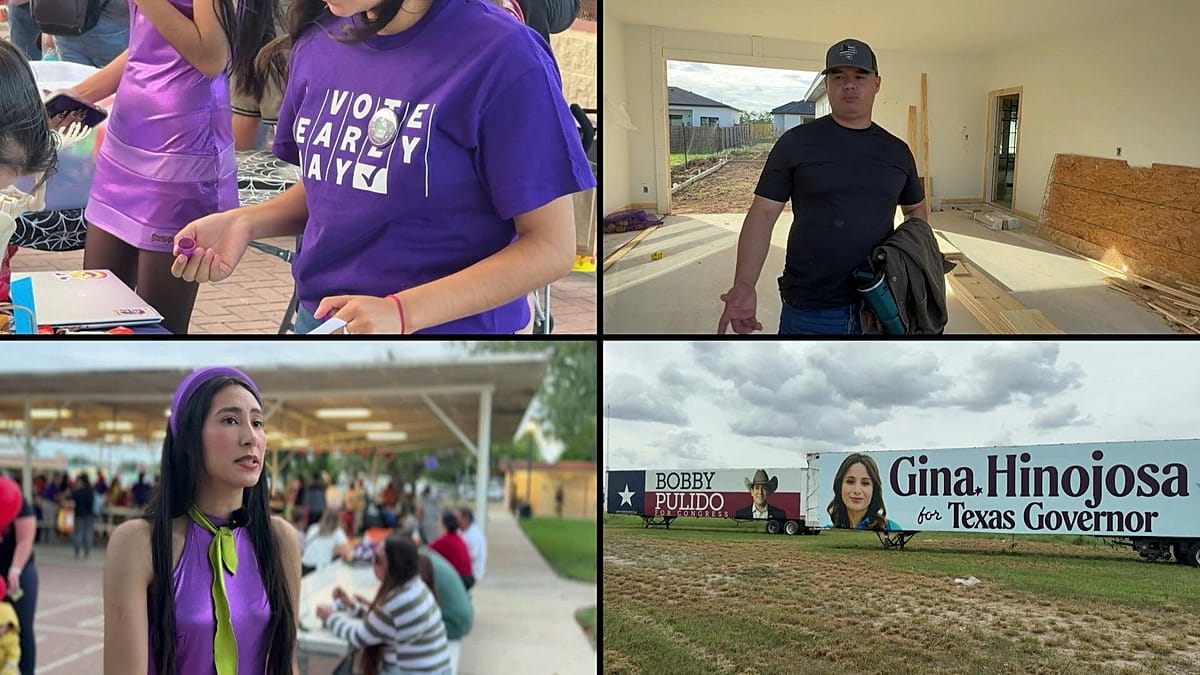
In the dusty border towns of the Rio Grande Valley, a political realignment is being tested. Hispanic voters who helped deliver South Texas to Donald Trump in 2024 are now voicing frustration with the Republican Party, citing unmet promises on the economy, immigration, and the cost of living. As the US midterm elections approach, these voters are weighing whether to stick with the GOP, return to the Democrats, or stay home altogether.
Promises vs. delivery
Maria Elena Garza, a small-business owner in McAllen, voted for Trump two years ago, hoping he would curb inflation and secure the border. Now she says Republicans have not delivered. “They talked a big game, but prices are still high, and the border situation hasn’t improved for us,” she told European Pulse. “I feel let down.”
Her sentiment echoes across the region, where the cost of groceries, rent, and healthcare remains a daily struggle. While national inflation has cooled, many here say they have not felt the relief. “The economy is the number one issue,” said Luis Torres, a political analyst at the University of Texas Rio Grande Valley. “Hispanic voters are pragmatic; they want results, not rhetoric.”
Immigration: a double-edged sword
Immigration policy remains a central and divisive issue. Some voters who backed Trump in 2024 now criticize the administration’s hardline enforcement tactics, which have included mass deportation raids that have sown fear in immigrant communities. “My neighbor was picked up last month. He’s been here for twenty years,” said Rosa Delgado, a teacher in Brownsville. “That’s not what I voted for.”
Others, however, remain disappointed with Democrats, whom they accuse of failing to reform the immigration system. “The Democrats had years to fix this, and they didn’t,” said José Martínez, a truck driver in Laredo. “They just talk about amnesty, but nothing changes.”
Community advocates push for turnout
Amid these crosscurrents, community organizations are working to ensure that eligible voters cast their ballots. In the Rio Grande Valley, groups like the Texas Organizing Project are holding registration drives and informational sessions, despite fears that immigration enforcement could deter participation. “People are scared, but they also know that voting is the only way to make their voices heard,” said Carmen Rios, a community advocate in Harlingen.
Turnout in the 2024 election was notably high among Hispanic voters in South Texas, a trend that both parties are now courting. The midterms, however, often see lower participation, and advocates worry that disillusionment could suppress the vote.
What this means for the midterms
Political analysts say the Hispanic vote in South Texas could be decisive in several competitive House districts. “This is a bellwether region,” Torres said. “If Republicans lose ground here, it will be a clear signal that their 2024 gains were not a permanent realignment.”
For many voters, the choice is not easy. “I’m not happy with either party,” said Garza. “But I’ll still vote. I have to.”
As the midterms approach, the debate over Hispanic loyalties is not just about policy—it is about trust. And in the Rio Grande Valley, trust is in short supply.
This story is part of European Pulse’s ongoing coverage of international elections and their implications for Europe.