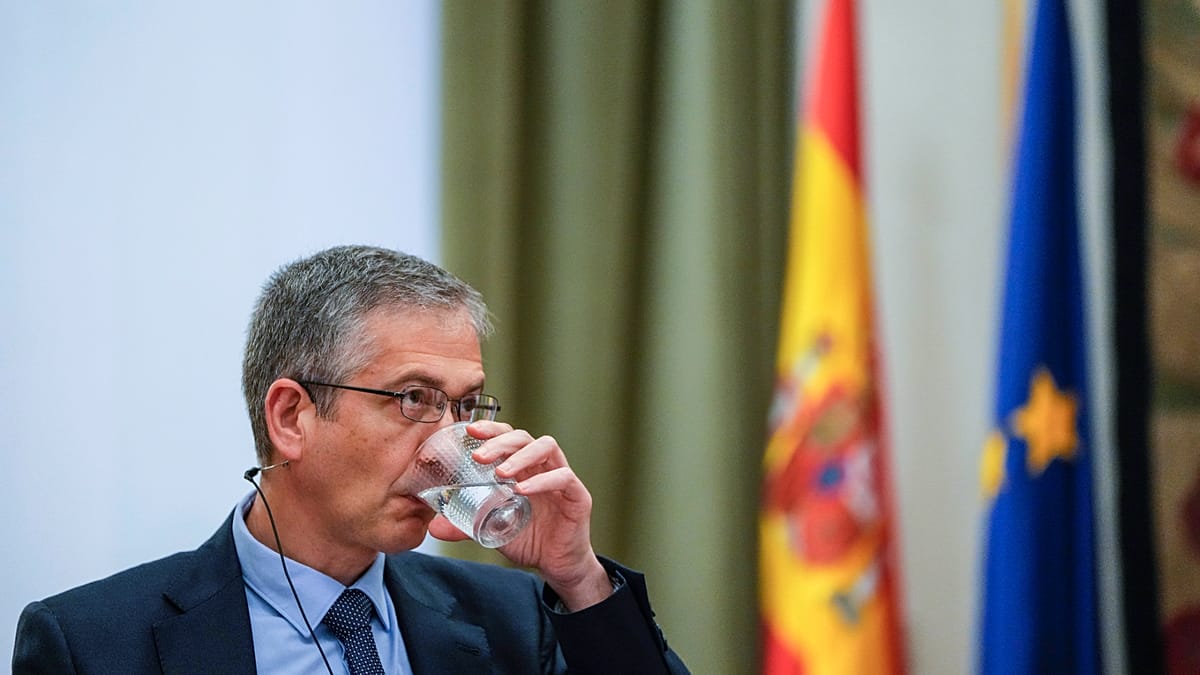
The Spanish government has formally endorsed Pablo Hernández de Cos as its candidate to lead the European Central Bank, marking Madrid's first attempt to secure the eurozone's top monetary post. The decision, reported by Spanish daily Expansión and confirmed by multiple sources, comes as speculation mounts that current ECB President Christine Lagarde may step down earlier than her scheduled departure in October 2027.
Hernández de Cos, currently general manager of the Bank for International Settlements in Basel and former governor of the Bank of Spain from 2018 to 2024, brings a formidable résumé. He sat on the ECB's Governing Council during his tenure, chaired the Basel Committee on Banking Supervision from 2019 to 2024, and has topped surveys of economists this year as the best-prepared candidate for the Frankfurt job.
Regular contact between Hernández de Cos and the team of First Deputy Prime Minister and Economy Minister Carlos Cuerpo has been ongoing for months, according to the sources. The economy ministry confirmed that Spain, as one of the euro area's largest economies and a major ECB shareholder, naturally aspires to a significant role in the institution's next phase and will present a candidacy when the moment arrives. Hernández de Cos declined to comment.
A Presidency-or-Nothing Bid
There is a catch: Hernández de Cos will only leave Basel for Frankfurt if it is for the presidency. His current role means no other position on the ECB's six-member Executive Board—including the chief economist and market operations roles soon to be debated—would represent a step forward. Should the presidency prove out of reach, Madrid would pivot to a different candidate to secure another board seat.
Spain is currently absent from the ECB board after Luis de Guindos's vice-presidency ended this year, passing to Croatia's Boris Vujčić. The economy ministry is determined not to repeat the vacuum that lasted between José Manuel González-Páramo's exit in 2012 and de Guindos's arrival in 2018. This push also comes amid broader European economic challenges, as highlighted in a recent report on vulnerable jobs in Spain.
Government backing is no formality. ECB board aspirants without home support have never succeeded, and earlier reports suggested hesitation in Moncloa due to clashes during Hernández de Cos's governorship over the Bank of Spain's critical stance on minimum wage and pension increases. The sources flatly reject that account, stating that the economy ministry has always regarded him as Spain's only real card for the presidency—an opportunity not to be missed.
Lagarde's Possible Early Exit
Christine Lagarde's potential early departure has compressed the succession timetable. Reports in February indicated she planned to leave before the April 2027 French presidential election, allowing French President Emmanuel Macron and German Chancellor Friedrich Merz to shape the choice. This month, Lagarde declined to rule out an early exit, telling Les Échos that "a European voice needs to be heard in the French presidential debate," before telling Euronews, "I'm not a candidate for anything."
The succession process involves euro area finance ministers voting on candidate lists to a qualified majority, followed by EU leaders taking the final decision—though leaders have sometimes settled on a single name directly, as with Lagarde herself. The debate is expected to intensify after the summer.
Hernández de Cos's candidacy also reflects Spain's broader ambitions on the European stage, a theme echoed in recent events such as Spain's World Cup victory and its economic implications. Whether Madrid can secure the ECB presidency remains uncertain, but its determination to end its board absence is clear.