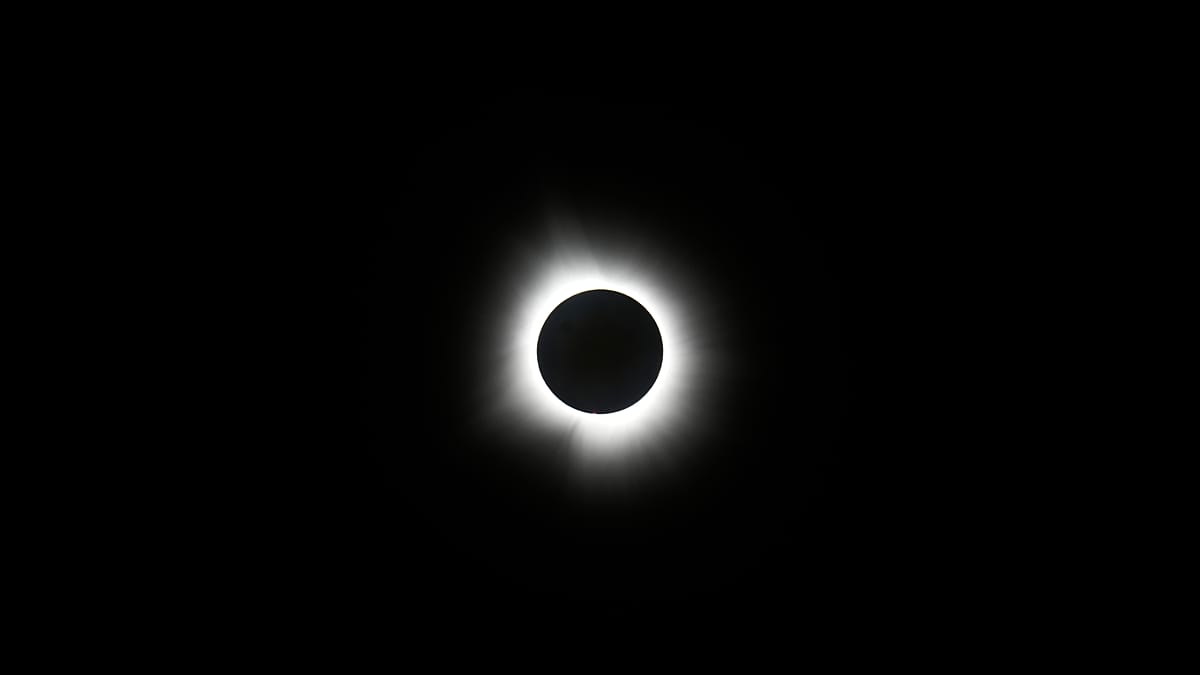
For the first time in over a century, Spain is set to witness a total solar eclipse, and remarkably, it will be followed by two more eclipses in quick succession. On 12 August 2026, a total eclipse will sweep across the Iberian Peninsula, marking the country's first since 1912. A second total eclipse will follow on 2 August 2027, and an annular eclipse on 26 January 2028, completing a trio that has no parallel in 21st-century Europe.
A celestial spectacle with economic promise
The 2026 eclipse will trace a 293-kilometre-wide path of totality across up to twelve autonomous communities, from Galicia in the northwest to the Balearic Islands in the Mediterranean. The path will pass directly over provinces such as Soria, Guadalajara, and Teruel—often called 'Spain's Siberia' due to their sparse populations—as well as all four Galician provinces, most of Castile and León, Asturias, Cantabria, the Basque Country, Navarre, Aragon, parts of Castile-La Mancha, Catalonia, Valencia, and the Balearics. Cities just outside the band, including Madrid and Salamanca, will see a deep partial eclipse, with at least 92% of the Sun obscured.
The Spanish Rural Development Network estimates that the three eclipses could inject nearly €1.4 billion into the economy, with most of the benefit flowing to inland regions that rarely attract large numbers of international visitors. Hotel bookings in these areas are already reported to be fully taken for the 2026 event, according to local tourism officials.
What to expect during totality
The total phase will last no more than 1 minute and 48 seconds, depending on the observer's proximity to the centreline. As the Moon fully covers the Sun, daylight will fade, temperatures may drop by up to five degrees Celsius, and a breeze often picks up. Birds, thinking night has fallen, may stop singing—a phenomenon described by César González, an astronomy populariser at the Madrid Planetarium. 'As soon as the Moon completely covers the Sun, the brightness decreases. We can start to pick out the brightest stars and planets in the sky. If we are in the countryside, we will hear the birds singing. And just as totality begins, the birds stop singing because they think night is falling,' he explains.
This echoes the testimony of Tomás Martínez, a teacher from O Barco de Valdeorras in Ourense, who witnessed the 1912 eclipse. 'The landscape looked sad and wan, and the cold was quite intense. The hens were looking for their roost and one that I saw, which had her chicks, sheltered them beneath her wings,' he recounted to the Spanish Astronomical Society.
Safety first: protect your eyes
Observers must use certified eclipse glasses that meet the ISO 12312-2:2015 standard. Without them, ultraviolet radiation can damage the eye's photoreceptors, and infrared energy can cause thermal burns to the retina, leading to solar retinopathy. Symptoms may include blurred vision, scotomas, distorted shapes, and photophobia, which can cause headaches. For those planning to photograph the event, experts recommend using proper solar filters to avoid damaging both eyes and equipment—see our guide on filming the eclipse safely.
How astronomers predict eclipses
Modern predictions rely on precise knowledge of celestial mechanics. 'We know the laws that govern the movement of planets and satellites and, in inverted commas, it is not too difficult to work out when they are going to happen, even in the distant future,' says González. By comparing past eclipses with historical records, scientists can link events across centuries. The Sumerians may have identified eclipse cycles as early as 5,000 years ago. The most famous is the Saros cycle, lasting about 18 years, 11 days, and 8 hours, after which the Sun, Earth, and Moon return to a similar geometry. A longer cycle, the exeligmos, equals three Saros cycles and allows for more precise predictions from a given location.
The 2026 eclipse will enter Spain through Galicia at around 19:27 local time and exit through the Balearic Islands at about 20:35. For those unable to travel, NASA has selected a revived hamlet in Burgos as a broadcast location, highlighting the event's significance—see why NASA chose that spot. The eclipse will also be partially visible from Canada, the northeastern United States, and northwest Africa.
As Spain prepares for this rare celestial trio, the combination of scientific interest and economic opportunity is drawing attention to regions that rarely feature in global headlines. For a country that last saw a total eclipse in the era of the Titanic, the next few years promise a unique spectacle—and a chance for its interior to shine.