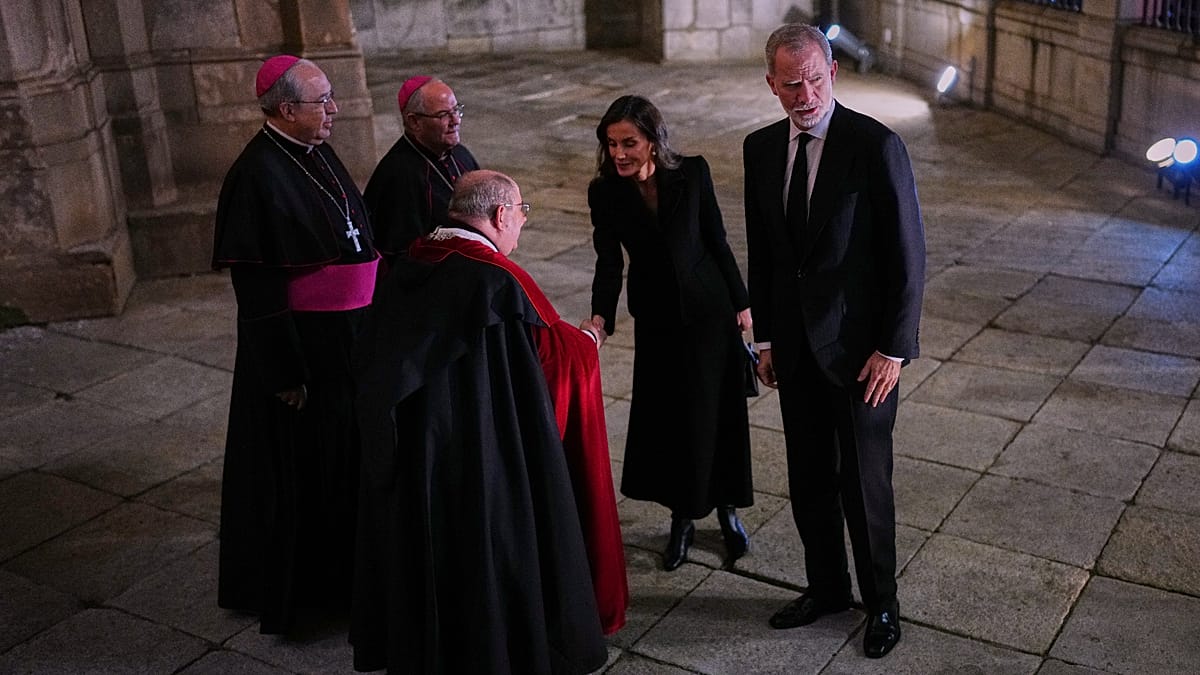
Spain has paid its final respects to the 69 people who died in the country's worst rail disaster in decades. King Felipe VI and Queen Letizia led the state funeral at Toledo Cathedral on Tuesday, 10 November, in a solemn ceremony that brought together political leaders, emergency workers and the families of the victims.
The crash occurred on 28 October when a high-speed train carrying 218 passengers collided with another train near the small town of Urda, in the Castilla-La Mancha region. The impact left carriages twisted and scattered across the tracks, and rescue teams worked through the night to reach survivors. In addition to the 69 dead, dozens more were injured, some critically.
The cathedral in Toledo, a UNESCO World Heritage site and the seat of the Primate of Spain, provided a fitting backdrop for a nation in mourning. The service was attended by Prime Minister Pedro Sánchez, regional leaders, and representatives from the European Union, reflecting the broader European sympathy for the tragedy.
A nation in mourning
During the funeral, the names of the victims were read aloud, each one met with a moment of silence. The royal couple laid a wreath at the altar, and the Archbishop of Toledo, Francisco Cerro Chaves, offered a homily that spoke of the fragility of life and the need for solidarity in the face of such loss. "We are here to accompany those who suffer, to share their pain, and to ask for strength for the families," he said.
The ceremony was also an opportunity to honour the emergency services, who were praised for their swift response. Firefighters, police officers, and medical teams from across the region had been deployed to the crash site, and many of them were present in the congregation.
The tragedy has prompted renewed scrutiny of Spain's high-speed rail network, which is among the most extensive in Europe. While the cause of the collision is still under investigation, initial reports suggest a possible signal failure or human error. The government has pledged a thorough inquiry, and the transport minister has promised that all necessary measures will be taken to prevent a recurrence.
For the families of the victims, the funeral was a step towards closure, but the road ahead remains difficult. Many have called for greater transparency and accountability, and their voices have been echoed by rail safety advocates across the continent. The crash has also resonated beyond Spain's borders, with condolences coming from European leaders and institutions, including the European Commission.
As Spain begins to heal, the memory of the 69 lives lost will not fade quickly. The cathedral's 69 candles, one for each victim, will remain lit for a week as a symbol of remembrance. In the words of one mourner, "We will never forget them, and we will carry them in our hearts."
The tragedy has also sparked a broader conversation about rail safety in Europe, with some calling for a unified European investigation and stricter oversight. While such measures may take time, the immediate focus remains on supporting the victims' families and ensuring that such a disaster never happens again.