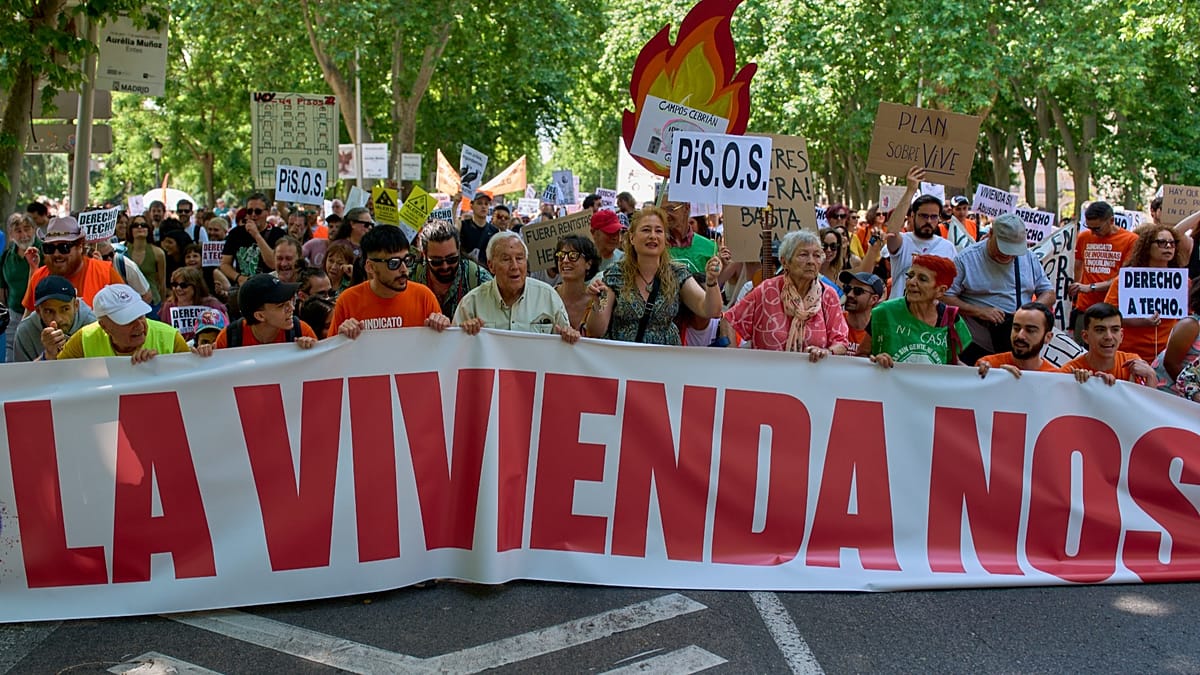
Housing affordability in Spain has reached a historic low. According to a joint study by Fotocasa and InfoJobs, a worker in 2025 must now dedicate the equivalent of 8.4 years of their full gross salary to purchase an 80-square-metre second-hand home. That is a sharp increase from 7.1 years in 2024, meaning the financial burden has grown by 16 months of pay in just twelve months.
The root cause is a widening chasm between wages and property prices. While advertised salaries inched up by just 1% in 2025, the price of second-hand housing soared by 20.5%, reaching an average of €2,879 per square metre. This imbalance is squeezing households across the country, particularly in the most overheated markets.
Regional disparities: from 15 years to under 4
The Balearic Islands remain the most inaccessible autonomous community, where buying a home demands 15.1 years of gross salary — equivalent to 181 months of pay. Madrid is close behind at 15 years, and it also recorded the steepest deterioration in 2025, with the required effort jumping by 34 months compared with the previous year.
Other regions with severe affordability challenges include the Canary Islands and the Basque Country, both exceeding ten years of salary, while Catalonia approaches that threshold at 9.4 years. At the opposite end, Castilla-La Mancha and Extremadura require around four years of gross pay, offering a stark contrast to the coastal and capital hotspots.
At the provincial level, the Balearic Islands again lead the ranking (15.1 years), followed by Madrid (15 years), Málaga (12.9 years), Guipuzcoa (11.7 years), Santa Cruz de Tenerife (11.3 years), and Barcelona (10.2 years). Only 17 of Spain's 50 provinces allow a home to be bought with less than five full years of salary. The most affordable province is Jaén, where residents need just three years of gross pay, with Ciudad Real, Teruel, Toledo, Zamora, and Ávila also remaining below four years.
“Spain is going through the worst housing affordability crisis in its history. Never before have citizens had to put so many years of pay towards buying a home,” said María Matos, Head of Research and spokesperson for Fotocasa.
The study's authors stress that wage growth is failing to keep pace with the property market. Mónica Pérez, Director of Communications and Studies at InfoJobs, noted: “The 1% increase recorded in 2025 falls far short of the rise in house prices.” This gap, she argued, is forcing people to devote ever more years of work and savings to secure a home of their own.
The findings echo broader trends across the eurozone, where real wages have slipped as inflation outpaces pay growth. In Spain, the housing crisis is compounded by a rental market where half of wages now go to housing, leaving many families with little room to save for a deposit.
The report concludes that housing is gradually moving out of reach for many households, especially in the most overheated markets, where the effort required to buy a home virtually doubles the national average. Without significant policy intervention or a cooling of prices, the dream of homeownership in Spain will remain elusive for a growing share of the population.