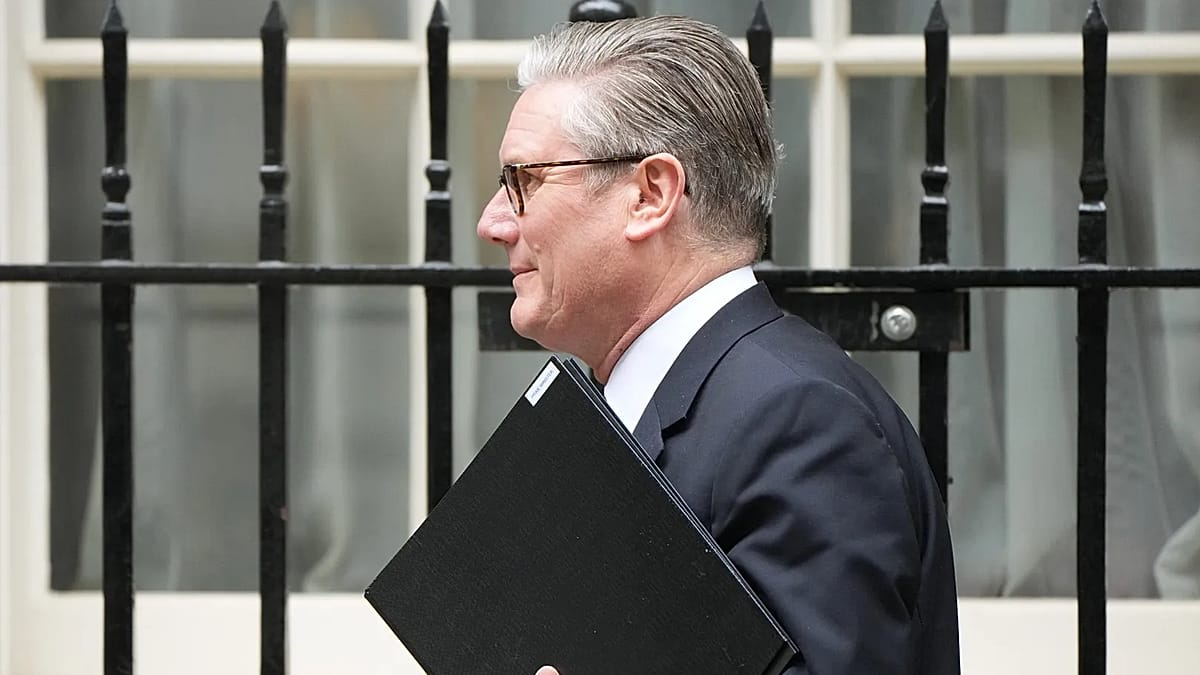
British Prime Minister Keir Starmer has publicly admitted a significant error in judgment, telling the House of Commons that appointing veteran Labour figure Peter Mandelson as the UK's envoy to Washington was a mistake. The concession comes amid a deepening political scandal involving security vetting failures and Mandelson's association with the late convicted sex offender Jeffrey Epstein.
"At the heart of this, there is also a judgment I made that was wrong. I should not have appointed Peter Mandelson," Starmer stated to MPs on Monday. The prime minister is attempting to manage a controversy that has triggered calls for his resignation and threatens his leadership, with his popularity reportedly slumping both nationally and within his own party.
A Withheld Security Failure
Central to the crisis is the revelation that Mandelson, appointed to the crucial diplomatic post last year, failed an independent security vetting process. Starmer and his senior ministers insist they were not informed of this failure until last week, long after Mandelson had taken up the role. "It beggars belief that throughout the whole timeline of events, officials in the Foreign Office saw fit to withhold this information from the most senior ministers in our system, in government," Starmer told Parliament.
He asserted that had he known the vetting recommendation was to deny clearance, "I would not have gone ahead with the appointment." In response, Starmer has sacked the Foreign Office's top civil servant, Olly Robbins, and initiated a review of the vetting process. Former officials, however, have accused the prime minister of making Robbins a scapegoat.
The government maintains that due process was technically followed because Foreign Office rules allowed it to overrule vetting concerns without informing the prime minister's office. Downing Street took the unusual step of releasing a memo to reinforce the timeline of Starmer's knowledge.
Political Fallout and a Defence of Judgment
Opposition leaders have seized on the episode, accusing Starmer of incompetence and misleading Parliament, with many demanding he step down. The scandal arrives as Starmer's Labour party braces for challenging local elections across the UK, including contests for the Scottish Parliament and the Senedd in Wales.
Some ministers have defended the original logic behind the unconventional appointment. Scotland Secretary Douglas Alexander said, "A judgement was made that the Trump administration was an unconventional administration and an unconventional ambassador could do a job for the United Kingdom. That judgement was wrong and the prime minister accepts that." Others argue Starmer must remain in power to navigate global instability, including the war in Iran and the complex task of forging closer relations with the European Union post-Brexit.
Starmer ultimately dismissed Mandelson from the envoy role in September 2025, seven months into the posting, following new disclosures about the extent of Mandelson's ties to Epstein. The financier died in a US prison in 2019 while facing sex-trafficking charges. The scandal echoes other instances where public figures have been linked to Epstein through disinformation campaigns, though Mandelson's association is documented.
Ongoing Legal Scrutiny
Compounding the political damage is a separate UK police investigation into allegations of misconduct in public office by Mandelson, relating to his time as a Labour minister over fifteen years ago. The 72-year-old was arrested and released in February. He has not been charged and denies any criminal wrongdoing.
The crisis underscores the fragility of political authority in London and presents another governance challenge for a European continent already grappling with multiple crises. The episode also highlights the enduring sensitivity of security and appointment procedures, a matter of keen interest in other European capitals like Budapest, where new governments are scrutinising the decisions of their predecessors for potential risks.
As Starmer fights to maintain his premiership, the fallout from the Mandelson appointment continues to expose rifts within the British government and raises serious questions about transparency and accountability at the highest levels of the UK state.



