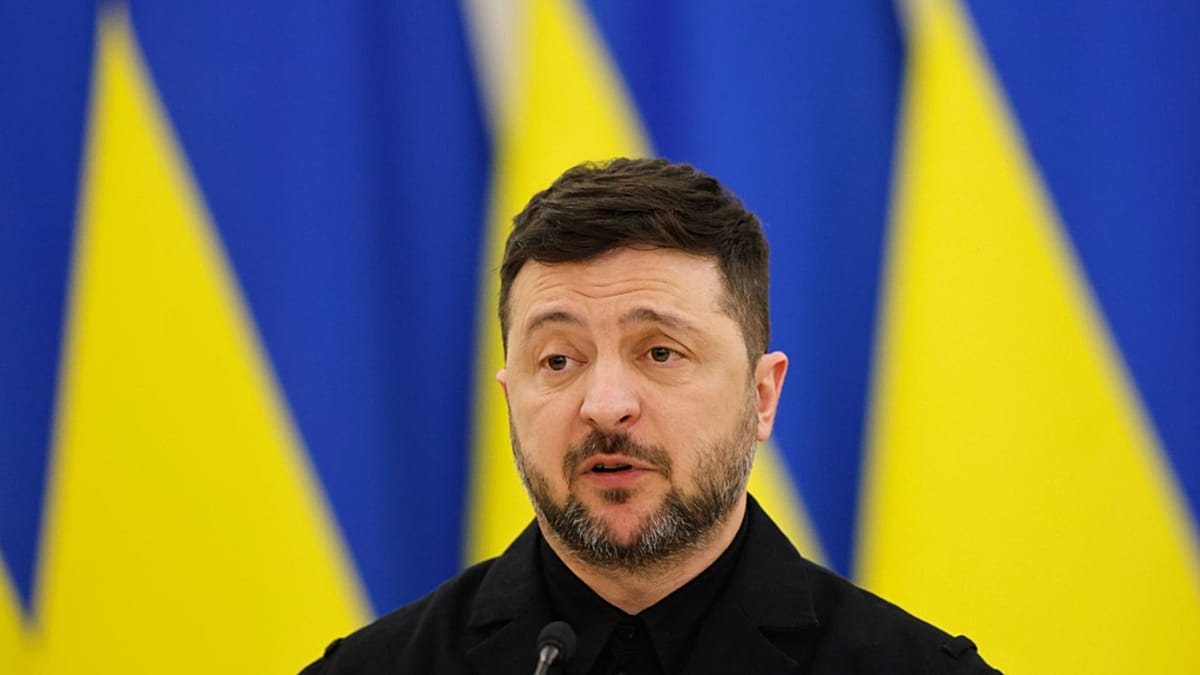
A new wave of synthetic media is attempting to falsely link Ukrainian President Volodymyr Zelenskyy to the late convicted sex offender Jeffrey Epstein. Images circulating on social media platforms, presented as stills from security footage, show figures resembling Zelenskyy and Epstein shaking hands and conversing in intimate settings, allegedly on Epstein's private island. The posts accompanying these images claim a close, non-public relationship between the two men.
European fact-checking teams, however, have swiftly identified the material as fabricated. Analysis using tools like Google's AI platform Gemini detected a SynthID watermark on the images, confirming they were created or modified using AI tools. The grainy, low-resolution quality of the pictures is also a hallmark of synthetic content designed to mimic authentic surveillance footage while masking visual inconsistencies.
Chronological and Evidential Impossibilities
The fabricated narrative collapses under basic scrutiny of the timeline. The images depict Zelenskyy as he has appeared since Russia's full-scale invasion began in February 2022, typically in his now-customary military-style green attire. Jeffrey Epstein, however, died by suicide in a Manhattan jail cell in August 2019. Zelenskyy was inaugurated as president in May of that same year, leaving a window of only a few months during which any alleged meeting could have occurred, for which there is no credible evidence.
Furthermore, a review of the publicly released Epstein documents, including the latest tranche unsealed in January, reveals no direct connection. While Zelenskyy's name appears in the files, it is solely within the context of contemporaneous news reports about his 2019 election victory. There is no record of correspondence, meetings, or any form of relationship between the Ukrainian president and the disgraced financier.
This is not an isolated incident. It forms part of a persistent pattern of disinformation aimed at Zelenskyy. Previous campaigns, often originating from pro-Russian Telegram channels, have pushed similar false narratives linking him to Epstein and human trafficking networks. These efforts frequently involve doctored video clips from legitimate news outlets, including the independent Russian investigative group Agentstvo, to lend an air of credibility.
A Coordinated Pro-Russian Disinformation Tactic
Impersonating reputable media organizations is a common tactic in pro-Russian information operations, such as the known campaign dubbed Storm-1516. The objective is clear: to discredit a key European ally and undermine the continent's steadfast political, military, and humanitarian support for Ukraine. By associating Zelenskyy with the Epstein scandal, propagandists aim to erode public trust in Kyiv's leadership at a critical juncture in the war.
Zelenskyy is far from the only public figure to be falsely implicated in the Epstein files through disinformation. Other Western leaders and political figures, including those in the United Kingdom and the United States, have been subject to similar baseless claims. The strategy exploits the global notoriety of the Epstein case to generate sensationalist and damaging false associations.
The deployment of increasingly sophisticated AI-generated imagery marks an escalation in these campaigns. As tools for creating convincing 'deepfakes' and synthetic photos become more accessible, the challenge for European institutions, media, and civil society grows. This incident follows a pattern seen in other hybrid threats, such as when pro-Russian networks deploy AI-generated soldier deepfakes to sap Ukrainian morale.
The broader European context is one of heightened vigilance against foreign manipulation. Leaders in capitals from Tallinn to Berlin have repeatedly warned about the threat disinformation poses to democratic cohesion and security. The Estonian president, for instance, has framed resilience in the information domain as part of a wider defence imperative, urging an EU defence buildup to avoid testing NATO's core commitments.
Meanwhile, the human cost of the war continues to shape European societies. Millions of Ukrainians have found refuge within the EU, with member states like Germany, Poland, and Czechia leading in hosting Ukrainian refugees after four years of war. Sustained public support for these policies relies on a clear understanding of the facts on the ground, which disinformation campaigns like this one explicitly seek to distort.
Ultimately, the circulation of these fake images underscores a persistent challenge for Europe: defending its information space from malicious actors while supporting a neighbour under assault. The rapid debunking by fact-checkers demonstrates a growing capacity to identify AI-generated forgeries, but the incident serves as a stark reminder that the battle for narrative supremacy remains a central front in the continent's ongoing security crisis.



