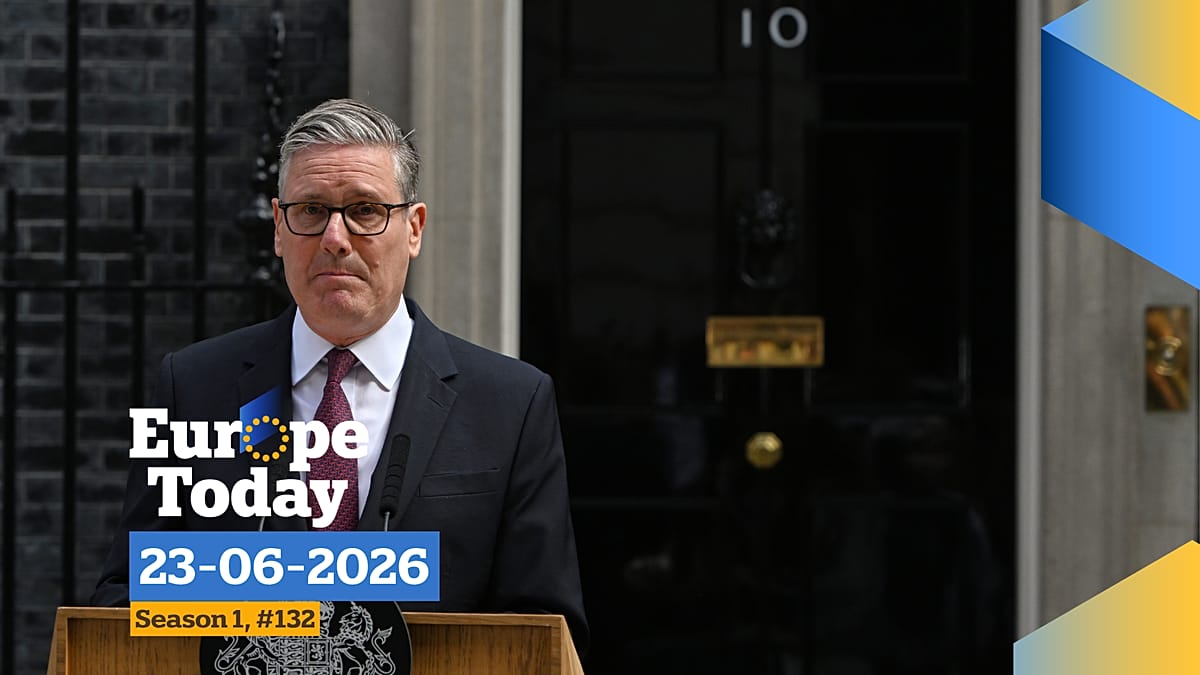
In a dramatic turn of events, British Prime Minister Keir Starmer announced his resignation today, plunging the United Kingdom into a fresh period of political uncertainty. The move comes exactly a decade after the country voted to leave the European Union in the 2016 Brexit referendum, a milestone that has prompted renewed debate about Britain's place in Europe.
Starmer's departure, reported by Mared Gwyn Jones of Euronews, leaves the Labour Party without a leader and raises immediate questions about the future of UK-EU relations. During his tenure, Starmer had pursued a cautious policy of rapprochement with Brussels, seeking to repair the damage wrought by the Brexit divorce without reopening the fundamental question of membership. His resignation now threatens to derail those efforts, potentially opening the door for a more eurosceptic successor or, conversely, a leader willing to push for closer alignment with the bloc.
Brexit at Ten: A Nation Reconsiders
As Britain marks ten years since the referendum, Jakub Janas of Euronews has examined how public attitudes toward Brexit have evolved. Polling data suggests that a growing number of Britons now believe leaving the EU was a mistake, with economic stagnation, trade friction, and labour shortages weighing heavily on the national psyche. A recent survey indicated that if another referendum were held today, the margin would likely favour rejoining the European Union.
This shift is reflected in the political landscape as well. The Conservative Party, which championed Brexit and has governed for most of the post-referendum period, has seen its support erode. Meanwhile, pro-European voices have grown louder, though the path back to membership remains fraught with political and legal obstacles. For a deeper look at how British opinion has changed, see our analysis: A Decade After Brexit, British Public Opinion Shifts Back Toward EU.
Poland-Ukraine Relations: A Dangerous Drift
Elsewhere in Europe, the relationship between Poland and Ukraine continues to deteriorate. Sasha Vakulina of Euronews reports that a dispute over historical memory has escalated into a full-blown diplomatic crisis between Warsaw and Kyiv. At the heart of the tension is the commemoration of the Volhynia massacre, a World War II-era tragedy in which Ukrainian nationalists killed tens of thousands of ethnic Poles. Poland has demanded that Ukraine acknowledge the event as genocide, while Kyiv has resisted, fearing it would undermine national unity during wartime.
The row has spilled over into practical cooperation, with Poland recently threatening to block Ukraine's EU accession talks unless the issue is resolved. Brussels has warned that this infighting plays directly into the hands of the Kremlin. As the EU Defence Chief recently cautioned, more Russian attacks on European soil are likely, making unity between Warsaw and Kyiv all the more critical.
The dispute also risks undermining the broader Western alliance against Russia. Poland has been one of Ukraine's staunchest supporters, providing military aid and hosting millions of refugees. But the current impasse threatens to fracture that solidarity at a time when Moscow is watching closely for any signs of division.
Brussels Welcomes Kazakhstan's President
In a separate development, the European Union hosted Kazakh President Kassym-Jomart Tokayev in Brussels for talks on deepening economic and strategic cooperation. Ambassador Roman Vassilenko discussed the visit, highlighting opportunities in energy, critical raw materials, and transport links. Kazakhstan, a key Central Asian partner, has sought to diversify its foreign relations away from Russia and China, and the EU has been eager to secure access to the country's vast reserves of oil, gas, and rare earth elements.
The visit underscores the EU's broader strategy of building ties with resource-rich nations in its eastern neighbourhood, particularly as the bloc seeks to reduce dependence on Russian energy. For more on how the EU is navigating its eastern partnerships, see our coverage of Moldova's EU accession and Transnistria settlement.
Finally, in the world of sport, Lionel Messi became the all-time leading goalscorer in FIFA World Cup history, France secured their place in the knockout stage, and Norway qualified thanks to another masterclass from Erling Haaland. The tournament continues to captivate audiences across Europe and beyond.