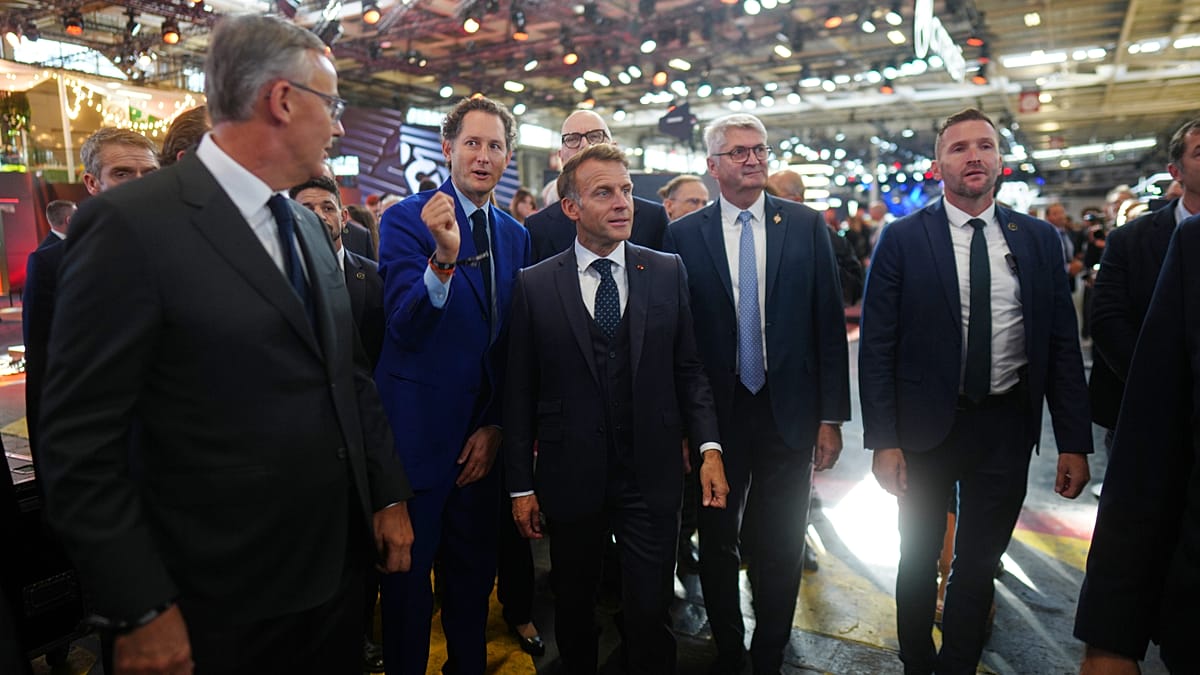
Speaking at the Paris Automotive Summit, held alongside the Paris Motor Show, Stellantis chief executive Antonio Filosa laid out a strategy to address the group's excess production capacity in Europe without resorting to plant closures. The solution, he explained, lies in sharing industrial capacity with Chinese partners such as Leapmotor and Dongfeng.
"We have excess production capacity, especially in Europe, but we do not want to shut plants," Filosa said. The aim is to use existing facilities in line with demand, while ensuring that products brought into the group's sites do not directly compete with Stellantis's own brands.
Partnerships as a way forward
The collaboration with Leapmotor, Filosa noted, combines technological expertise, industrial capacity, and market access. Part of the production could be located in Europe to serve European customers more efficiently and expand the range of affordable electric vehicles. The model extends to other Chinese players and partners in markets such as India, where Stellantis aims to integrate partners' technologies with its own industrial experience, sales network, and consumer knowledge.
The European distribution network is another advantage, allowing competitive products to reach the market through well-established commercial infrastructure. This approach is part of the broader electric city car push seen at the Paris show.
More battery gigafactories in Europe
The electric transition will require new investment in battery production. Stellantis already operates European gigafactories built with two partners, but Filosa indicated that additional ones will be necessary to support demand and meet "Made in Europe" requirements. He stressed that the industry needs sufficient time to carry out these investments, making European battery capacity a key issue for competitiveness.
New Stla One platform debuts with Peugeot
On the industrial front, Stellantis is preparing to launch the new global Stla One platform, initially used by Peugeot in France and later rolled out to other brands in Europe and North America. The project is part of the Fastlane 2030 plan, which foresees total investment of €60 billion, with 40% going into cross-cutting technologies shared across brands and markets.
The same approach applies to engines, with common families of powertrains used in multiple regions. The goal is to reduce duplication, harness economies of scale, and channel a significant share of investment into shared solutions, leaving the remaining 60% for brand-specific needs.
Emissions rules and Made in Europe
Filosa urged a rapid agreement on the revision of European CO2 emissions rules and on measures to support Made in Europe. "We all agree on 90% of the issues," he said, underlining the urgency of approving new rules. Talks involve diplomatic initiatives by France and Germany, as well as meetings with manufacturers and suppliers promoted by French President Emmanuel Macron.
The push for regulatory clarity comes as the industry faces pressure from geopolitical tensions that affect supply chains and energy costs.
In the days leading up to the show, Stellantis unveiled six of nine concept cars during The Night Before event. The prototypes, bearing the signatures of Alfa Romeo, Citroën, DS Automobiles, FIAT, Opel, and Peugeot, illustrate how the group intends to relaunch its brands by focusing on design, innovation, and new mobility solutions. The preview is part of the Fastlane 2030 strategic plan, presented in May by Filosa, with the aim of accelerating model development and strengthening competitiveness.