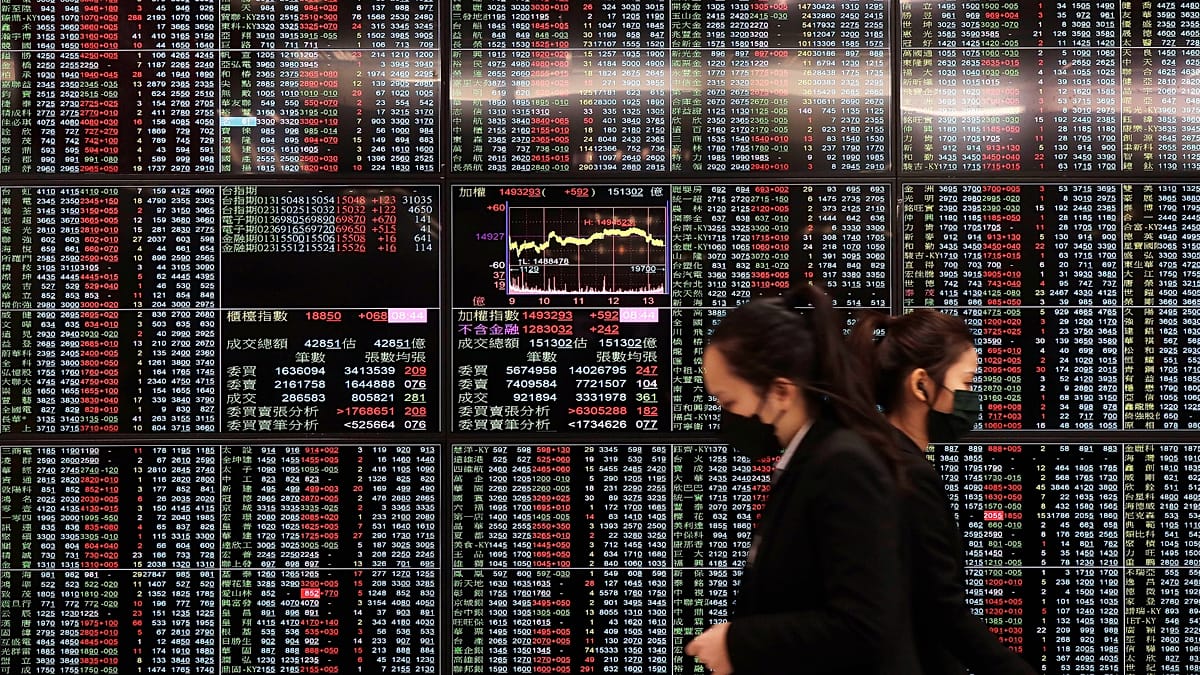
Taiwan's stock market has been on a tear, propelled by the global AI boom, and a growing number of ordinary people are borrowing heavily to ride the wave. From bank loans to remortgaging homes, the island's retail investors are taking on significant debt to buy shares, a trend that has brought both windfalls and painful losses.
Lucas Chen, a 34-year-old real-estate worker, borrowed NT$5 million (€136,000) earlier this year to buy tech stocks, including TSMC, and saw his investment quadruple within six months. "The first half of the year was really crazy. It was absolutely wild," he said. Chen, who earns a base salary of up to NT$50,000 (about €1,360) a month, used his Tesla as collateral for two of the three loans he took out.
His success story is not unique. Taiwan's main stock index soared 59% in the first half of the year, driven by demand for AI hardware from chip giant TSMC and other tech firms. But the rally has also left many investors nursing heavy losses, and authorities have issued warnings about the risks of borrowing to invest.
Borrowing to chase gains
Financial influencer Yeh Yu-shuo, who runs a Facebook group with hundreds of thousands of members, has seen the darker side of the frenzy. "I've reviewed posts saying they want to jump off a building," he said. One anonymous poster described investing NT$10 million (about €272,000), including a NT$6 million (about €163,000) mortgage, and losing nearly half of it. "Since last month I've been waking up in the middle of the night in a panic," the poster wrote. "I've already sought treatment from a psychiatrist, but none of it has helped."
The borrowing boom is not confined to Taiwan. Across Europe, similar trends have emerged in markets like Sweden and the Netherlands, where retail investors have used leverage to amplify bets on tech stocks. However, Taiwan's case is particularly acute, with banks sitting on "unprecedented" levels of deposits and eager to lend, according to Norman Yin, a professor at National Chengchi University.
"If I borrow money from a bank to buy stocks, I could make more in one day than I earn from my salary in a month," Yin said, noting that fresh graduates often earn around NT$40,000 (about €1,090) per month. "It's faster and easier than sitting in an office and working hard."
Margin trading, where investors borrow from brokers, rose nearly 20% in the first half of the year, according to Taiwan Stock Exchange data. The exchange has started publishing videos on social media warning young investors of the risks of defaulting on loans.
The global tech rally hit a wall in July, with Taiwan's index falling about 16% from its record high in late June. South Korea's market, another AI beneficiary, plunged about 40%. Concerns about when AI investments will pay off and warnings of overvaluation have weighed on sentiment.
Despite the volatility, Yeh remains confident in Taiwan's market "as long as TSMC remains stable." The Taiex has recovered most of its summer losses, and Chen says the opportunity to make money will keep him investing.
For European readers, the Taiwanese experience offers a cautionary tale about the dangers of leverage in frothy markets. As education spending across Europe shows, financial literacy is uneven, and the allure of quick gains can cloud judgment. Meanwhile, efforts to integrate Nordic stock exchanges could increase retail participation, but with it, the risk of similar borrowing sprees.