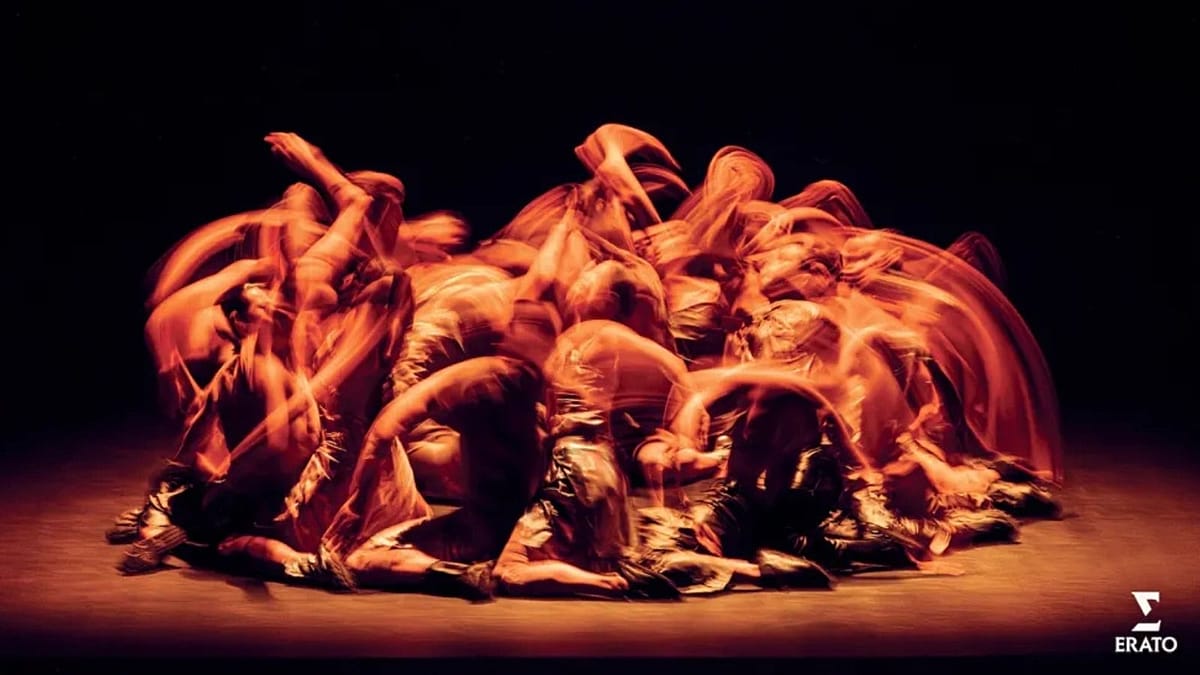
Five years after Daft Punk's dissolution, Thomas Bangalter continues to redefine his post-electro career. The French composer, known for his masked duo's pioneering electronic sound, has announced a new ballet score, Mirage – Ballet For 16 Dancers. The piece is described as a “vast and atmospheric work of electronic minimalism,” marking another sharp turn from his dance-music origins.
The score accompanies a ballet choreographed by Damien Jalet, a frequent collaborator with artists like Sidi Larbi Cherkaoui, and features visual installations by Japanese contemporary artist Kōhei Nawa. The music aims to trace the “changing states” of the dancers, blending Bangalter's electronic sensibilities with classical structure.
Bangalter's pivot to classical composition began with his 2023 debut solo album, Mythologies, a 90-minute orchestral work that drew comparisons to Vivaldi and Philip Glass. That album, which he composed for choreographer Angelin Preljocaj, was praised for its Baroque influences and minimalist repetition, echoing the sampling techniques Daft Punk mastered. Now, with Mirage, he returns to a more electronic palette, though still within a theatrical framework.
From Dance Floors to Dance Stages
Bangalter's trajectory since Daft Punk's 2021 breakup has been eclectic. He has scored films, contributed to operatic soundtracks, and composed for symphony orchestras. His work increasingly intersects with contemporary dance and visual art, a shift that aligns with his broader artistic ambitions. The new ballet is set to premiere at a yet-unannounced venue, with a teaser already released online.
Beyond the ballet, Bangalter is also curating a “massive immersive event” at Art Basel in Switzerland on 20 June. Titled Warehouse Artefacts, the installation will combine a DJ set by German producer Rampa with visual art by Julian Charrière. Organizers describe it as “a sensory overload aimed squarely at the intersection of music and fine art.” This event underscores Bangalter's continued engagement with electronic music culture, even as he explores classical forms.
For European audiences, Bangalter's evolution reflects a broader trend among electronic artists—such as Aphex Twin or Brian Eno—who have moved into orchestral and installation work. His projects also highlight the continent's vibrant dance and art scenes, from Paris to Basel. The ballet's collaboration with Jalet and Nawa, both internationally recognized, further cements Europe's role as a hub for cross-disciplinary performance.
As Bangalter prepares for the Art Basel event, he joins a lineage of musicians who have blurred boundaries between club culture and high art. Whether his minimalist electronic score will resonate as deeply as Mythologies remains to be seen, but his willingness to experiment continues to captivate audiences across Europe and beyond.