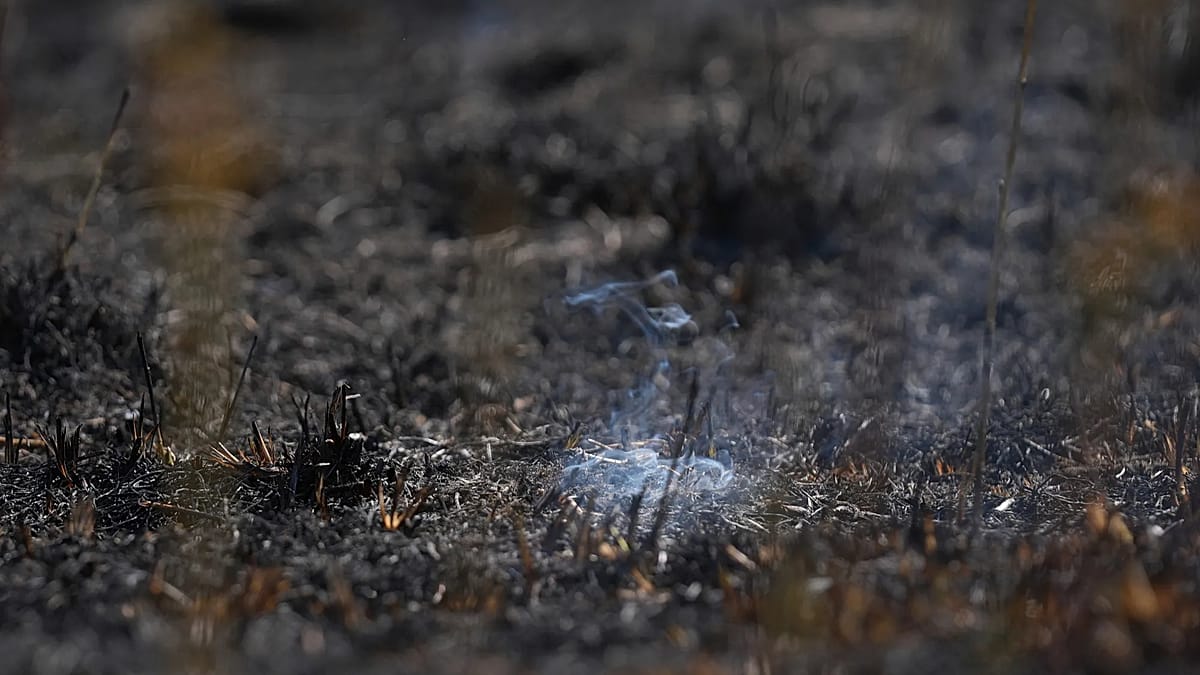
What began as a routine forest fire in late June near the towns of Meuselwitz, Mumsdorf and Falkenhain in the eastern German state of Thuringia has turned into a stubborn underground blaze that experts say could persist for years. The fire, which broke out on 27 June, has ignited coal-bearing deposits left behind by decades of open-cast lignite mining in the region.
Above ground, little remains of the original flames. But beneath the surface, coal-rich layers continue to smoulder, sending a steady stream of smoke through the soil. The site, a former coal slurry basin near Mumsdorf, is now the focus of a complex firefighting operation that has already lasted three months and shows no sign of a quick resolution.
Why the fire is so hard to put out
Unlike a surface forest fire, a smouldering fire burns without open flames, slowly consuming material in a low-oxygen environment. This makes it particularly difficult to detect and even harder to extinguish. The fire can spread underground, resurfacing in unexpected places, and may continue for months or even years.
According to the Lausitzer und Mitteldeutsche Bergbau-Verwaltungsgesellschaft (LMBV), the state-owned company managing the legacy of former mining operations, the fire zone is off-limits to firefighters for safety reasons. Water supplies in the area are limited, and water-bombing helicopters can only dampen the surface, doing little to reach the smouldering depths.
For now, emergency services are focused on containment. A firebreak around the seat of the fire has been widened to up to 50 metres, and sprinkler systems are being used to keep the perimeter wet. Drones fly over the area daily to monitor the situation.
A multi-month plan to flood the site
The authorities have drawn up a long-term strategy to tackle the blaze. The first step is to dampen the surface of the coal slurry basin to reduce smoke and odour nuisance. Coal slurry, a mixture of water, coal dust and coal particles that was flushed into the basin over decades, is still smouldering beneath a layer of soil.
Once the surface is sufficiently moistened, the plan is to cover the fire zone with a two-metre-thick layer of soil to cut off the oxygen supply. But the most ambitious measure is to flood the site entirely. This will require several hundred thousand cubic metres of water, to be drawn from the nearby Zipsendorf residual pit.
Before flooding can begin, two pipelines must be built over a distance of four kilometres, along with a new well. These projects are expected to be completed by November, with the flooding scheduled to start by January 2027 at the latest, according to Bernd Sablotny, spokesperson for the LMBV management.
"We are working flat out to implement the measures as quickly as possible," Sablotny said at a public meeting in Meuselwitz. He stressed that lengthy approval procedures should not cause delays, a point echoed by representatives of the responsible authorities.
The construction of the pipeline will pass through a protected nature area, but the municipality of Elsteraue has defended the plan, saying it is necessary to safeguard the local population.
Residents face months of smoke and uncertainty
In the meantime, residents in the surrounding communities are bearing the brunt of the fire. Complaints of respiratory irritation and unpleasant odours have been reported, with the impact varying depending on wind strength and direction. The town of Meuselwitz has been ordered to hire external experts to conduct a comprehensive air quality measurement programme, as the Burgenland district explained.
The measurements will focus on concentrations of carbon monoxide, oxygen, carbon dioxide, methane and hydrogen sulphide. The LMBV currently describes the results as "unremarkable," but the monitoring will continue. Air quality is also being checked in other municipalities, including Elsteraue.
The situation has drawn attention beyond the immediate region, highlighting the long-term environmental legacy of Germany's lignite mining industry. As the country pushes towards its 2045 fossil fuel exit plan, the challenges of managing former mining sites are becoming increasingly apparent. The underground fire in Thuringia is a stark reminder that the costs of the coal era will be paid for years to come.
For now, the emergency services remain on site, working around the clock to prevent the fire from spreading to adjacent woodland and meadow areas. But with the flooding operation still months away, the smouldering blaze is likely to remain a fixture of the local landscape for some time.