Tokyo Governor Yuriko Koike has called on start-ups, SMEs, and local governments across Japan, Europe, and Kazakhstan to intensify collaboration on green hydrogen technology, artificial intelligence, and urban resilience. Speaking during an official visit to Astana, Koike emphasised that sharing knowledge and best practices is essential to accelerating the energy transition in major cities.
Green Hydrogen as a Shared Urban Challenge
Green hydrogen, produced by splitting water into hydrogen and oxygen using renewable energy such as wind or solar power, generates no carbon emissions. This distinguishes it from the far more common "grey" hydrogen, which relies on natural gas and accounts for the vast majority of hydrogen produced today. However, scaling up green hydrogen remains expensive and requires substantial investment in pipelines, storage, and shipping terminals.
Koike noted that cities face particular challenges in integrating this technology into existing infrastructure. "With the goals of halving emissions by 2030 and achieving zero emissions by 2050, Tokyo is advancing a wide range of initiatives," she said. "I hope that knowledge sharing in forums like these will further drive innovation and accelerate the hydrogen implementation in various regions."
The governor's trip included meetings with the mayors of Rotterdam and Amsterdam, where discussions focused on incorporating green hydrogen into urban infrastructure, supporting start-ups in the sector, and advancing integrated port management. "We confirmed the importance of major cities collaborating to address common challenges," Koike added.
European cities have been at the forefront of hydrogen pilot projects, with Rotterdam positioning itself as a key hub for hydrogen imports and distribution. The European Union, alongside Japan, South Korea, Australia, and Gulf states, is pouring significant public funds into national hydrogen strategies and infrastructure. Start-ups and SMEs play a vital supporting role, particularly in improving electrolyser efficiency, fuel cell design, and niche applications such as urban transport and localised energy storage. This aligns with broader efforts to diversify supply chains, as highlighted by the EU Industry Chief's recent call for companies to diversify supply chains amid China tensions.
Strengthened Ties with Kazakhstan
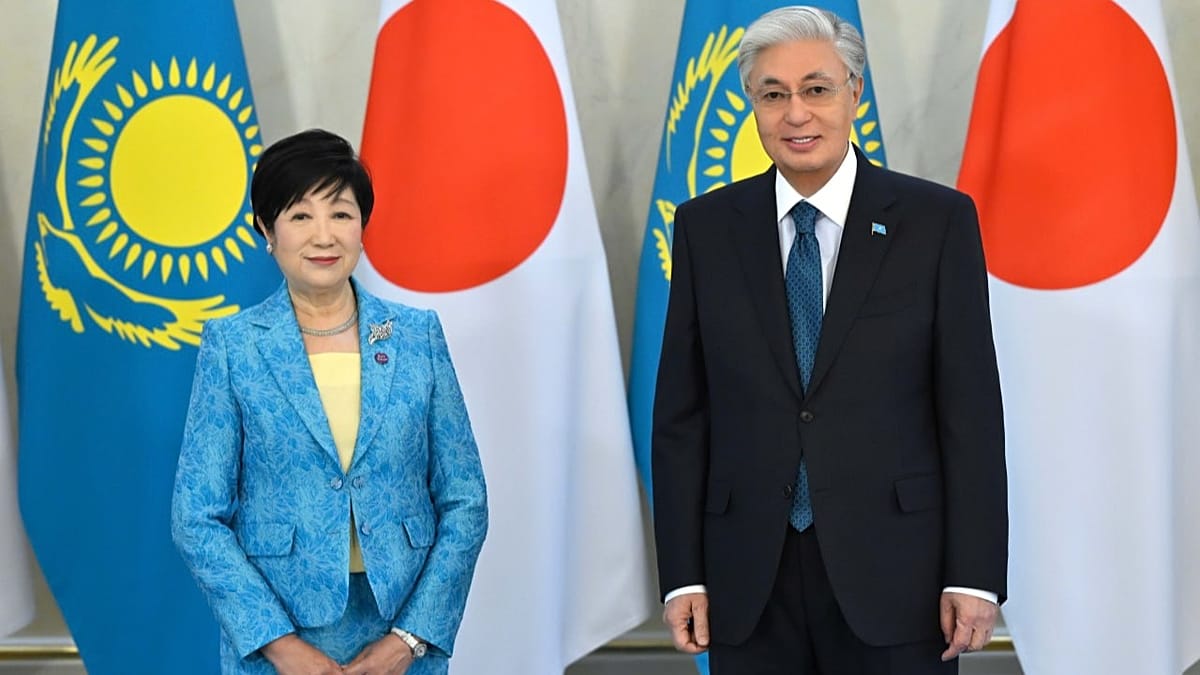
In Astana, Koike met with Kazakh President Kassym-Jomart Tokayev to discuss future cooperation between Kazakhstan and Japan. President Tokayev noted the upcoming tenth anniversary of the Enhanced Strategic Partnership between the two countries. "Here in Kazakhstan, we know you as a time-tested friend, partner and dedicated statesperson who made a lot for Kazakh-Japanese relations," Tokayev said. "For more than 25 years, your initiatives devoted to Kazakhstan's history and culture have played a unique role in bringing our peoples closer."
Koike revealed that Tokyo and Astana signed a memorandum of understanding on digital development and urban resilience in December 2025, which formed the basis for several discussions during the visit. "President Tokayev and I have a long-standing relationship in promoting exchanges and cooperation between our countries and cities," she said, adding that energy security amid ongoing tensions in the Middle East was among the issues discussed. President Tokayev awarded Koike the Order of Dostyk (Friendship) First Degree in recognition of her contribution to strengthening bilateral ties.
Koike also visited AlemAI, Kazakhstan's premier centre for artificial intelligence, located in the EXPO ecosystem in Astana. The 20,000-square-metre technology and education hub unites scientific research, start-ups, and smart governance to accelerate the nation's digital transformation. At Kazakhstan's Ministry of Agriculture, she learned about sturgeon farming and caviar production, noting similarities with projects on Tokyo's Kozushima island.
The visit underscores a growing trend of city-to-city diplomacy on climate and technology issues, with Tokyo positioning itself as a leader in urban sustainability. As the World Urban Forum in Baku recently concluded with an urgent call for global urban action, Koike's push for collaboration reflects a broader recognition that no single city can solve the climate challenge alone.