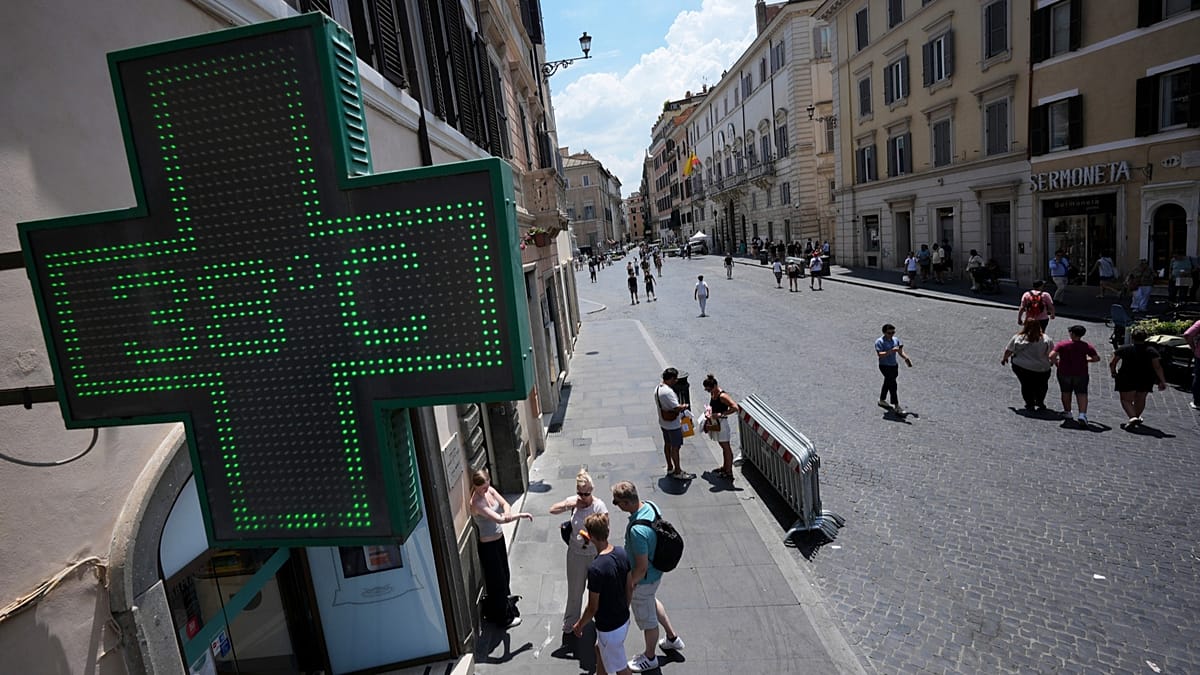
Western Europe recorded its hottest June since records began, as a severe heatwave swept across the continent, the European Union's Copernicus Climate Change Service reported on Thursday. The average temperature in the region reached 20.74°C, exceeding the 1991-2020 average by more than 3°C and breaking the previous record set in June 2025.
The findings come as a new heatwave batters Europe this week, following an unusually early spring hot spell in May and the record-breaking June event. Globally, June was the second hottest on record for both the world and Europe as a whole, with temperatures 1.39°C above the estimated pre-industrial average (1850-1900), according to Copernicus.
Heat Dome and Health Impacts
A so-called "heat dome" — a high-pressure system that traps heat like a lid on a boiling pot — drove all-time and monthly temperature records in several countries. More than two-thirds of Europeans, some 410 million people, endured temperatures above 35°C between June 15 and 30, according to an AFP analysis. Thousands of deaths were linked to the heatwave, primarily in France, Spain, and Belgium.
"We will see more heatwaves in a warmer world," said Samantha Burgess, strategic climate lead at the European Centre for Medium-Range Weather Forecasts (ECMWF), which operates Copernicus. "They will be more intense and they will last longer, and they will impact more geographical areas."
The June heatwave also contributed to severe health impacts, including heat-related deaths, Copernicus noted. Nearly 300 million people — including 100 million children and elderly individuals — may have been exposed to harmful levels of ozone pollution during the punishing heat, according to a report from NGO Global Witness shared exclusively with AFP.
High humidity exacerbated the heatwave's intensity, Burgess explained. "It was extremely humid, which then meant people didn't get relief at night. So we had a number of tropical nights in a row."
Marine Heatwaves and Drought Risks
The Mediterranean experienced its own record-breaking marine heatwave, while Atlantic coasts were also hit by hot spells, putting ecosystems at risk. "When the sea is warm, we get less alleviation at nighttime because there's no coolness coming from the ocean. There's no sea breeze," Burgess said.
Dry conditions raised drought risks in eastern Europe and contributed to wildfire activity in the Iberian Peninsula and southern France, Copernicus reported. The world's oceans recorded their highest June temperatures on record, against the backdrop of a developing El Niño weather pattern forecast to strengthen in the tropical Pacific.
World Weather Attribution, a network of climate scientists, said last month that Europe's June heatwave was the "most severe ever recorded" based on a three-day forecast of average peak temperatures. Such an event would have been "virtually impossible" without climate change, they noted; a similar heatwave in June 2003 would have been about 2°C cooler.
Adaptation and the Path Forward
Burgess stressed that Europe needs adaptation plans to cope with climate change. "Many amazing buildings across Europe were built hundreds of years ago and that climate no longer exists," she said. The continent is the world's fastest-warming region, and changes in atmospheric circulation are fueling more frequent and intense heatwaves.
As cities like Paris, London, and Berlin grapple with aging infrastructure, some are exploring innovative solutions. For instance, Europe's cities turn sewers into swimming spots as heatwaves intensify, while eco-construction keeps buildings cool during heatwaves, but costs more. The southern and central-eastern Europe bear brunt of extreme heatwaves, highlighting regional disparities.
"We're at a transition point where climate change is shifting from being an abstract statistical future problem that you read about in reports, to a concrete present and disruptive feature of daily life," Burgess said. She emphasized that the world must reach net-zero emissions from fossil fuels as soon as possible. "Heatwaves will only get worse the more fossil fuel we pump into the atmosphere."