As heatwaves arrive earlier and more intensely across Europe, the buildings where millions live and work are under scrutiny. In northern Europe, many homes are designed to retain heat, turning into saunas when temperatures spike. Yet a growing field—eco-construction—offers a way to keep interiors cool while cutting carbon emissions.
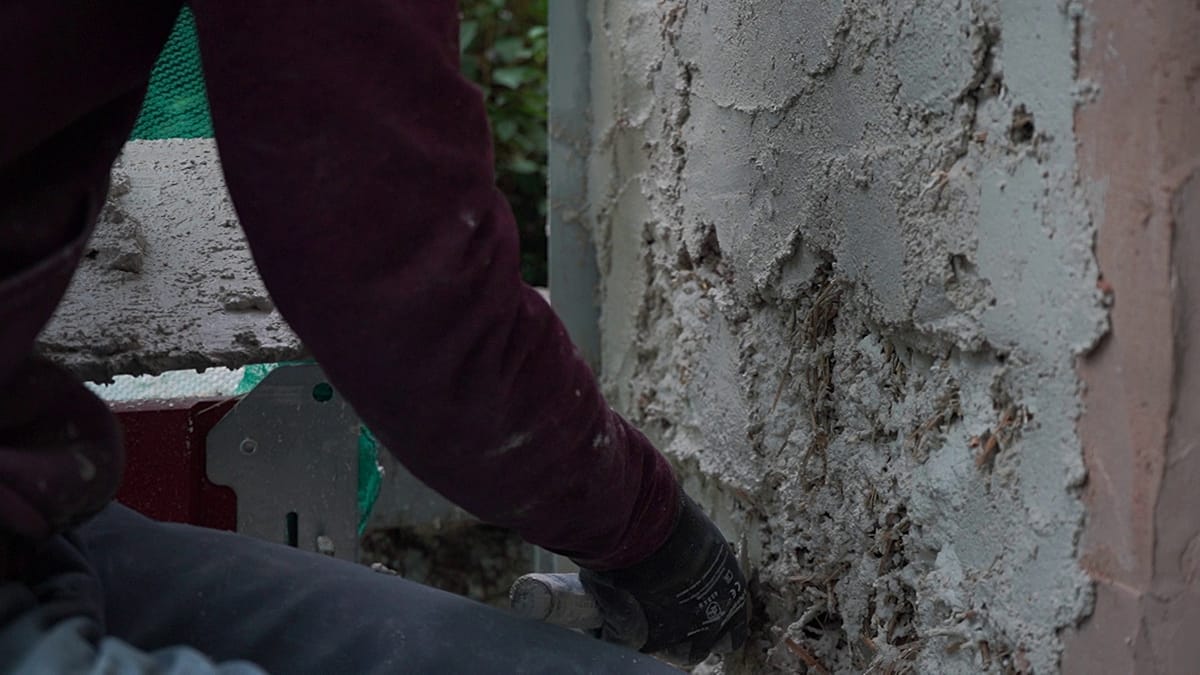
Adrien Poullain, an eco-construction architect and founder of Les Grands Moyens, describes the approach as “a whole range of techniques based on natural materials.” These include “locally sourced materials, which are generally installed with few tools or with equipment that requires little electrical or mechanical energy. This can include construction using raw earth, timber, straw, or stone.”
The Simone Veil Library in Le Chesnay-Rocquencourt, on the outskirts of Paris, was built using these principles. During France’s June heatwave, the library stayed open without air conditioning. Director Gaëlle Ledoré-Montier notes that while outdoor temperatures reached “up to 35/36 degrees outside,” they “managed to maintain an indoor temperature of 23.5 degrees or 25.5 degrees.” Even during an unprecedented heatwave when temperatures hit 41–42°C, the library peaked at 32°C—roughly 10 degrees cooler than outside.
Europe’s Building Stock: A Public Health and Climate Challenge
Nearly 75% of Europe’s building stock is energy inefficient, according to the EU, and more than 85% of today’s buildings are expected to still be in use by 2050. Yet renovation rates have stagnated at about 1% per year. This inefficiency is not just a comfort issue; it is a public health and climate problem. Poorly insulated buildings require more energy for both heating in winter and cooling during increasingly frequent summer heatwaves.
The European Environment Agency (EEA) reports that the building sector accounts for 35% of the EU’s greenhouse gas emissions, and buildings consume 42% of the EU’s energy—much of it for heating and cooling. Sustainable builder Poullain explains that green construction “has the advantage of being low carbon, meaning that it requires much less energy in its manufacturing processes, as well as in the materials used, which require less transport and less processing.” This aligns with the EU’s commitments under the Paris Agreement, which aims to limit global temperature rise to well below 2°C.
As Southern and Central-Eastern Europe bear the brunt of extreme heatwaves, the need for cooler buildings becomes more urgent. France’s official public health guidance recommends staying in cool indoor spaces, but for many Europeans, that advice is hard to follow.
The Cost Barrier
One major hurdle for eco-construction is cost. Poullain estimates it is often 15–20% more expensive than conventional building. Clients frequently prioritize the lowest upfront cost, even though sustainable buildings typically save money over time. For example, Marie Heckenbenner, a resident in a raw earth brick apartment building in Bagneux, a Paris suburb, says she has not needed to turn on the heating since moving in two years ago.
Paris is already adapting. Since 2020, the city has used only bio-based insulation materials—such as wood, wool, hemp, straw, and cellulose wadding—for renovating public buildings and housing. Jacques Baudrier, Deputy Mayor of Paris for Housing and Energy Retrofit, explains that these materials are chosen “particularly because of their ability to provide thermal time lag.” The city has insulated 80,000 social housing units so far.
However, Baudrier points to a major challenge: getting private renovators on board, especially owners of second homes. “Nearly 30% of private housing consists of vacant homes or second residences. So there are many owners of second homes in the heat traps, in the old neighbourhoods in central Paris where there are many thermal sieves. Since they do not live there, they vote against renovation work being carried out.”
As Europe grapples with rising temperatures, eco-construction offers a proven, low-carbon solution—but scaling it will require overcoming cost perceptions and policy inertia. For now, projects like the Simone Veil Library show that it is possible to stay cool without air conditioning, even in a heatwave.