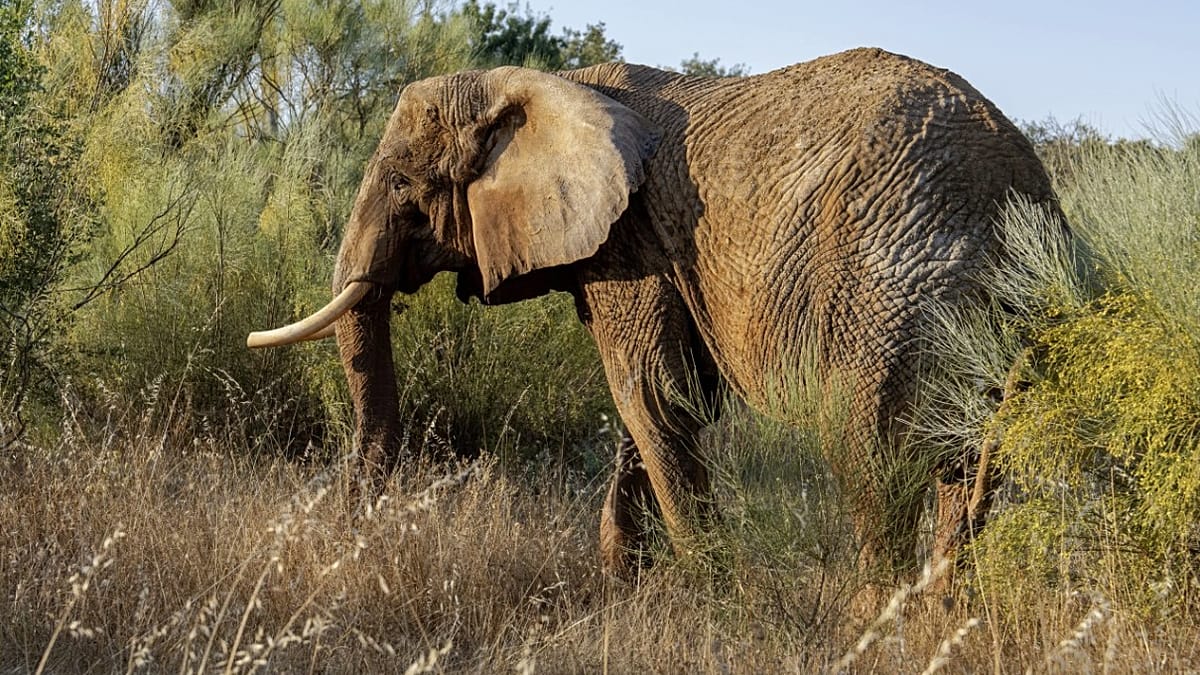
In the rolling plains of Alentejo, between Vila Viçosa and Alandroal in the district of Évora, a new chapter in European animal welfare has begun. Julie, an African elephant estimated to be around 40 years old, has become the first resident of the Pangea elephant sanctuary, described as Europe's first large-scale refuge for captive elephants.
Julie was captured in Africa roughly four decades ago and arrived in Portugal as a calf. She joined the Victor Hugo Cardinali circus in 1988 and remained there until recently, even after Portugal banned wild animals in circuses in 2018. The law only took full effect in 2024, giving circuses time to adapt, but Julie's owner had nowhere to send her—until now.
“Julie is not only Pangea’s first elephant, she is also the last circus elephant in Portugal; in fact, the last wild animal in any circus,” said Kate Moore, Pangea’s director-general, in an interview with the Associated Press. “That is extraordinary, and it just shows how important it is to connect legislation with sanctuaries, because there has to be a solution, a place to send these animals.”
A New Home After Decades of Captivity
Julie is already exploring her new environment under controlled freedom, enjoying her first mud bath and showing signs of adaptation. The sanctuary reports that she “is adapting very well” and “is quickly feeling comfortable enough to choose how to spend her day.”
Her life expectancy remains uncertain. “We cannot be sure; elephants in the wild live for more than 70 years. Unfortunately, elephants born in captivity have half the life expectancy,” Moore explained. “She has had a hard life, but I must say she has been very energetic at Pangea this week, so we remain hopeful.”
The sanctuary, established by the UK-based Pangea foundation with funding from various organisations and donors—including comedian Ricky Gervais—spans 400 hectares and has capacity for up to 30 elephants. It follows the model of large-scale facilities already operating in Asia, Africa, and the Americas, where animals can roam, forage, and socialise freely while receiving specialist care.
For now, Julie is the sole inhabitant, but another arrival is expected later this year. Kariba, an African elephant also captured in the wild and around 40 years old, currently lives alone in a zoo in Belgium. Her transfer was delayed due to an abscess on her foot, which required treatment before she can travel safely.
Moore emphasised the cooperative spirit behind Julie's relocation: “Our experience with Victor Hugo Cardinali has been incredibly positive. I think that, once we reached that agreement, we focused solely on Julie’s welfare and on trying to achieve the best outcome for her. I believe this is an excellent basis to show that this is how we want to work from now on.”
The sanctuary presents itself as “a compassionate solution for zoos, circuses and European governments seeking lifelong homes for elephants in need.” It will remain closed to visitors for the time being, “giving Julie and future residents the space and tranquillity they need to settle in.”
Julie's story underscores a broader trend across Europe: as countries tighten restrictions on wild animals in entertainment, the need for adequate sanctuaries becomes critical. Similar efforts elsewhere, such as the rescued bile bears from South Korea finding sanctuary in a Danish forest, highlight the growing network of refuges for formerly captive animals.
For Julie, the transition marks a poignant end to a long journey. Once the last circus elephant in Portugal, she now represents a hopeful model for how legislation and sanctuaries can work together to give captive animals a dignified retirement.