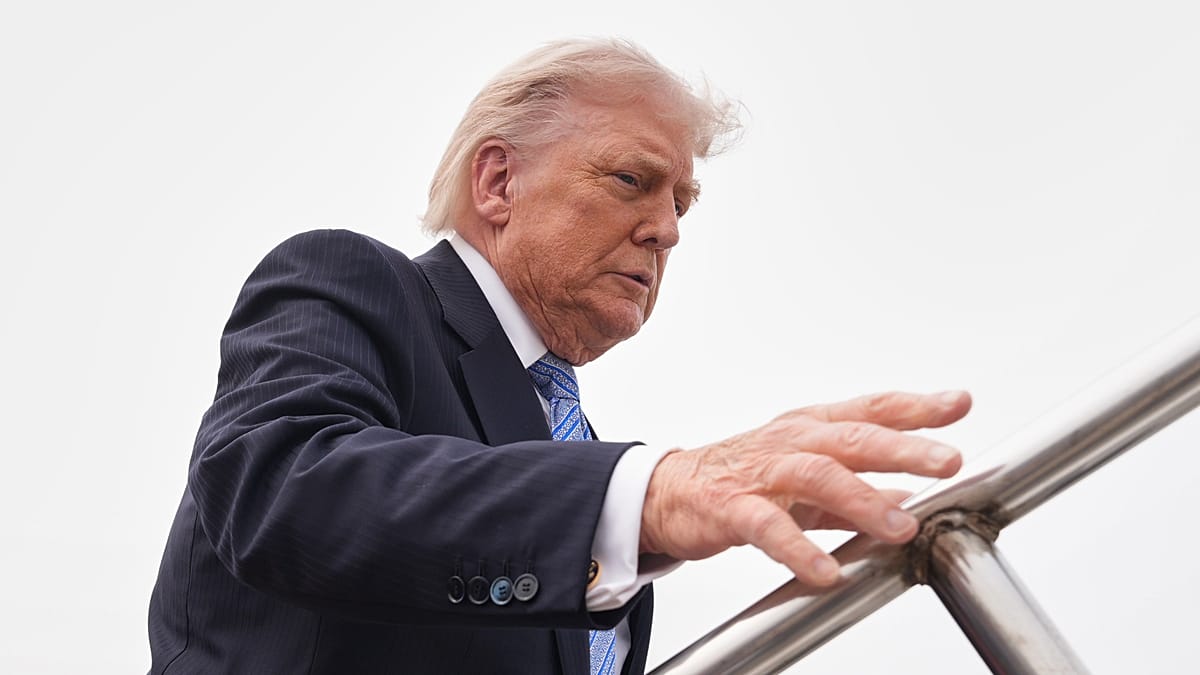
Donald Trump arrived in Beijing with characteristic fanfare, promising a cascade of business deals and a reset in US-China relations. But the reality of a complex rivalry quickly tempered those ambitions. The summit with President Xi Jinping ended with little more than a fragile stabilization of ties, leaving investors and geopolitical analysts underwhelmed.
Helmut Brandstätter, a liberal Member of the European Parliament from Austria with close ties to Chinese diplomats, summed up the mood: “You don't get the sense that much has been accomplished. Trump hasn't achieved anything economically for himself, nor has he done anything for the rest of the world.”
Trade Deals Fall Short
The most concrete outcome was an agreement for China to purchase 200 Boeing jets—a far cry from the 500 Trump had floated before the trip. Boeing shares slid 4% on Wall Street as investors digested the modest figure. This was the only major business deal announced during the visit, despite Trump's entourage of top US CEOs and his earlier hints at a bonanza of contracts.
China's last large Boeing order came during Trump's November 2017 visit, when it agreed to buy 300 planes. Relations soured afterward, and orders dried up. The current deal, while welcome, signals no fundamental thaw in commercial ties. US officials mentioned vague progress on farm goods sales, but details were scant, and there was no breakthrough on Nvidia chips—a key demand from US tech firms, despite CEO Jensen Huang's last-minute inclusion in the delegation.
Both sides agreed to preserve the fragile “trade truce” reached after last year's tariff war, setting up mechanisms to manage future disputes rather than letting tensions escalate immediately. But for European leaders watching from Brussels, the underwhelming outcome offered a measure of relief. Ling Chen, an associate professor at Johns Hopkins University's School of Advanced International Studies (SAIS), noted: “The EU is not economically marginalized because it is an important economic partner to both the US and China, especially as the two great powers compete strategically. The EU is also an essential market for China's green energy products.”
Geopolitical Rifts Remain
If trade relations saw a tentative stabilization, geopolitical security differences were barely papered over. At a lavish banquet in the Great Hall of the People, both leaders exchanged effusive praise—Xi called the visit a “milestone,” Trump spoke of “fantastic trade deals.” But the substance behind the pageantry was thin.
Just before the final meeting, China's foreign ministry issued a blunt statement criticizing the US and Israel's war with Iran: “This conflict, which should never have happened, has no reason to continue.” China expressed support for peace efforts in a war that has disrupted energy supplies and the global economy. Trump had hoped Xi would pressure Iran to end the conflict, but no such commitment emerged. Ian Lesser, distinguished fellow at The German Marshall Fund, suggested that “it is quite possible that the Chinese will exercise subtle influence on the Iranians in the weeks to come, but little of it will likely be visible.”
On Taiwan, the American readout of the talks was silent, but China's statement was stark: Xi stressed that the Taiwan question is “the most important issue in China-US relations” and could lead to clashes if mishandled. The warning echoed Beijing's longstanding red lines, leaving the core dispute unresolved.
For Europe, the summit's modest outcome is a double-edged sword. It avoids a US-China deal that sidelines the EU, but it also leaves global trade and security uncertainties intact. As the continent navigates its own relationships with both powers, the Beijing summit served as a reminder that the superpower rivalry is far from settled.