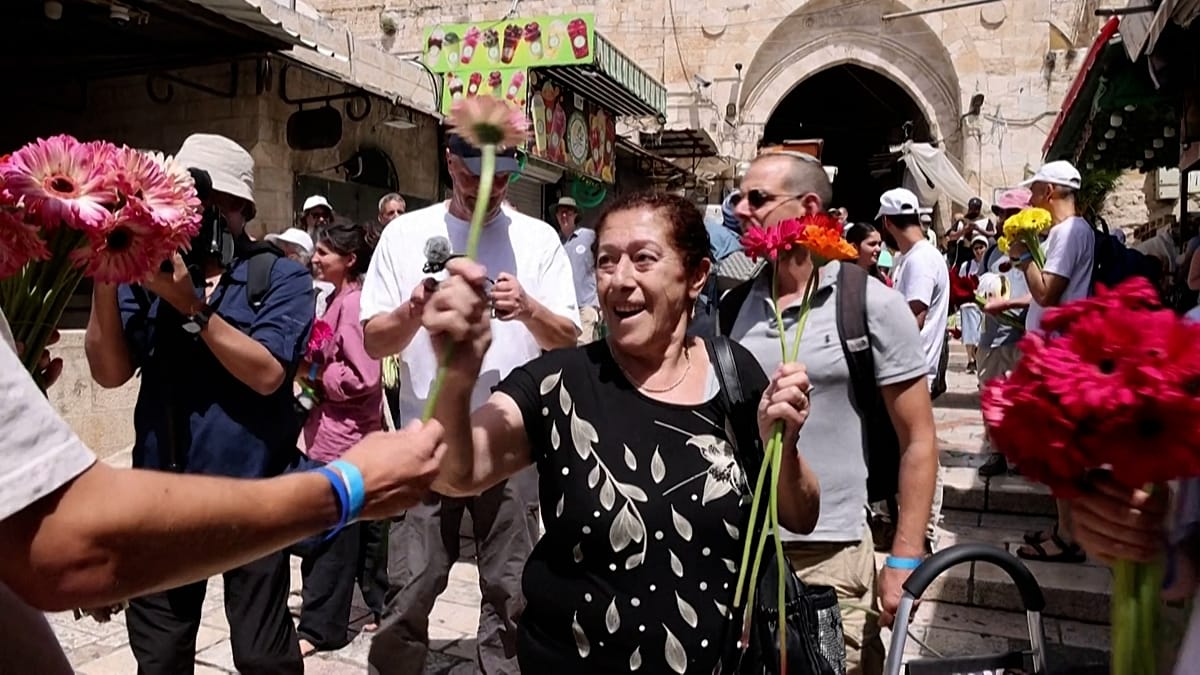
On Thursday, a group of Israeli peace activists gathered in Jerusalem to stand in solidarity with Palestinian residents ahead of the annual Jerusalem Day flag march. This event, which commemorates the reunification of the city under Israeli control in 1967, is frequently marked by heightened nationalist fervor and a heavy security presence, often leading to clashes.
The activists, representing various civil society organizations, positioned themselves in neighborhoods with significant Palestinian populations, such as the Old City and Sheikh Jarrah. Their stated goal was to provide a protective presence and to de-escalate potential confrontations between marchers and local residents. The flag march, which draws thousands of mostly religious-nationalist Israelis, has in recent years become a flashpoint for violence, with participants chanting slogans and engaging in provocations.
Context of Tensions
Jerusalem Day itself is a complex commemoration. For many Israelis, it is a celebration of national unity and sovereignty over the entire city. For Palestinians, it is a reminder of displacement and ongoing occupation. The march's route deliberately passes through Palestinian quarters, which critics view as a deliberate provocation. This year, the atmosphere was further charged by the ongoing conflict in Gaza and rising violence in the West Bank.
Peace activists emphasized that their presence was not about opposing the march itself, but about protecting civilians. “We are here to ensure that no Palestinian is harmed, that their homes are not attacked, and that their dignity is respected,” said one organizer from the group Standing Together. “This is about basic humanity.”
The Israeli police deployed thousands of officers across the city, setting up checkpoints and barricades. While the march proceeded without major incidents, several scuffles were reported between marchers and activists, as well as between police and Palestinian youths. The activists' efforts were credited with helping to prevent more serious violence.
This event occurs against a broader backdrop of European concern over the situation in Jerusalem and the occupied territories. The European Union has repeatedly called for restraint and for the preservation of the status quo at holy sites. The Palestinians' annual Nakba commemorations earlier this month also drew attention to the ongoing displacement and the right of return, a key issue in any future peace negotiations.
The role of civil society in such flashpoints is increasingly important, as official diplomatic channels often remain deadlocked. European governments, while critical of settlement expansion and provocative actions, have limited leverage. The activism seen in Jerusalem reflects a broader trend of grassroots efforts to address the conflict, which resonates with many European audiences who follow the situation closely.
In a related development, AI-generated videos misrepresenting Italy's stance on Israel have surfaced online, highlighting the challenges of disinformation in the region. Such content can inflame tensions and complicate public understanding.
The Jerusalem Day march remains a potent symbol of the divisions within the city and the wider conflict. While the peace activists' actions may not resolve the underlying political issues, they serve as a reminder that there are voices within Israeli society advocating for coexistence and the protection of Palestinian rights. The international community, including European capitals, will be watching closely to see if such grassroots efforts can influence the broader trajectory of the conflict.