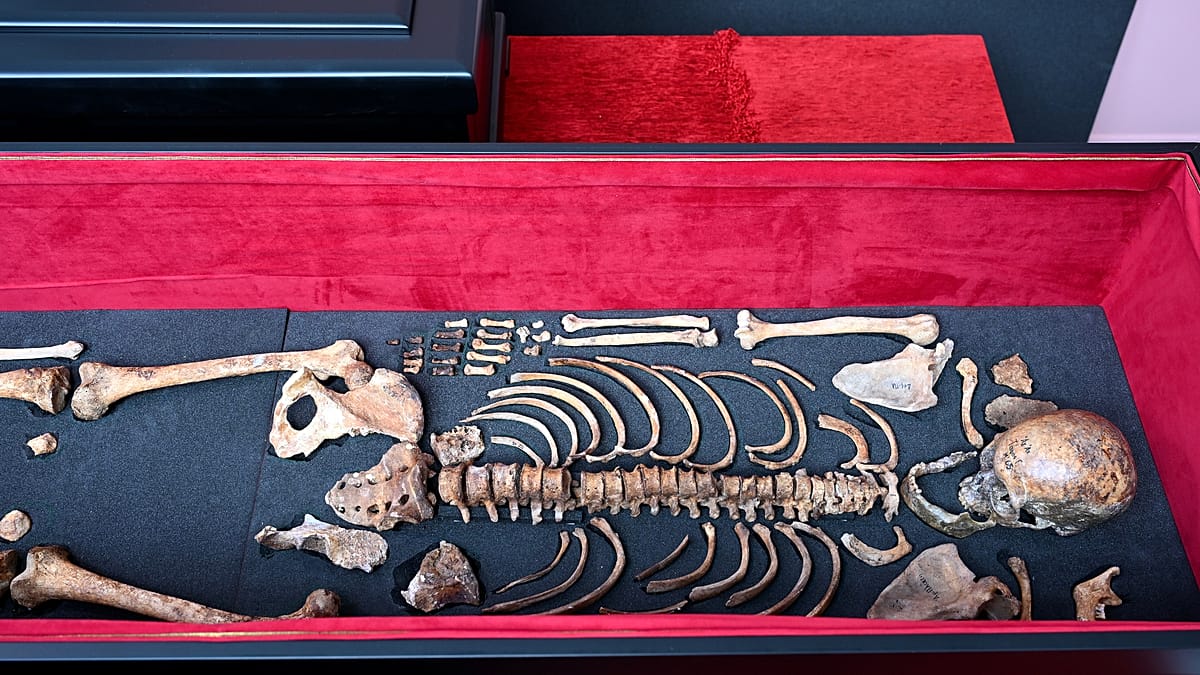
After six decades in Greece, the remains of Tsar Samuel, one of medieval Bulgaria's most significant rulers, have finally returned home. The relics were flown to Sofia in a solemn ceremony, marking the culmination of a long-awaited agreement between Bulgaria and Greece to exchange historic religious artefacts.
A historic homecoming
Tsar Samuel ruled the First Bulgarian Empire from 997 to 1014, a period when the state stretched across much of the Balkans. His remains had been kept in the Church of Saints Achillios in the Greek city of Larissa, where they were moved after the fall of his capital. For decades, Bulgarian historians and church officials had campaigned for their return, but it was only recently that diplomatic efforts bore fruit.
The repatriation was part of a broader cultural accord signed between Sofia and Athens, which also includes the exchange of other religious relics and icons. The deal reflects a growing trend of cooperation in the region, as both countries seek to strengthen ties within the European framework. Similar exchanges have been seen elsewhere, such as medieval heritage tourism in the Alps, which highlights the shared history of the continent.
Bulgarian President Rumen Radev and Prime Minister Dimitar Glavchev were present at the airport ceremony, along with Orthodox clergy and hundreds of citizens who gathered to pay their respects. The relics were received with full state honours, including a military guard and the singing of the national anthem. In his address, President Radev called the event "a moment of national pride and historical justice."
The return of Tsar Samuel's remains is not just a symbolic act; it also underscores the importance of preserving cultural heritage in a region where borders have shifted many times. The exchange with Greece is seen as a model for resolving similar disputes over artefacts and relics across the Balkans, where nations often share overlapping historical claims.
Historians note that Tsar Samuel's reign was marked by both military conflict and cultural flourishing. His capital at Ohrid, now in North Macedonia, became a centre of learning and religious life. The return of his remains to Bulgaria is expected to boost interest in medieval history, much like Bulgaria's growing economic profile has drawn attention to its modern development.
The agreement with Greece also includes the return of several Byzantine icons and manuscripts to their original locations, a process that has been praised by cultural experts. "This is a win-win for both nations," said Dr. Elena Marinova, a historian at Sofia University. "It allows us to share our common heritage while respecting each other's national narratives."
The relics will be placed in the Alexander Nevsky Cathedral in Sofia, where they will be accessible to the public. A special exhibition is planned to explain the historical context of Tsar Samuel's life and the significance of his return. The event has also sparked discussions about other Bulgarian artefacts still held abroad, with some calling for similar negotiations with other countries.
As Bulgaria continues to navigate its role within the European Union, the repatriation serves as a reminder of the deep historical roots that bind the continent together. It also comes at a time when the country is asserting its diplomatic independence, as seen in Prime Minister Glavchev's recent statements on EU diplomacy. The return of Tsar Samuel is a rare moment of unity and reflection for a nation often divided by contemporary politics.
For now, the focus is on honouring the legacy of a ruler who shaped the Bulgarian state. The ceremony in Sofia was both a farewell to a long exile and a welcome home for a king whose memory had never faded.