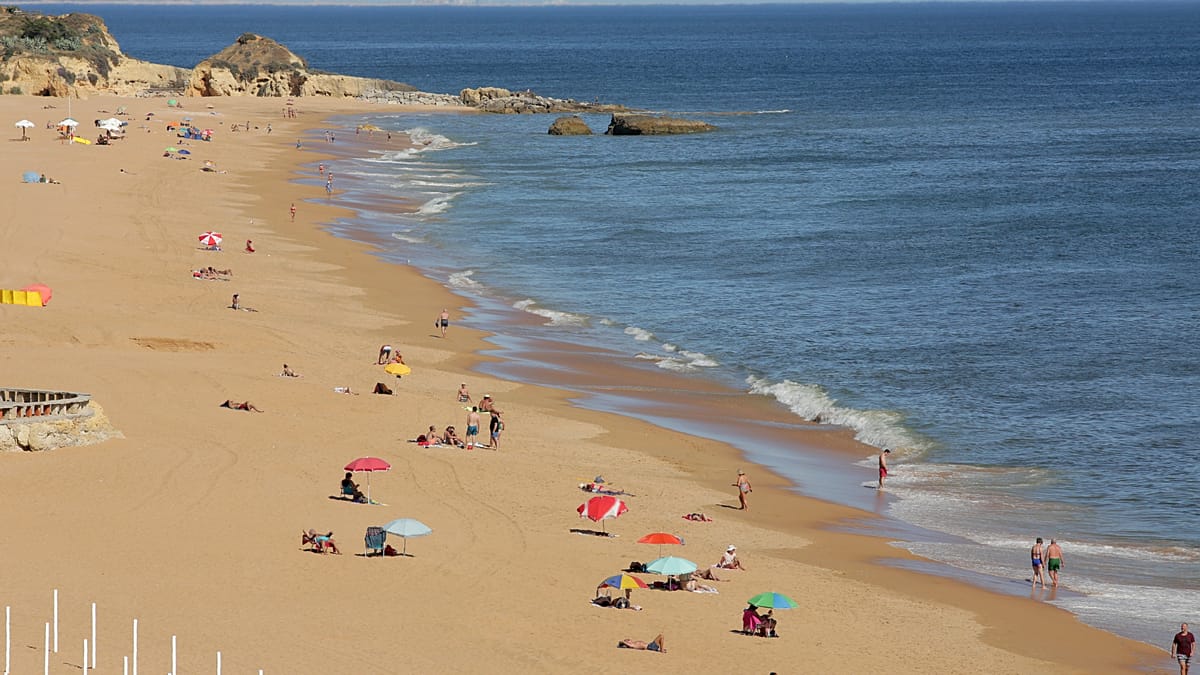
The waters off the Algarve coast have experienced a significant warming event this summer. The Portuguese Navy, through its Hydrographic Institute, reported two marine heatwaves off Faro between 15 June and 9 July, with sea surface temperatures peaking at 26.1°C. The data, collected by the Faro Coastal Buoy as part of the national MONIZEE monitoring network, reveals a daily average of around 25°C during the period.
Two Distinct Heatwaves
The first marine heatwave was classified as moderate, with a daily maximum of 23.3°C—approximately 1.5°C above the 90th percentile threshold for that day. The second event was stronger, reaching a maximum of 24.8°C, about 2.2°C above the 90th percentile. While the daily averages underpin the detection of these events, the absolute maximum of 26.1°C recorded during the period illustrates the magnitude of the warming.
“This value clearly illustrates the magnitude of the warming observed, although the classification of a marine heatwave depends on the persistence of the event and not just on an isolated temperature spike,” the Portuguese Navy stated.
The MONIZZE network, which monitors Portugal's coastal ocean in real time, is crucial for tracking such extreme events. The data helps scientists understand thermal variability and supports activities dependent on sea conditions, from fisheries to tourism. This summer's heatwaves are part of a broader pattern affecting southern Europe, as Southern and Central-Eastern Europe bear the brunt of extreme heatwaves.
Broader European Context
The warming off Faro is not an isolated incident. Across Europe, rising temperatures are reshaping coastlines and ecosystems. In the Mediterranean, marine heatwaves have become more frequent and intense, threatening marine biodiversity and coastal economies. The Portuguese Navy's monitoring highlights the need for robust data collection to inform policy and adaptation strategies.
Portugal, like much of southern Europe, is increasingly vulnerable to heat extremes. The country has experienced record-breaking land temperatures in recent years, and the ocean is no exception. The Algarve, a popular tourist destination, relies on stable sea conditions for its beach tourism and fishing industries. Prolonged warming could disrupt local marine life and affect the region's appeal for visitors, especially as Europe's coolcation trend gains momentum.
The data from Faro also underscores the importance of real-time environmental surveillance. The MONIZEE network, operated by the Hydrographic Institute, provides continuous monitoring that can detect anomalies early. This information is vital for scientists studying climate change impacts and for authorities planning coastal management.
As Europe grapples with the consequences of a warming planet, events like these serve as a reminder that the ocean is a key indicator of broader climatic shifts. The Portuguese Navy's findings contribute to a growing body of evidence that marine heatwaves are becoming more common, with implications for ecosystems and human activities across the continent.