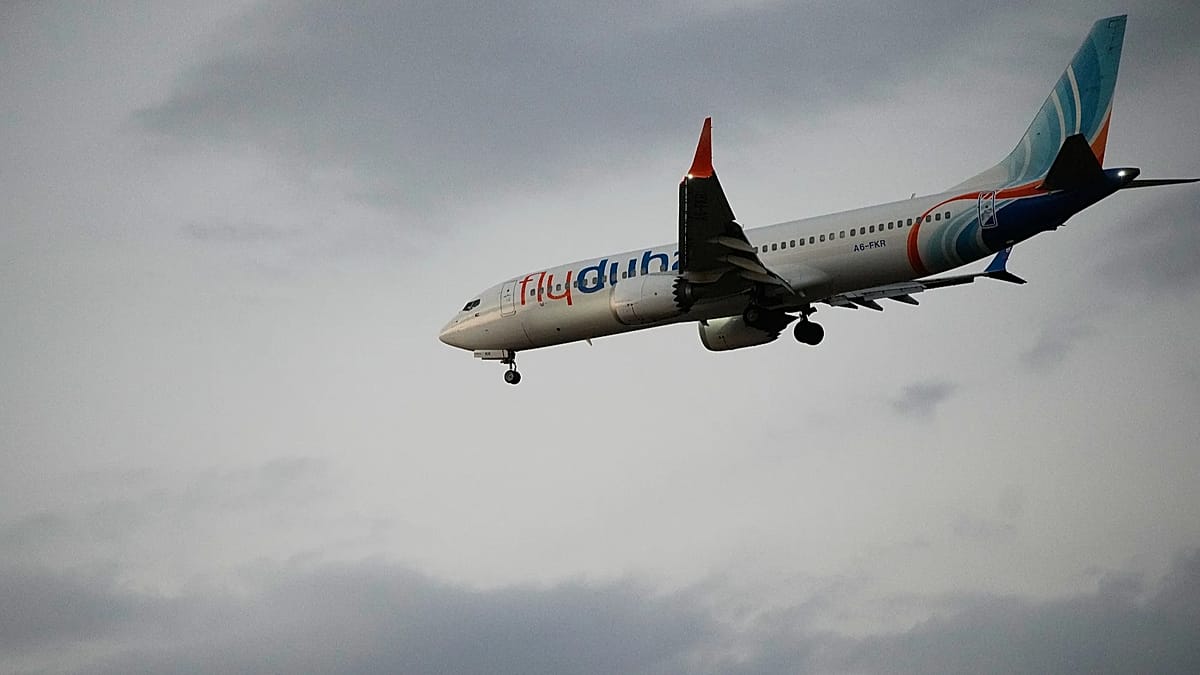
The United Arab Emirates' prosecutor general has described the mid-air assault on a FlyDubai flight as a terrorist attack, as investigators work to piece together how an Omani co-pilot with a history of extremist concerns was able to board an Israel-bound aircraft.
Hamad Saif al-Shamsi said the co-pilot of flight FZ1073 used a crash axe against the captain and attempted to seize control of the plane. The attack, which took place on Wednesday, forced an emergency landing in Saudi Arabia with 182 people on board. The prosecutor's office said the investigation continues to uncover all circumstances, motives, and connections, including technical and digital evidence, according to state news agency WAM.
A co-pilot with a troubling past
The co-pilot has been identified as Hamam al-Hammami, an Omani national born in the UAE. According to sources cited by the Associated Press and the Wall Street Journal, Oman had barred him from flying because of concerns over radical ideological views. He had been moved to an administrative role at Oman Air before being hired by Dubai-based FlyDubai. The extent of his vetting by the airline remains unclear.
His social media presence was active until the day of the flight, then deleted. Security agencies from four regional countries, with assistance from the United States and other Western governments, are working to establish his motives.
Israeli Prime Minister Benjamin Netanyahu has claimed the co-pilot underwent “Islamist radicalization,” though he provided no evidence. Israel and Oman do not have formal diplomatic relations, and Israel has agreements with foreign carriers to prevent pilots from nations without ties from flying into the country.
Captain hailed as hero
The captain, Indian national Smit Machchhar, has been widely praised for his actions. In an emotional video from his hospital bed in Saudi Arabia, he described the struggle: “I was fighting for my life. When I was lying on the floor I could feel the aircraft was going down. I knew exactly that this would be the last push. I told myself that if I didn't get up, there would be a problem. I managed to open the door, and then everyone else came in.”
UAE presidential advisor Anwar Gargash called Machchhar a true hero, saying he “embodied the meaning of courage and responsibility in the face of a dangerous terrorist act and a potential disaster.” Gargash also urged vigilance against extremism, warning against conspiracy theories.
The attack has sent shockwaves through the region's aviation community and raised serious questions about security screening. The UAE has suspended all flights to Israel, and Israel's El Al has cancelled its scheduled services to the UAE. Repatriation flights have been arranged for stranded passengers.
The incident also adds to tensions in a region already unsettled by the US-Iran conflict. For European travellers and airlines, the episode underscores the fragility of Middle East air corridors, a key transit zone for flights between Europe and Asia. The rebound in oil prices above $100 a barrel further complicates the economic picture for European carriers.
As the investigation continues, the central question remains how a pilot flagged for extremist views was allowed to operate a commercial flight. The answer may have implications for aviation security protocols worldwide, including those in Europe, where airlines and regulators will be watching closely.